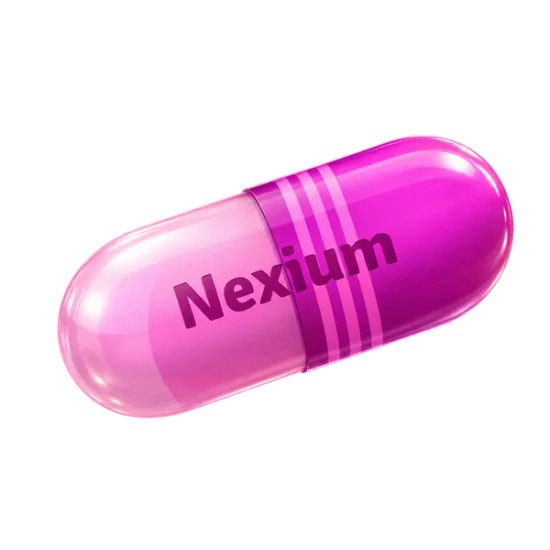
I used Nexium daily for six weeks after nighttime reflux started waking me up. The first few days were not dramatic, but by the second week I stopped keeping antacids beside the bed. I had a mild headache early on, then it disappeared.
Nexium capsules are used for adults and adolescents with gastroesophageal reflux disease, acid-related oesophageal irritation, frequent heartburn, or ulcer risk linked to anti-inflammatory medicines. By suppressing acid production at its source, it can relieve burning symptoms and allow irritated tissue to heal.
Overview
Esomeprazole, the active ingredient associated with Nexium, is a proton pump inhibitor used to reduce excess stomach acid.
Dosage and administration
Nexium capsules are swallowed whole. The amount per intake is selected individually according to the condition being treated, symptom severity, age, other medicines, and treatment response.
For consistent acid suppression:
- Take the prescribed capsule before the first meal of the day.
- Use the capsule at the same time each day during a regular course.
- Swallow it whole with water.
- Do not crush, split, or chew the capsule.
- If a dose is missed, take it when remembered unless the next scheduled dose is close. Do not take two doses together.
The capsule design protects esomeprazole from stomach acid until it reaches the intestine. Crushing or chewing can damage that protection and change where the medicine is released.
Formulation
The active ingredient associated with Nexium is esomeprazole, a proton pump inhibitor that reduces excess stomach acid at its source.
How it affects the body
Nexium contains esomeprazole, a proton pump inhibitor, often shortened to PPI. PPIs provide longer acid suppression than antacids because they act on the final stage of acid secretion rather than neutralizing acid that is already present.
Esomeprazole is the S-isomer of omeprazole. The two substances are closely related, though esomeprazole has its own absorption and metabolism profile.
Cellular Inhibition of Gastric Acid
Acid is produced by parietal cells in the stomach lining. These cells use a gastric hydrogen-potassium ATPase pump, also called the proton pump, to release hydrogen ions into the stomach. Hydrogen ions combine with chloride to form gastric acid.
Esomeprazole reaches these acid-producing cells through the bloodstream and binds to active proton pumps. This reduces the amount of acid released after meals and overnight. The effect builds with regular use because each dose blocks pumps that are active at the time of dosing. [1]
Nexium does not coat the oesophagus or neutralize acid instantly. It reduces future acid production. That distinction matters for people expecting immediate relief from a first capsule.
Therapeutic indications
Nexium is used when acid reflux is recurring, severe, or linked with damage to the oesophagus. Gastroesophageal reflux disease, or GERD, occurs when stomach contents repeatedly move upward into the oesophagus, causing burning behind the breastbone, sour fluid in the throat, regurgitation, cough, or sleep disruption.
Clinical uses of esomeprazole include:
- Relief of persistent GERD symptoms and frequent heartburn
- Healing and maintenance treatment of erosive oesophagitis
- Reduction of ulcer risk in people using nonsteroidal anti-inflammatory drugs, including naproxen, ibuprofen, and diclofenac
- Treatment plans for certain acid-related stomach and duodenal conditions
- Use alongside antibiotics in selected Helicobacter pylori eradication regimens when prescribed
GERD treatment has two goals. The first is symptom control. The second is reducing repeated acid exposure that can inflame or erode the oesophageal lining.
Health Canada recognizes proton pump inhibitors as established acid-suppressing therapies, while clinical guidance from the American College of Gastroenterology supports PPIs for healing erosive oesophagitis and controlling troublesome GERD symptoms. [2]
A PPI is not always the first choice for occasional indigestion after a heavy meal. It is better suited to acid-related symptoms that recur, disrupt sleep, persist despite simpler measures, or have been medically assessed as GERD.
Common mistakes
Several avoidable habits reduce the benefit of Nexium.
- Taking capsules after meals: Esomeprazole works best when proton pumps are about to be activated by food.
- Using it only after a trigger meal: This approach suits an antacid better than a PPI.
- Chewing the capsule: The delayed-release design is there for a reason.
- Doubling a missed dose: More is not better and can increase adverse effects.
- Combining multiple acid reducers without a plan: Antacids, H2 blockers, and PPIs can sometimes be used together, though the timing and purpose should be clear.
- Ignoring alarm symptoms: Persistent swallowing difficulty, bleeding, or unexplained weight loss need investigation.
- Assuming all throat symptoms are reflux: Hoarseness and chronic cough have many possible causes.
One detail people often miss is the timing of calcium supplements. Calcium carbonate needs stomach acid for best absorption, while calcium citrate is less dependent on acid. This can matter for people using long-term PPIs who also need calcium supplementation.
Reasons not to use it
This medication is not for you if you have had a serious allergic reaction to esomeprazole, another proton pump inhibitor, or any capsule ingredient.
Use needs individual medical assessment in the following situations:
- You take clopidogrel, warfarin, phenytoin, diazepam, cilostazol, digoxin, methotrexate, or medicines used for HIV treatment.
- You have severe liver disease.
- You have had low magnesium, osteoporosis, fractures, or vitamin B12 deficiency.
- You have persistent vomiting, anemia, unexplained weight loss, difficulty swallowing, or gastrointestinal bleeding.
- You have a history of acute interstitial nephritis or significant kidney disease.
- You are using several acid-reducing products at the same time.
Esomeprazole can affect medicines handled through liver enzyme pathways, including CYP2C19. Clinically relevant interactions can occur with clopidogrel, warfarin, diazepam, phenytoin, cilostazol, methotrexate at high doses, and some antifungal or antiviral medicines whose absorption depends on stomach acidity.
Clopidogrel deserves special attention. Esomeprazole may reduce formation of clopidogrel’s active metabolite through CYP2C19 inhibition. A prescriber may choose a different acid-suppression strategy when antiplatelet protection is essential.
When this is not for you
Symptoms can be misleading. Reflux-like burning can overlap with heart disease, gallbladder disease, ulcer disease, medication irritation, or functional dyspepsia. New chest pressure, sweating, breathlessness, or pain spreading to the jaw or arm should never be managed as simple heartburn.
Possible side effects
Most people tolerate esomeprazole without major difficulty. Headache, abdominal pain, diarrhea, nausea, constipation, and gas are among the more frequently reported effects in clinical trials. They are often mild and may settle as the body adjusts.
A practical issue is that diarrhea during acid suppression has more than one possible cause. It may be a temporary drug effect, a dietary change, an infection, or an antibiotic-related problem. Persistent watery diarrhea, fever, or severe cramping needs medical review.
Long-term acid suppression also deserves a more thoughtful discussion. Stomach acid helps release vitamin B12 from food and supports absorption of some minerals. Extended PPI use has been associated with low magnesium, vitamin B12 deficiency, and a higher fracture risk in susceptible people, especially where there are other risk factors such as osteoporosis, poor nutrition, or long-term corticosteroid therapy. These associations do not mean every long-term user develops complications.
Possible reactions needing prompt assessment include:
- Rash, facial swelling, wheezing, or other signs of allergy
- Severe or persistent diarrhea
- Muscle twitching, tremor, palpitations, or unusual weakness, which can occur with low magnesium
- Yellowing of the skin or eyes
- New kidney-related symptoms such as reduced urine output or flank pain
- Severe blistering or peeling skin reactions
The FDA prescribing information also describes rare kidney inflammation, called acute interstitial nephritis, with proton pump inhibitors. This can occur without a warning rash. [4]
Comparison
Acid-reducing treatments work in different ways. The best option depends on whether symptoms are occasional, meal-related, nocturnal, or frequent enough to suggest ongoing GERD.
| Treatment type | How it works | Usual role |
|---|---|---|
| Esomeprazole PPI | Blocks gastric proton pumps and lowers acid production for an extended period | Frequent reflux, erosive oesophagitis, ulcer prevention |
| Famotidine H2 blocker | Reduces acid signalling through histamine H2 receptors | Intermittent symptoms or nighttime acid breakthrough |
| Antacid | Neutralizes acid already in the stomach | Fast, short-term relief of occasional symptoms |
Antacids can work within minutes, though their relief is short. They do not heal acid-related oesophageal inflammation and do not prevent acid secretion after they wear off.
Famotidine acts faster than a PPI for some people, yet its acid suppression is less sustained. It can be useful for occasional symptoms or for selected nighttime patterns.
Esomeprazole generally takes longer to show its full benefit. For ongoing reflux, that slower start is balanced by stronger suppression of meal-related acid production. The American College of Gastroenterology guideline describes PPIs as the preferred therapy for healing and maintaining healing in erosive oesophagitis. [3]
What doctors say
In clinical practice, physicians usually look for a pattern before continuing long-term acid suppression: symptoms occurring several times each week, nighttime reflux, documented oesophagitis, repeated NSAID exposure, or a clear response to a PPI.
A common clinical observation is that people often call a PPI ineffective when the timing is wrong. Taking it after breakfast, only during severe discomfort, or stopping after two days does not give esomeprazole a fair trial.
Doctors also separate symptom relief from healing. Burning may improve before irritated oesophageal tissue has recovered. Conversely, ongoing throat symptoms can persist even when acid is well controlled because throat irritation, allergy, asthma, or non-acid reflux may be contributing.
WHO medication-safety principles support regular review of continuing medicines, especially when treatment extends beyond the initial intended course. That review helps confirm the indication and identify interaction or nutrient-related concerns. [5]
Comparison
Common questions
What should I do if Nexium does not produce the expected result?
Take it consistently before the first meal for the prescribed period, since esomeprazole is not designed for instant rescue relief. Ongoing symptoms may reflect incorrect timing, missed doses, persistent reflux triggers, non-acid reflux, or a condition other than GERD. The American College of Gastroenterology guideline published in 2022 recommends reassessment when symptoms persist despite appropriate PPI use, especially if alarm symptoms are present. Do not increase the amount on your own. A clinician can check whether testing or a different diagnosis is needed.
How soon does Nexium become noticeable?
Some people notice reduced burning within the first few days, while full acid control may take longer with regular use. The FDA’s 2022 prescribing information explains that esomeprazole suppresses acid production through repeated inhibition of active proton pumps. Healing of erosive oesophagitis takes longer than symptom relief because damaged tissue needs time to recover. Relief after the first capsule does not predict the full response.
Can Nexium be used during pregnancy and breastfeeding?
Pregnancy-related reflux is common, though treatment choices should be individualized. Health Canada’s 2023 product information and clinical practice consider the reason for treatment, stage of pregnancy, other medicines, and symptom severity before selecting a PPI. Esomeprazole may be considered when medically appropriate, but it should not be started or continued in pregnancy without individualized prescriber input. Breastfeeding decisions also require assessment of maternal need and infant factors.
How should Nexium be stopped and tapered?
Stopping a PPI can lead to rebound acid hypersecretion, where acid symptoms temporarily return more strongly after treatment ends. This is more likely after prolonged regular use. A prescriber may recommend reducing treatment gradually or using an alternative acid-control plan rather than stopping abruptly. The WHO’s 2023 medication-safety framework supports periodic treatment review when medicines are used for extended periods.
What medical review is needed before starting Nexium?
Discuss all regular medicines, especially clopidogrel, warfarin, phenytoin, diazepam, digoxin, high-dose methotrexate, and medicines whose absorption needs stomach acid. Mention past kidney inflammation, liver disease, osteoporosis, low magnesium, anemia, vitamin B12 deficiency, or gastrointestinal bleeding. Health Canada’s 2023 product information recommends assessment of warning symptoms such as trouble swallowing, persistent vomiting, weight loss, or black stools before acid suppression is continued. These details help distinguish straightforward reflux from conditions requiring a different approach.
How long should Nexium be used?
Course length depends on the reason for treatment. Short courses may be used for uncomplicated reflux symptoms, while healing erosive oesophagitis, NSAID-related ulcer prevention, and certain recurring conditions can require longer treatment. Long-term use can be appropriate when there is a clear indication, though the need should be reviewed periodically because of potential nutrient, bone, kidney, and interaction concerns. The American College of Gastroenterology guideline from 2022 supports using the lowest suitable maintenance approach after response is established.
Can Nexium be used under age 18?
Esomeprazole can be used in pediatric care for selected acid-related conditions, though age, body weight, diagnosis, and capsule formulation affect the treatment plan. Adult dosing assumptions should not be applied to children or adolescents. The FDA’s 2022 prescribing information includes pediatric considerations for esomeprazole, but the indication and amount must be selected for the individual child. A young person with recurrent heartburn should also be assessed for dietary, swallowing, respiratory, or gastrointestinal contributors.
Do you offer anonymous delivery?
Your order will be securely packed and shipped within 24 hours. This is exactly what your package will look like (images of an actual item sent). It has the size and look of a regular private letter (24x11x0.7 cm) and its contents cannot be seen.
Customer Feedback on Nexium
I took it while using anti-inflammatory tablets for knee pain. My stomach burning settled after about ten days and I could eat breakfast without that acidic feeling. I was careful to take the capsule before eating because taking it later did not seem to work as well.
I expected immediate relief after the first capsule and was disappointed. My reflux improved gradually over the next week, but greasy late meals still caused symptoms. The medicine helped, though it did not cancel out every food choice.
I had been taking it for several months when my clinician reviewed my other medicines and arranged bloodwork. I appreciated that because I also take several regular prescriptions. The reflux control was good, but I did not like the loose stools I had during the first week.
I used Nexium for a prescribed course after ongoing heartburn and throat irritation. The burning eased, though my hoarse voice took longer to settle. I learned not to skip doses on weekends because the symptoms came back by Sunday night.
Sources
- U.S. Food and Drug Administration (2022). Nexium (esomeprazole magnesium) prescribing information.
- Health Canada (2023). Product Monograph: NEXIUM (esomeprazole magnesium).
- American College of Gastroenterology (2022). ACG Clinical Guideline for the Diagnosis and Management of Gastroesophageal Reflux Disease.
- U.S. Food and Drug Administration (2022). Nexium (esomeprazole magnesium) prescribing information: Adverse reactions and warnings.
- World Health Organization (2023). Medication Without Harm: Global Patient Safety Challenge.