The first week brought nausea and restless sleep. That settled by the third week, and my worry became easier to manage. I still had reduced sexual interest, so I discussed it at my follow-up rather than stopping on my own.
Escitalopram in Lexapro increases serotonin signalling in the brain, helping regulate mood and anxiety. Lexapro is prescribed for adults with major depressive disorder and generalized anxiety disorder. Its benefits develop gradually rather than after one dose.
Overview
Escitalopram in Lexapro increases serotonin signalling in the brain, helping regulate mood and anxiety. Lexapro is prescribed for adults with major depressive disorder and generalized anxiety disorder. It is a selective serotonin reuptake inhibitor (SSRI) taken as a daily oral tablet, with benefits developing gradually rather than after one dose.
Dosage and administration
The dose of Lexapro is decided individually, taking age, other medicines, and health conditions into account. The starting dose and any later adjustments are determined according to the prescriber’s assessment and the person’s response.
- Take the tablet orally once daily.
- Swallow it with water, with or without food.
- Keep the dosing time consistent.
- Do not increase, reduce, or stop the dose without a prescriber’s plan.
- If a dose is missed, take it when remembered unless the next dose is close; do not double the next dose.
- Treatment often continues for months after improvement to reduce relapse risk.
Dose increases are usually separated by at least several days or longer, depending on tolerability and clinical response. Older adults and people with liver impairment may require a lower dose or a slower adjustment schedule. People taking medicines that inhibit CYP2C19 may also need dose review because escitalopram exposure can rise.
Titration and Maintenance Dosing Schedules
During titration, the prescriber monitors anxiety, mood, sleep, agitation, suicidal thoughts, gastrointestinal symptoms, and sexual adverse effects. A small temporary increase in anxiety can occur after starting an SSRI. Severe agitation, rapidly worsening mood, or new suicidal thinking requires urgent medical attention.
Stopping suddenly can cause discontinuation symptoms, including dizziness, electric-shock sensations, irritability, nausea, vivid dreams, and flu-like feelings. A gradual reduction is usually used after longer treatment.
Formulation
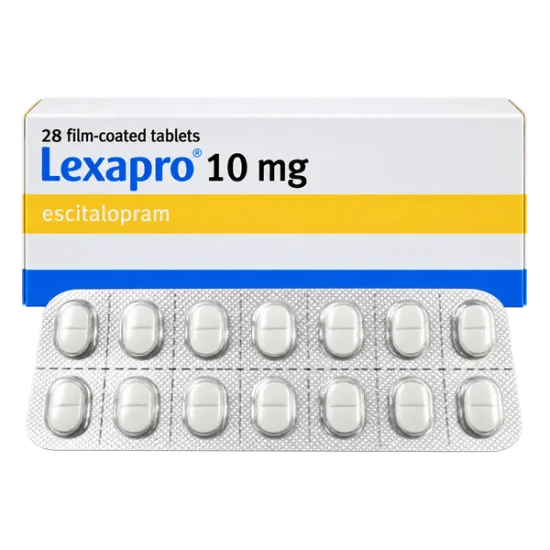
Lexapro contains escitalopram and is supplied as film-coated tablets. Escitalopram belongs to the SSRI antidepressant class, which works by changing how nerve cells handle serotonin. Health Canada recognizes escitalopram as a treatment option for depressive illness and anxiety-related conditions [1].
How it affects the body
Escitalopram selectively inhibits the serotonin transporter, also called SERT. This reduces the reuptake of serotonin from the synaptic space between nerve cells. More serotonin remains available for signalling between neurons.
Receptor adaptation, changes in neural signalling, and gradual improvement in sleep and activity patterns help explain why therapeutic benefits often take two to four weeks to become noticeable. Some people notice sleep or appetite changes earlier, while emotional improvement may take longer.
Serotonin Transporter Inhibition at the Synapse
A synapse is the small communication gap between two nerve cells. A sending neuron releases serotonin into this gap, and a receiving neuron detects the signal. SERT normally transports some serotonin back into the sending neuron.
Lexapro blocks SERT with relative selectivity. It does not act as a sleeping tablet, stimulant, or tranquillizer. This mechanism helps explain both its intended action and some adverse effects, including nausea, headache, changes in sleep, and sexual dysfunction. The U.S. Food and Drug Administration describes escitalopram pharmacology and clinical use in its prescribing information [2].
Therapeutic indications
Indications for Major Depressive Disorder and Anxiety
Major depressive disorder involves persistent low mood or loss of interest alongside symptoms such as sleep changes, fatigue, reduced concentration, guilt, or thoughts of death. Lexapro may be selected when these symptoms are clinically significant and require daily antidepressant treatment.
Generalized anxiety disorder involves excessive, difficult-to-control worry across several areas of life. Physical tension, restlessness, irritability, sleep disruption, and poor concentration may accompany the worry. The goal of treatment is a sustained reduction in anxiety and improved day-to-day functioning, not a sedating effect after a single tablet.
Lexapro is not designed for immediate relief during an acute panic episode. Its benefit depends on regular dosing and time for the nervous system to adapt.
Common mistakes
Several practical errors can reduce benefit or create avoidable problems:
- Taking the tablet only on stressful days instead of daily.
- Doubling the next dose after a missed tablet.
- Stopping abruptly when mood improves.
- Changing from morning to evening dosing repeatedly.
- Adding 5-HTP, St John’s wort, tramadol, or dextromethorphan without checking interactions.
- Assuming early nausea means the treatment must be abandoned.
- Ignoring persistent sexual dysfunction because mood has improved.
- Drinking alcohol during the first days without observing its effect on alertness and mood.
- Failing to mention a history of bipolar symptoms, seizures, fainting, or low sodium.
One useful clinical detail is that discontinuation symptoms can feel like a new illness. Dizziness, “electric shock” sensations, vivid dreams, and irritability after abrupt stopping are often linked to withdrawal rather than a return of depression.
Reasons not to use it
Lexapro is not suitable for everyone. The following situations require avoidance, specialist review, or a clearly documented prescribing decision:
- Current use of a monoamine oxidase inhibitor (MAOI), including linezolid or intravenous methylene blue.
- Previous serious allergic reaction to escitalopram or citalopram.
- Known congenital long-QT syndrome or a significant history of dangerous rhythm disturbance.
- Bipolar disorder without assessment for past mania or hypomania.
- Severe liver disease requiring dose adjustment.
- Previous serotonin syndrome linked to serotonergic treatment.
- Concurrent medicines that substantially prolong the QT interval.
- Pregnancy or breastfeeding without an individualized risk-benefit assessment.
Risk of Serotonin Syndrome with Concomitant Medications
Serotonin syndrome can occur when serotonergic activity becomes excessive. Risk increases with MAOIs, other SSRIs, serotonin-norepinephrine reuptake inhibitors, tramadol, fentanyl, lithium, triptans, buspirone, dextromethorphan, and serotonergic herbal products.
Switching between serotonergic medicines may require a washout interval, with the timing determined by the medicines involved.
Lexapro may increase bleeding risk with aspirin, ibuprofen, naproxen, anticoagulants, and antiplatelet medicines. Omeprazole and some other CYP2C19 inhibitors may increase escitalopram exposure. Health Canada’s safety information for escitalopram supports medication review before treatment changes .
When this is not for you
Lexapro is not for you if you are taking an MAOI, have had a severe reaction to escitalopram, or have a known serious heart-rhythm condition that makes QT prolongation unsafe. It also requires careful review if you have bipolar disorder, epilepsy, liver disease, low sodium, glaucoma, a bleeding disorder, or a history of severe drug-related agitation.
Young people require close monitoring after starting an antidepressant or changing the dose. Worsening depression, impulsivity, unusual agitation, or suicidal thoughts can occur even when the longer-term treatment plan is appropriate. This warning does not mean that Lexapro causes suicidal thinking in every patient; it means that changes in mood and behaviour require prompt clinical attention.
Possible side effects
Common adverse effects include nausea, dry mouth, headache, sweating, fatigue, sleepiness, insomnia, dizziness, and changes in sexual function. Many early effects lessen during the first one to three weeks, although sexual dysfunction can persist while treatment continues.
Lexapro can also cause reduced appetite, constipation, diarrhoea, abnormal dreams, or difficulty reaching orgasm. These effects are not signs that the medicine is failing, but persistent symptoms may justify a dose review or a change in treatment strategy.
Managing Common Tolerability Issues
- Morning dosing may suit people who feel activated or have insomnia.
- Evening dosing may suit people who feel sleepy after taking the tablet.
- Regular meals and adequate fluids can help with mild nausea or dry mouth.
- Alcohol can worsen drowsiness, impaired judgement, and mood instability.
- Sexual side effects should be reported directly; they are common enough to deserve active management.
- Do not self-treat persistent restlessness with sedatives or supplements.
Urgent assessment is needed for symptoms such as fainting, an irregular heartbeat, severe allergic swelling, seizure, marked confusion, high fever with muscle rigidity, or severe agitation. Hyponatraemia, abnormal bleeding, mania, and serotonin syndrome are uncommon but clinically significant risks. The FDA label reports adverse reactions and warning information for escitalopram treatment [3].
One detail patients often miss: improved anxiety can lag behind improvements in sleep or appetite. Early changes do not reliably predict the final response.
Comparison
Lexapro belongs to the SSRI group. Other antidepressants act through different combinations of serotonin, norepinephrine, dopamine, or receptor pathways.
| Treatment category | Main pharmacological focus | Practical distinction |
|---|---|---|
| Escitalopram | Selective serotonin reuptake inhibition | Often chosen for depression or generalized anxiety |
| Sertraline-type SSRI treatment | Selective serotonin reuptake inhibition | May be considered when a different SSRI profile is preferred |
| Serotonin-norepinephrine reuptake inhibition | Serotonin and norepinephrine reuptake inhibition | May be considered when pain symptoms or low energy are prominent |
The best option depends on diagnosis, previous response, sleep, anxiety, sexual effects, blood pressure, other medicines, and medical history. Switching antidepressants requires a planned schedule because abrupt changes can produce withdrawal symptoms or additive serotonergic effects.
What doctors say
In clinical practice, prescribers often describe Lexapro as a gradual treatment rather than a rapid calming agent. The first appointment after initiation usually focuses on tolerability, sleep, anxiety activation, mood changes, and adherence. A later review assesses whether depressive or anxiety symptoms are changing enough to justify continuing, adjusting, or changing treatment.
A common prescribing mistake is judging the medicine after only a few days. Another is increasing the dose before early adverse effects have settled. Response is assessed across several domains, including functioning, concentration, sleep, worry, appetite, and emotional range.
Patients who previously stopped an SSRI because of sexual dysfunction may still experience this effect with escitalopram. Patients who developed severe activation or mania with an antidepressant require a different level of diagnostic review before another dose is taken.
Comparison
Common questions
What condition rules out Lexapro completely?
A current MAOI treatment is a clear reason to avoid taking Lexapro because the combination can cause dangerous serotonergic toxicity. The FDA prescribing information available in 2023 also lists serious escitalopram hypersensitivity as a contraindication. A known congenital long-QT syndrome requires specialist assessment before treatment because escitalopram can affect cardiac repolarization.
How soon does Lexapro become noticeable?
Some people notice nausea, sleep changes, or altered anxiety during the first week, while mood improvement often takes two to four weeks. NICE guidance updated in 2022 advises reviewing antidepressant response over time rather than judging treatment after only a few doses. Full benefit may take several weeks, especially when depression or anxiety has been present for a long period.
Can Lexapro be combined with other medicines or supplements?
Lexapro should not be combined casually with MAOIs, tramadol, triptans, lithium, dextromethorphan, St John’s wort, or 5-HTP. Health Canada’s 2024 escitalopram safety information identifies serotonergic combinations as a cause of concern. Aspirin, anti-inflammatory pain medicines, anticoagulants, and antiplatelet drugs can also raise bleeding risk when used with an SSRI.
How long does one Lexapro dose keep working?
Escitalopram has an elimination half-life of about 27 to 32 hours, so once-daily dosing maintains exposure across the day. The FDA Lexapro label from 2023 describes this pharmacokinetic profile. Symptom control depends on regular dosing over time; one tablet does not provide an immediate rescue effect for acute anxiety.
Can I drive, concentrate, or operate machinery while taking Lexapro?
Drowsiness, dizziness, fatigue, or impaired concentration can occur, especially during the first days or after a dose increase. Health Canada’s 2024 safety information supports caution until the individual response is clear. Do not drive or operate machinery if you feel sleepy, dizzy, confused, or less alert.
Can I drink alcohol while using Lexapro?
Alcohol may worsen drowsiness, poor coordination, impaired judgement, and depressed mood while taking Lexapro. A 2024 advisory from the Canadian Centre on Substance Use and Addiction advises caution when alcohol is combined with medicines that affect the central nervous system. Avoid alcohol during initiation and dose changes until the effect on alertness and mood is understood.
Is Lexapro suitable during pregnancy or breastfeeding?
Pregnancy and breastfeeding require an individualized review of maternal symptoms, previous treatment response, fetal or infant considerations, and available alternatives. The EMA’s 2024 escitalopram product information describes pregnancy, neonatal adaptation symptoms, and breastfeeding considerations. Do not stop Lexapro suddenly after discovering a pregnancy, because abrupt discontinuation and untreated depression can also create clinical risks.
Do you offer anonymous delivery?
Your order will be securely packed and shipped within 24 hours. This is exactly what your package will look like (images of an actual item sent). It has the size and look of a regular private letter (24x11x0.7 cm) and its contents cannot be seen.
Customer Feedback on Lexapro
My concentration felt worse for several days, and I was tired in the afternoons. By week four, work felt less overwhelming. The improvement was gradual, not dramatic, and missing doses made me feel off balance.
I stopped after the early anxiety became uncomfortable. I later learned that the dose and timing needed review, and that stopping suddenly could cause symptoms. The experience was mixed, and I needed a more careful plan.
Sources
- Health Canada (2024). Product Monograph: Lexapro (escitalopram oxalate).
- U.S. Food and Drug Administration (2023). Lexapro (escitalopram oxalate) Prescribing Information.
- U.S. Food and Drug Administration (2023). Lexapro Medication Guide.