Skip to content
Tegretol
Active ingredient: Carbamazepine

Tegretol

Quality products
24/7 Support
Fast delivery
Delivery from 4 days
Select pack Package Per unit Price

Free delivery on orders from $ 312.00, free express delivery from $ 468.00

Secure Payments
Track your order
Best price guarantee

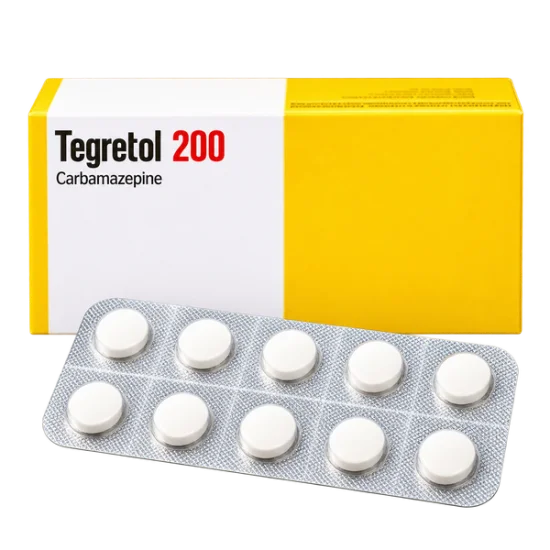
Carbamazepine, the active ingredient of Tegretol, is an anticonvulsant used for selected seizure disorders and trigeminal neuralgia. Tegretol 200 tablets reduce repeated abnormal electrical firing in nerve cells, helping to control seizures or reduce episodes of severe facial nerve pain.

Overview

Tegretol contains carbamazepine. Carbamazepine is an anticonvulsant, also called an antiseizure medicine, that acts on overactive nerve signalling. Tegretol is used under prescriber supervision because its benefits, dose requirements, and interaction risks differ between people.

Active Ingredient and Pharmacological Class

Carbamazepine belongs to the dibenzazepine anticonvulsant class. It is also used for trigeminal neuralgia, a condition marked by sudden, severe, electric shock-like facial pain caused by abnormal trigeminal nerve signalling.

How much to use and how often depends on the purpose of use and is agreed with a doctor or pharmacist.

Clinical Uses of Tegretol

Clinical use Role of carbamazepine Typical clinical setting
Focal seizures Helps reduce abnormal electrical discharges Neurology-led seizure management
Generalized tonic-clonic seizures May be used when clinically appropriate Individual seizure-type assessment
Trigeminal neuralgia Reduces repeated pain signalling from the trigeminal nerve Neurology or pain-focused care

Health Canada’s product monograph identifies carbamazepine as an established treatment for specific seizure types and trigeminal neuralgia. It is not intended for ordinary headaches, dental pain, muscle pain, or unexplained facial pain. [1]

Keep the same daily timing once a schedule has been set. Stable timing helps maintain steadier carbamazepine exposure and makes adverse effects easier to interpret.

Dosage and administration

Tegretol is supplied as tablets. How much to use and how often depends on the purpose of use and is agreed with a doctor or pharmacist. Carbamazepine treatment is commonly introduced gradually, allowing the prescriber to assess seizure control, pain relief, drowsiness, dizziness, and blood-test results before changing the dose.

Do not change the tablet strength, daily schedule, or release type without prescriber direction.

Immediate-Release and Controlled-Release Forms

Immediate-release carbamazepine releases medicine sooner after swallowing. Controlled-release forms release it more gradually and may be prescribed to reduce fluctuations in blood levels. These forms are not automatically interchangeable.

Do not crush or chew a controlled-release carbamazepine tablet. Damaging the release system can deliver medicine too quickly and increase adverse effects.

Dose Titration and Missed Doses

  • Take Tegretol exactly on the established schedule.
  • If a dose is missed, take it when remembered unless the next scheduled dose is close.
  • Do not take two doses together to compensate.
  • Do not stop Tegretol suddenly, especially when it is used for epilepsy.
  • Contact the prescriber or pharmacist if vomiting, illness, or a medication change makes regular dosing difficult.

Abrupt discontinuation can allow seizures to return or worsen. In trigeminal neuralgia, sudden interruption may allow severe facial pain attacks to recur.

Formulation

Tegretol contains carbamazepine. Carbamazepine is an anticonvulsant, also called an antiseizure medicine, that acts on overactive nerve signalling.

Active Ingredient and Pharmacological Class

Carbamazepine belongs to the dibenzazepine anticonvulsant class.

How it affects the body

Nerve cells communicate through small electrical signals. Sodium channels are microscopic gates that help create and pass on those signals. Carbamazepine keeps overactive sodium channels in an inactive state for longer, reducing rapid, repetitive bursts of electrical firing.

For seizures, this action can reduce the spread of abnormal electrical activity through the brain. For trigeminal neuralgia, it can dampen repeated firing in the facial pain pathway. Tegretol controls symptoms; it does not remove the underlying tendency toward seizures or nerve pain.

Sodium-Channel Modulation

Carbamazepine mainly acts on voltage-gated sodium channels. Think of it as placing a brief pause between repeated electrical bursts, so a nerve cell is less able to fire continuously.

This mechanism explains why carbamazepine is useful for focal seizures and certain neuralgic pain syndromes, yet it may not suit every seizure type. A prescriber matches the medicine to the seizure diagnosis rather than treating all episodes of altered awareness as the same condition.

Active Metabolite Formation

The liver converts part of carbamazepine into carbamazepine-10,11-epoxide. This active metabolite contributes to both therapeutic effects and adverse reactions, including dizziness, blurred vision, and unsteadiness when levels become too high.

Therapeutic indications

Tegretol is used under prescriber supervision because its benefits, dose requirements, and interaction risks differ between people.

Clinical use Role of carbamazepine Typical clinical setting
Focal seizures Helps reduce abnormal electrical discharges Neurology-led seizure management
Generalized tonic-clonic seizures May be used when clinically appropriate Individual seizure-type assessment
Trigeminal neuralgia Reduces repeated pain signalling from the trigeminal nerve Neurology or pain-focused care

Health Canada’s product monograph identifies carbamazepine as an established treatment for specific seizure types and trigeminal neuralgia. It is not intended for ordinary headaches, dental pain, muscle pain, or unexplained facial pain. [1]

Common mistakes

In clinical practice, the most preventable Tegretol problems arise after an unreported medication change, inconsistent tablet timing, a missed monitoring appointment, or an attempt to stop therapy abruptly after symptoms improve.

Carbamazepine works best when treatment changes are deliberate and documented.

Administration and Adherence Errors

  • Doubling up after a missed dose
  • Changing from one release formulation to another without instruction
  • Crushing or chewing modified-release tablets
  • Stopping after a seizure-free period without a prescriber-led taper
  • Starting a herbal product without reviewing interactions
  • Assuming hormonal contraception remains equally reliable
  • Drinking alcohol while still experiencing Tegretol-related drowsiness

Early Warning Signs Requiring Action

Seek urgent medical assessment for a spreading rash, blistering, mouth sores, fever with sore throat, unexplained bruising, severe vomiting, jaundice, major confusion, or thoughts of self-harm.

A rash is not a dose-adjustment problem to manage alone. It needs assessment.

Reasons not to use it

Do not use Tegretol without prescriber review if there has been:

  • Stevens-Johnson syndrome, toxic epidermal necrolysis, or another severe medicine-related rash
  • Bone-marrow depression or clinically significant blood-cell abnormalities
  • Allergy to carbamazepine or structurally related tricyclic compounds
  • Current use of a monoamine oxidase inhibitor, or use within the required washout period

Liver disease, low sodium, heart-conduction disorders, glaucoma, kidney impairment, and previous adverse reactions to antiseizure medicines may require a different treatment plan or closer monitoring. These are not all absolute barriers, but they must be assessed before Tegretol is prescribed.

When this is not for you

Tegretol is not for you if you have had a serious allergic reaction to carbamazepine, a related tricyclic compound, or a previous severe carbamazepine-related skin reaction. It may also be unsuitable with a history of bone-marrow depression or when certain interacting medicines are being used.

A complete health and medication history should be reviewed before treatment begins.

Possible side effects

Dizziness, drowsiness, unsteadiness, nausea, vomiting, headache, blurred vision, and double vision are among the more frequent effects of carbamazepine. They are often more noticeable during early treatment or after a dose increase.

Alcohol can add to drowsiness and impaired coordination. Driving, cycling, climbing ladders, or operating machinery may be unsafe until the individual effect of Tegretol is clear.

Frequent Neurological and Gastrointestinal Effects

Effect Practical response When to seek assessment
Dizziness or unsteadiness Rise slowly and avoid alcohol Falls, fainting, severe imbalance
Drowsiness Avoid driving until alertness is reliable Excessive sedation or confusion
Nausea or vomiting Take only as directed and report persistence Inability to keep doses down
Blurred or double vision Pause hazardous tasks Sudden or persistent visual symptoms
Dizziness may feel stronger when standing after sitting or lying down, especially during early dose titration. Moving slowly can reduce falls while the treatment plan is being stabilized.

Serious Skin, Blood and Liver Reactions

A new rash requires prompt medical assessment. Blistering, peeling skin, mouth sores, fever, facial swelling, or a rash with eye irritation can signal a severe reaction and needs urgent care.

Carbamazepine can also affect blood cells, liver function, and sodium levels. Fever, persistent sore throat, mouth ulcers, unusual bruising, yellowing of the skin or eyes, severe fatigue, confusion, or worsening balance should be reported urgently. The FDA prescribing information warns about serious dermatologic reactions, bone-marrow suppression, and hyponatremia associated with carbamazepine. [2]

Comparison

Treatment choice depends on seizure type, age, pregnancy potential, coexisting conditions, interaction risk, and response to prior medicines. Carbamazepine has a strong place in focal epilepsy and trigeminal neuralgia, though its interaction burden is greater than that of several newer antiseizure treatments.

Active ingredient Broad clinical context Key limitation
Carbamazepine Focal seizures and trigeminal neuralgia Many interactions; blood, sodium, liver, and skin monitoring
Valproic acid Several generalized seizure syndromes Major pregnancy-related concerns and metabolic adverse effects
Primidone Selected seizure disorders Sedation and interaction burden

Carbamazepine and Valproic Acid

Valproic acid and carbamazepine act through different pharmacological pathways. Valproic acid may suit some generalized seizure syndromes, while carbamazepine can be useful for focal seizures and facial neuralgia.

Valproic acid has major reproductive safety concerns. Carbamazepine also needs pregnancy planning, so neither option should be selected by a simple one-size-fits-all rule.

Carbamazepine and Primidone

Primidone is metabolized partly to phenobarbital and can cause sedation, slowed thinking, and impaired coordination. Carbamazepine has a different adverse-effect profile, with more concern for enzyme induction, hyponatremia, and serious skin reactions.

What doctors say

A prescriber matches the medicine to the seizure diagnosis rather than treating all episodes of altered awareness as the same condition.

NICE epilepsy guidance emphasizes matching antiseizure treatment to the diagnosed seizure type and the person’s clinical circumstances rather than choosing by drug name alone. [3]

Comparison

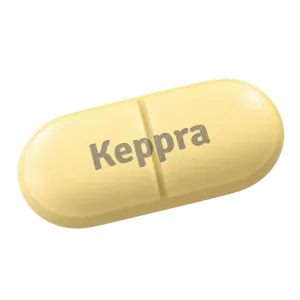
Keppra

Active ingredient: Levetiracetam
250mg 500mg
From $ 207.48
pills
4 (4)

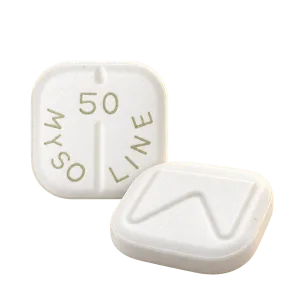
Mysoline

Active ingredient: Primidone
250mg
From $ 163.80
tablets
3.8 (3)

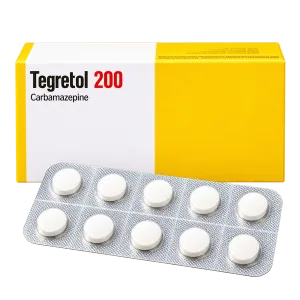
Tegretol Current

Active ingredient: Carbamazepine
100mg 200mg 400mg
From $ 57.72
pills
3.7 (3)

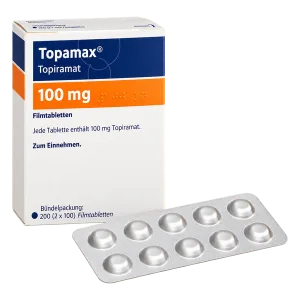
Topamax

Active ingredient: Topiramate
100mg 200mg 25mg 50mg
From $ 156.00
pills
3.8 (4)

Comparison table: Epilepsy

Common questions

How does Tegretol differ from valproic acid?

Tegretol contains carbamazepine, which primarily reduces repetitive sodium-channel firing. Valproic acid has broader mechanisms and is used for different seizure contexts, including some generalized epilepsy syndromes. Carbamazepine has a larger enzyme-inducing interaction burden, while valproic acid carries major pregnancy-related concerns. NICE guidance updated in 2025 recommends choosing treatment according to seizure type and individual clinical factors.

Can Tegretol be used during pregnancy or breastfeeding?

Pregnancy requires an early review because untreated seizures and carbamazepine exposure both involve risks. Do not stop Tegretol suddenly during pregnancy, since breakthrough seizures can be dangerous. Folic acid, dose review, prenatal monitoring, and infant observation after birth may be part of the care plan. MotherToBaby’s 2024 carbamazepine fact sheet supports individualized pregnancy and breastfeeding decisions.

Does a previous severe carbamazepine rash rule out Tegretol?

Yes. A past severe carbamazepine-related rash, including Stevens-Johnson syndrome or toxic epidermal necrolysis, is a major reason not to restart Tegretol. Re-exposure can trigger another serious reaction. A clinician should also review reactions to related medicines and relevant genetic risk factors before any carbamazepine treatment. The FDA label published in 2018 carries prominent warnings about severe dermatologic reactions.

What should be discussed before starting Tegretol?

Discuss seizure type or facial-pain diagnosis, prior medicine reactions, pregnancy plans, liver or blood disorders, low sodium, mood symptoms, and every medicine or supplement being used. Hormonal contraception, anticoagulants, antidepressants, antipsychotics, and antiseizure medicines deserve close review. Baseline blood counts, liver tests, sodium, and genetic-risk assessment may be appropriate for some patients. The WHO Model Formulary 2008 describes carbamazepine as a medicine where interactions and clinical monitoring can materially affect treatment.

What is the best time of day to take Tegretol?

The best timing is the schedule set for the prescribed formulation and purpose of treatment. Consistent daily timing matters more than choosing a universally preferred morning or evening dose. If Tegretol causes drowsiness, the prescriber may adjust the schedule, but changes should not be made independently. Health Canada’s 2020 product information advises individualized dosing because carbamazepine response varies across patients.

Do you offer anonymous delivery?

Your order will be securely packed and shipped within 24 hours. This is exactly what your package will look like (images of an actual item sent). It has the size and look of a regular private letter (24x11x0.7 cm) and its contents cannot be seen.

Customer Feedback on Tegretol

3.7
Based on 3 reviews
Ian, 49 Saskatoon Four months
Verified
Rating: 4 out of 5

I used Tegretol for trigeminal neuralgia. The sharp facial pain settled after my dose was adjusted, though I felt dizzy for the first week. Taking it at the same times each day made the routine easier.

Oct 23, 2026
Christopher, 34 Regina Six months
Verified
Rating: 3.5 out of 5

My focal seizures became less frequent after the gradual dose changes. I had double vision after one increase, so my neurologist changed the plan rather than having me push through it. I also kept a note of every other medicine I used.

Nov 5, 2026
Gary, 26 Quebec City Two months
Verified
Rating: 3.5 out of 5

The tablets helped, but the early fatigue was frustrating and I stopped driving until it settled. I learned that missing doses affected how I felt the next day, so I set reminders.

Nov 19, 2026

Sources

  1. Novartis Pharmaceuticals Canada Inc. (2020). Tegretol Product Monograph
  2. U.S. Food and Drug Administration (2018). Tegretol (carbamazepine) Prescribing Information
  3. National Institute for Health and Care Excellence (2025). Epilepsies in Children, Young People and Adults: Diagnosis and Management
Get our free app Shop faster and track your orders 3.9 · 525 reviews Install