My knees felt less stiff after sitting at my desk. I still had discomfort after long hikes, so I did not treat it as a complete solution.
Shallaki contains the botanical resin traditionally identified as Boswellia serrata, used in Ayurvedic practice to support joint comfort and mobility. It is intended for adults seeking plant-based support for normal connective-tissue function, flexibility, and movement.
Overview
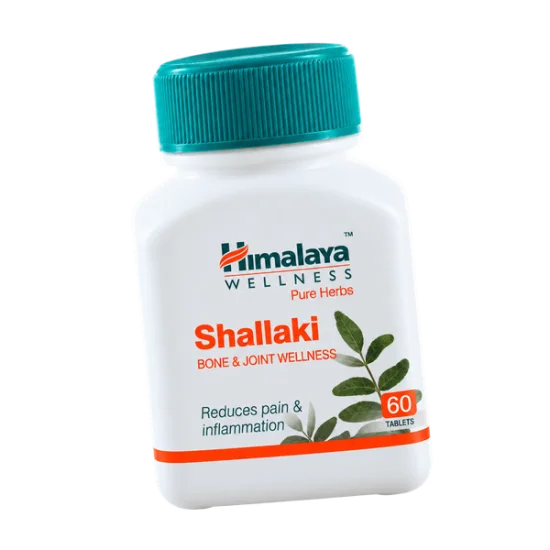
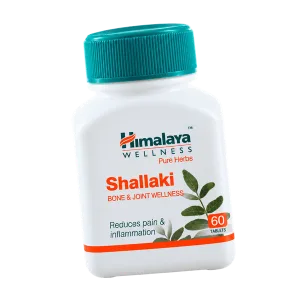
Shallaki is a plant-based oral supplement containing botanical resin traditionally identified as Boswellia serrata. It belongs to the category of botanical products used for bone and joint wellness, with naturally occurring boswellic acids as its characteristic compounds. The tablets are supplied in a bottle of 60.
Dosage and administration
Shallaki tablets are taken orally. The appropriate amount depends on the product strength and the individual, so there is no single amount that suits everyone.
Use the product-specific directions for the number of tablets and frequency. Do not increase the amount because joint discomfort has not improved quickly. Herbal products may require consistent use over time, and a higher intake does not guarantee a stronger result.
Practical administration points include:
- Swallow the tablets with water.
- Take them with food if they cause stomach discomfort.
- Use the same general time of day to reduce missed doses.
- Do not double the next intake after forgetting a dose.
- Avoid combining several Boswellia products unless a clinician has reviewed the total intake.
- Keep a record of other medicines and supplements used for joint pain.
If a dose is missed, take the next scheduled dose when appropriate. Avoid taking extra tablets to compensate.
A course length depends on the goal, symptom pattern, and response. Persistent pain, worsening stiffness, night pain, or reduced mobility needs a clinical assessment rather than repeated dose increases.
Formulation
Shallaki is the traditional name used for Boswellia serrata, a tree whose gum resin contains naturally occurring boswellic acids. The resin is also called Boswellia Serrata Gum, Salai Gum, Salai Guggul, or Gond Kundru in different Ayurvedic and botanical references. The term frankincense is used for resins from several Boswellia species, although the exact species and preparation matter when assessing a supplement.
Shallaki tablets are intended for bone and joint wellness. The product description identifies support for reducing pain and inflammation, while the botanical basis relates to compounds in Boswellia resin that influence inflammatory pathways.
The formulation is presented as tablets in a bottle containing 60 tablets. A tablet provides a measured oral format that is easier to use than raw gum resin, which can vary in texture, concentration, and palatability.
Traditional Names and Botanical Origins
Boswellia serrata belongs to the Burseraceae family. Its resin is collected from the trunk and branches, then processed for traditional herbal use. Ayurvedic texts have used names such as Shallaki and Salai Guggul for preparations associated with musculoskeletal comfort.
Botanical identity does not by itself establish a fixed dose. The amount suitable for one person can differ according to the preparation, strength, diet, other medicines, and the reason for use.
How it affects the body
Boswellia resin contains boswellic acids, a group of plant compounds studied for effects on inflammatory signalling. Laboratory and clinical research has focused on 5-lipoxygenase, an enzyme involved in the production of leukotrienes. Leukotrienes can contribute to inflammatory activity in tissues, including structures around joints [1].
This mechanism gives Shallaki a different profile from products that mainly provide minerals, collagen, or general nutritional support. The intended role is support for normal joint function, flexibility, and physical motion rather than direct replacement of cartilage or treatment of a structural joint disorder.
Inflammation is only one part of joint discomfort. Mechanical strain, osteoarthritis, previous injury, muscle weakness, body weight, sleep, and activity patterns may also influence symptoms. A botanical supplement can support a joint-care plan, but it cannot correct a torn ligament, severe instability, or a joint infection.
The product’s stated focus is bone and joint wellness. It is not presented as a corticosteroid, disease-modifying antirheumatic drug, or conventional anti-inflammatory medicine.
Therapeutic indications
Shallaki tablets are intended for bone and joint wellness. The product description identifies support for reducing pain and inflammation, while the botanical basis relates to compounds in Boswellia resin that influence inflammatory pathways.
Common mistakes
Several practical mistakes can reduce tolerability or make the response difficult to assess:
- Taking extra tablets because pain has not changed after one or two days.
- Combining Shallaki with another Boswellia supplement.
- Taking the tablet on an empty stomach despite repeated digestive discomfort.
- Continuing self-treatment despite a hot, swollen, red joint.
- Forgetting to mention the supplement before surgery.
- Assuming that a tablet and a raw resin have equal strength.
- Using Shallaki as the only response to progressive loss of movement.
- Stopping prescribed treatment without medical direction.
- Giving adult tablets to a child or teenager.
- Ignoring a new rash, wheezing, facial swelling, or severe stomach symptoms.
Pain relief can also be overestimated when activity changes at the same time. Record the main symptom, walking tolerance, stiffness, and any digestive effects instead of judging the product only by one unusually good or bad day.
Reasons not to use it
- Previous allergic reaction to Boswellia, its resin, or any component of the tablet.
- Pregnancy and breastfeeding without qualified clinical assessment.
- Use of anticoagulants or antiplatelet medicines.
- Use of prescription anti-inflammatory treatment.
- Bleeding disorder.
- Planned surgery.
- Chronic liver or kidney disease.
- Several medicines that cause stomach irritation.
- Treatment for an autoimmune or inflammatory condition.
Boswellia may affect medicines through changes in inflammatory pathways or drug metabolism, although the clinical importance of individual interactions is not always established. A pharmacist or prescriber should review the full medicine list when anticoagulants, antiplatelet drugs, immunosuppressants, or regular anti-inflammatory medicines are involved [2].
When this is not for you
Shallaki may not be suitable if you have previously reacted to Boswellia or any tablet ingredient. Speak with a qualified clinician before use if you are pregnant or breastfeeding, take medicines that affect bleeding or inflammation, have liver or kidney disease, are preparing for surgery, or are being treated for an autoimmune condition. Stop using it and seek urgent help for facial swelling, throat tightness, breathing difficulty, faintness, or a rapidly spreading rash.
Possible side effects
Reported concerns with Boswellia preparations include digestive symptoms such as nausea, loose stools, heartburn, or upper-abdominal discomfort. Sensitivity reactions can also occur.
Common Tolerability Concerns
Possible unwanted effects include:
- Stomach discomfort or burning.
- Nausea or loose stools.
- Headache.
- Skin rash or itching.
- Worsening symptoms of reflux.
- An allergic reaction to Boswellia or another tablet component.
Upper-abdominal discomfort may be more noticeable when the tablet is taken without food. Persistent digestive symptoms should not be managed by repeatedly increasing the dose.
Comparison
Shallaki and other botanical products can have different targets. Boswellia research focuses on inflammatory signalling and joint comfort. Ashwagandha, also called Ashvagandha, is traditionally used in relation to stress adaptation, sleep, and general vitality rather than as a joint-focused Boswellia preparation.
Nutritional joint supplements may focus on collagen peptides, vitamins, minerals, or other structural ingredients. Their intended roles differ from a resin extract. Comparing products by category is more useful than assuming that all joint supplements have the same mechanism.
| Approach | Primary focus | Main limitation |
|---|---|---|
| Shallaki or Boswellia | Joint comfort, inflammatory pathways, mobility support | Product strength and evidence vary |
| Ashwagandha or Ashvagandha | Stress response and general adaptogenic support | Not a direct substitute for joint-focused use |
| Nutritional joint support | Structural or nutritional support | Benefits depend on the specific nutrients and indication |
Boswellia should not be presented as a replacement for prescribed treatment when inflammatory arthritis, gout, infection, or another diagnosed condition is involved. It may fit a broader plan that also includes physical activity, strengthening, weight management, sleep, and medical care.
What doctors say
In clinical practice, doctors usually frame Boswellia as supportive care for joint comfort rather than a treatment that reverses joint damage. The response may be more noticeable in mild or moderate discomfort than in severe structural disease, though individual outcomes differ.
A physician will usually ask about the location and duration of pain, morning stiffness, swelling, previous injuries, mobility, sleep, and current medicines. These details help separate everyday mechanical discomfort from conditions requiring targeted treatment.
Consistency matters because intermittent use makes it difficult to judge response. A short period of use followed by several missed doses can create the impression that the product has failed, while immediate dose escalation can increase unwanted effects without improving mobility.
The main clinical limitation is variation between Boswellia preparations. Studies may use extracts with a defined boswellic-acid content, while a commercial tablet may use a different preparation. Health Canada’s natural health product framework places emphasis on product-specific evidence, quality, and safety information rather than treating every product with the same botanical name as identical [3].
Comparison
Common questions
How does Shallaki differ from other joint-support ingredients?
Shallaki is associated with Boswellia serrata resin and boswellic acids, while other joint-support ingredients may provide nutritional, structural, or general wellness support. Boswellia research centres on inflammatory signalling, including the 5-lipoxygenase pathway. Health Canada’s 2021 natural health product evidence guidance supports assessing each formulation according to its own ingredients, dose, and evidence rather than assuming that all botanical products are equivalent [4]. The practical difference is mechanism: Shallaki is a Boswellia-based botanical, not a generic mixture of all joint nutrients.
How should Shallaki be stored at home or while travelling?
Store the bottle in a cool, dry place away from excess heat, humidity, and direct sunlight. Keep it closed between uses and out of reach of children. During travel, avoid leaving tablets in a hot vehicle, near a bathroom shower, or in a place exposed to condensation. WHO guidance published in 2023 describes moisture, heat, and light as important storage considerations for medicinal products and supplements [5].
Can Shallaki affect driving, concentration, or work with machinery?
Shallaki is not generally used as a sedative, and routine use is not expected to impair concentration in most adults. Individual responses can differ, especially if nausea, headache, dizziness, or an allergic reaction develops. Health Canada’s 2022 natural health product safety guidance supports avoiding safety-sensitive tasks when a new product causes symptoms that could affect alertness or coordination. Do not drive or operate machinery if you feel unwell after taking a tablet.
Can Shallaki cause stomach discomfort?
Yes. Nausea, loose stools, reflux, or upper-abdominal discomfort can occur with oral Boswellia preparations, although not every user experiences them. Taking the tablet with food may improve mild stomach irritation, but persistent or severe symptoms need assessment. Health Canada’s 2023 Boswellia serrata monograph emphasizes reviewing the complete herbal preparation, since tolerability can vary between extracts and dosage forms.
Is Shallaki suitable for people under 18?
Shallaki should not be given routinely to children or adolescents without specific clinical direction. Safety and dosing requirements can differ substantially between adults and younger people. Health Canada’s 2022 natural health product safety guidance supports age-appropriate assessment, especially when evidence for a particular formulation in minors is limited. Adult tablets should not be used as a substitute for a child-specific recommendation.
Do you offer anonymous delivery?
Your order will be securely packed and shipped within 24 hours. This is exactly what your package will look like (images of an actual item sent). It has the size and look of a regular private letter (24x11x0.7 cm) and its contents cannot be seen.
Customer Feedback on Shallaki
The first few days were uneventful, and I noticed easier movement after a few weeks. Taking it before breakfast caused mild stomach burning, which settled when I took it with food.
I hoped for a quick change, but the improvement was gradual. It helped me stay more comfortable during normal walking, although heavy lifting still brought the pain back.
I stopped after developing loose stools. The symptom cleared after stopping, so I did not restart it.
After several weeks my morning stiffness seemed easier to manage. I still needed medical treatment for a swollen joint, and the tablets were only one part of my routine.
Sources
- World Health Organization (1999). WHO Monographs on Selected Medicinal Plants, Volume 1
- Health Canada (2023). Compendium of Monographs — Boswellia serrata
- Health Canada (2022). Natural health product guidance on quality, safety, and efficacy
- Health Canada (2021). Natural health product evidence guidance
- World Health Organization (2020). Good storage and distribution practices for medical products