Ian, 52 - Saint John, used the recommended tablet regimen for several weeks for recurring knee stiffness. He said walking after sitting at work felt easier, although the change was gradual and he still needed stretching.
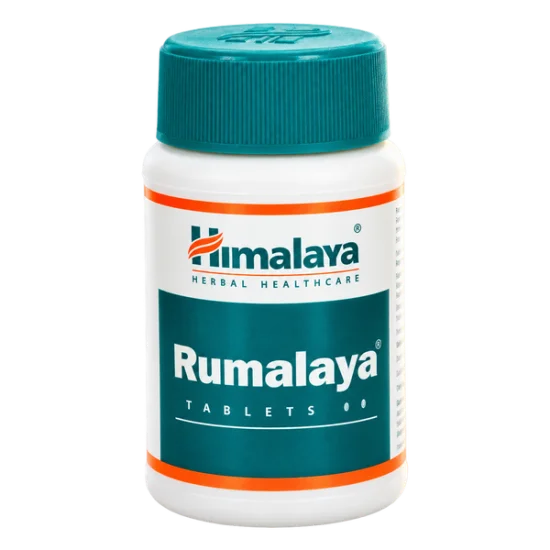
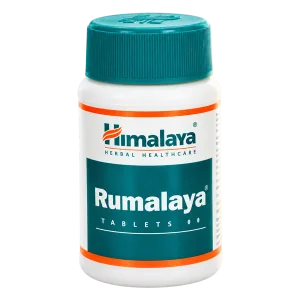
Rumalaya is an herbal healthcare tablet for adults seeking support with joint comfort and everyday mobility. Its oral format is intended for systemic use, while the appropriate dose is decided individually according to age, other medicines, and health conditions.
Overview
The formulation belongs to the broader category of botanical joint-support products. Its purpose is to help maintain musculoskeletal comfort during normal daily movement, including walking, climbing stairs, and household activity. Traditional herbal products can contain several plant-derived substances with different pharmacological actions.
The World Health Organization describes traditional and complementary products as therapies that require attention to quality, safety, and appropriate use [1].
Dosage and administration
Rumalaya tablets are taken by mouth. The dose is decided individually, taking age, other medicines, and health conditions into account.
Use should follow the individual regimen established for the product. Tablets should be swallowed with water unless a clinician or product-specific direction provides another method. Do not change the number of tablets, double a missed dose, or extend the course solely because symptoms have not changed quickly.
Useful administration principles include:
- Take each dose at a consistent time.
- Use water when swallowing the tablet.
- Take the tablet with food if stomach discomfort occurs and the individual regimen permits it.
- Do not crush or split a tablet unless that option is specifically authorised for the product.
- If a dose is missed, take the next scheduled dose rather than doubling the amount.
- Stop and seek prompt medical assessment if a severe allergic reaction, marked abdominal pain, jaundice, or unusual bleeding develops.
The duration of use depends on the reason for taking Rumalaya and the response observed. A joint-support product should not delay evaluation when symptoms continue, worsen, or interfere with sleep and movement.
Formulation
The product is presented as a herbal healthcare tablet. The pack information identifies the product category and dosage form, while the exact active botanical profile should be considered when evaluating suitability alongside medicines.
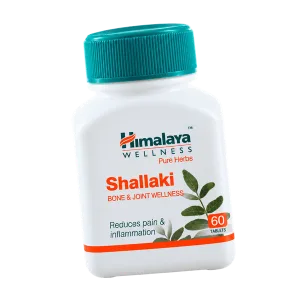
Boswellia, also called Shallaki, is one botanical ingredient studied in joint-support research. Boswellia serrata resin extracts have been investigated for effects on 5-lipoxygenase and leukotriene pathways, which participate in inflammatory signalling. Research on Boswellia preparations has examined joint discomfort and function, though results can vary according to extract standardisation, dose, and study design. The European Medicines Agency evaluates herbal substances through monographs and assessment reports rather than treating every botanical preparation as interchangeable [2].
Rumalaya should not be assumed to have the same composition as every Boswellia product. Botanical products may differ in extract ratio, plant part, standardisation, and accompanying ingredients. Those differences can change both expected effects and interaction potential.
| Feature | Rumalaya | Botanical joint-support category |
|---|---|---|
| Dosage form | Oral tablet in a bottle | Tablets, capsules, powders, or liquids |
| Main purpose | Support for joint comfort and mobility | Support for musculoskeletal wellbeing |
| Onset | Gradual response with consistent use | Depends on the formulation and individual response |
A practical detail often missed is that herbal products are not automatically free from interactions. Plant extracts can influence gastrointestinal tolerance, bleeding tendency, liver metabolism, or immune activity depending on their constituents.
How it affects the body
Boswellia serrata resin extracts have been investigated for effects on 5-lipoxygenase and leukotriene pathways, which participate in inflammatory signalling. Their effects may involve inflammatory signalling, tissue comfort, and perceived stiffness rather than the rapid pain control associated with conventional analgesics.
Therapeutic indications
Rumalaya may be selected by adults who want botanical support for joint comfort, mobility, and day-to-day physical activity. It may be relevant when stiffness develops after prolonged sitting, repetitive movement, or age-related changes in joint function.
The expected benefits are supportive rather than immediate. A person may notice easier movement, less awareness of stiffness, or improved comfort during routine activity after consistent use. The response differs between individuals because joint symptoms can arise from osteoarthritis, tendon irritation, muscle strain, inflammatory disease, or injury.
Rumalaya does not replace assessment of symptoms such as:
- A hot, red, suddenly swollen joint
- Severe pain after a fall or impact
- Progressive weakness or loss of movement
- Fever with joint pain
- Unexplained weight loss with persistent musculoskeletal symptoms
- Numbness, loss of balance, or new difficulty walking
A botanical joint-support tablet may fit mild, recurring discomfort. Persistent or worsening symptoms need a clearer diagnosis because the treatment for osteoarthritis differs from the treatment for gout, rheumatoid arthritis, nerve compression, or infection.
Common mistakes
Several everyday mistakes can make a joint-support product seem ineffective or create avoidable risk:
- Increasing the dose because relief is not immediate
- Taking double the next dose after forgetting one
- Combining Rumalaya with several new supplements
- Continuing despite a spreading rash or persistent abdominal pain
- Using it to delay assessment of a hot, swollen joint
- Forgetting to mention herbal products before surgery
- Assuming that plant-based products cannot interact with prescription medicines
- Changing the timing from day to day
- Judging the product after only one or two doses
- Giving an adult tablet to a person under 18 without medical direction
A second common error is confusing symptom relief with correction of the underlying problem. Reduced discomfort can improve movement, but it does not establish whether the cause is osteoarthritis, tendon injury, nerve compression, or inflammatory disease.
Reasons not to use it
Rumalaya is not suitable for everyone. Not for you if you are pregnant or breastfeeding, under 18, have significant liver or kidney disease, or take anticoagulants without medical guidance. Avoid use or obtain a medical decision first in the following situations:
- Previous allergy to Rumalaya or any botanical component
- Pregnancy or breastfeeding
- Significant liver disease
- Significant kidney disease
- A history of gastrointestinal bleeding
- Treatment with anticoagulants or antiplatelet medicines
- Planned surgery
- Use in a child or adolescent under 18
- Unexplained joint swelling, fever, or severe pain
- Multiple prescription medicines with a narrow therapeutic range
When this is not for you
People preparing for surgery should raise the use of herbal products well before the procedure because some botanicals may affect bleeding, blood pressure, sedation, or medicine metabolism.
Children and adolescents should not use an adult herbal tablet regimen without a paediatric assessment. Pregnancy and breastfeeding also require a specific decision because safety data may not cover every botanical combination.
Older adults may have reduced kidney or liver reserve and often use several medicines. That combination increases the importance of an individual review before starting.
Possible side effects
Herbal tablets can cause adverse effects even when they are plant-derived. Possible problems include nausea, abdominal discomfort, loose stools, headache, rash, itching, or sensitivity to one of the botanical components.
Stop using the product and obtain urgent medical help for facial or throat swelling, breathing difficulty, widespread hives, fainting, severe vomiting, black stools, vomiting blood, or yellowing of the skin. These symptoms can indicate a serious allergic, gastrointestinal, or liver-related problem.
People with sensitive digestion may tolerate an oral botanical product better when it is taken with food, provided the individual regimen allows this. Persistent stomach pain should not be dismissed as a normal adjustment effect.
Drug interactions deserve attention. Extra caution is appropriate with:
- Anticoagulants or antiplatelet medicines
- Regular anti-inflammatory medicines
- Corticosteroids or medicines that affect immune activity
- Diabetes treatments
- Medicines processed extensively by the liver
- Multiple herbal products used at the same time
The Natural and Non-prescription Health Products Directorate of Health Canada requires attention to product-specific evidence, risk information, and consumer directions for natural health products [3]. A pharmacist or doctor should review the complete medicine list when a person uses warfarin, apixaban, rivaroxaban, clopidogrel, insulin, or several anti-inflammatory medicines.
Comparison
Rumalaya occupies a different place from a prescription anti-inflammatory, a standard analgesic, or a local physical treatment. The main distinction is its herbal oral approach and the expectation of gradual supportive use.
| Approach | Main role | Practical limitation |
|---|---|---|
| Rumalaya tablet | Oral botanical support for joint comfort and mobility | Response may be gradual and varies between individuals |
| Conventional oral anti-inflammatory | Reduces pain and inflammation through established drug mechanisms | Can cause gastrointestinal, kidney, blood-pressure, or cardiovascular concerns in susceptible people |
| Physiotherapy and therapeutic exercise | Improves movement, strength, and functional control | Requires regular participation and an appropriate diagnosis |
Clinicians often combine approaches according to the cause of symptoms. Exercise may be central for stiffness linked to weakness or reduced mobility. A medicine may be needed for an acute inflammatory flare. A botanical product may be considered as supportive care when symptoms are mild and there are no relevant contraindications.
Rumalaya is not a substitute for urgent treatment after trauma or for disease-modifying therapy in inflammatory arthritis. Its role is narrower: supporting comfort and movement as part of a broader plan.
What doctors say
In clinical practice, doctors usually assess the cause, duration, and pattern of joint symptoms before recommending supportive treatment. A product aimed at comfort may be reasonable for mild, stable symptoms, while persistent morning stiffness, repeated swelling, or reduced function may indicate a condition requiring targeted evaluation.
Physicians also examine the complete medicine list. An herbal tablet can add to gastrointestinal irritation or bleeding risk when combined with regular anti-inflammatory treatment, anticoagulants, or antiplatelet therapy.
Expectations should remain practical. Improvement may be gradual, and absence of benefit after a reasonable trial calls for reassessment rather than automatic dose escalation. The National Center for Complementary and Integrative Health describes the evidence for herbal products as dependent on the specific plant, preparation, and clinical outcome being studied [4].
One useful clinical habit is to record the symptom being monitored. “My knees feel better” is less informative than “stairs were easier on four days this week, and stiffness after sitting lasted less time.”
Comparison
Common questions
Can Rumalaya be combined with anti-inflammatory medicines or supplements?
Combining Rumalaya with regular anti-inflammatory medicines requires an individual review because both approaches may contribute to stomach irritation or other adverse effects. The same caution applies to anticoagulants, antiplatelet medicines, corticosteroids, and several herbal supplements. Health Canada guidance for natural health products supports reviewing possible interactions rather than assuming that botanical products are interaction-free. This principle remains relevant in 2026 when people commonly use several non-prescription products together.
How soon can the effect of Rumalaya become noticeable?
A supportive herbal tablet may produce a gradual change in comfort rather than an immediate effect. The time depends on the cause of symptoms, the formulation, regular use, and individual response. Evidence reviewed by the European Medicines Agency in its 2018 assessment is specific to the preparation studied, so findings from one Boswellia extract cannot automatically predict the response to every product. Persistent or worsening symptoms need reassessment instead of dose escalation. The 2018 assessment does not establish an onset time for every commercial formulation.
Can Rumalaya be used during pregnancy or breastfeeding?
Pregnancy and breastfeeding require a product-specific medical decision before use. Botanical combinations may not have sufficient safety data for every stage of pregnancy or lactation, and plant constituents can differ between preparations. The WHO's 2019 report promotes informed, quality-focused use of traditional and complementary products, with special care for vulnerable groups. Do not begin Rumalaya during pregnancy or breastfeeding without a clinician reviewing the product and the person’s health history.
Is Rumalaya suitable for people under 18?
Rumalaya should not be given to a child or adolescent under 18 without an appropriate medical assessment. Adult herbal tablet regimens may not be suitable for a developing body, and the cause of pain in a younger person may require a different evaluation. Health Canada's 2022 natural health product framework does not make every adult formulation suitable for paediatric use. A doctor should assess persistent pain, injury, swelling, or reduced movement in someone under 18.
Can Rumalaya affect driving, concentration, or machinery work?
Rumalaya is not intended to produce sedation, but any person who develops dizziness, drowsiness, weakness, or visual disturbance should avoid driving and machinery work until symptoms have resolved. The risk may increase when it is combined with sedating medicines, alcohol, or products that affect the central nervous system. The WHO's 2019 safety principles for traditional products include observing individual tolerability after starting use. The first doses should be taken at a time when any unexpected reaction can be managed safely.
What should be discussed with a doctor before starting Rumalaya?
Discuss allergies, pregnancy or breastfeeding, liver or kidney disease, planned surgery, gastrointestinal bleeding, and all prescription and non-prescription medicines. Mention anticoagulants, antiplatelet medicines, diabetes treatments, corticosteroids, and other herbal products specifically. The European Medicines Agency's 2018 assessment evaluates herbal substances according to the evidence available for each preparation, so product identity and formulation matter. A doctor should also assess a hot swollen joint, fever, severe injury, unexplained weakness, or persistent night pain before supportive treatment begins.
Is Rumalaya suitable for older adults?
Older adults may use herbal joint-support products only after considering kidney and liver function, fall risk, and the number of medicines already being taken. Multiple medicines can increase the chance of interactions even when each product is tolerated alone. Health Canada's 2022 approach to natural health products supports attention to individual risk factors and product-specific precautions. A medication review is useful when an older adult takes anticoagulants, blood-pressure medicines, diabetes treatment, or regular anti-inflammatory drugs.
Do you offer anonymous delivery?
Your order will be securely packed and shipped within 24 hours. This is exactly what your package will look like (images of an actual item sent). It has the size and look of a regular private letter (24x11x0.7 cm) and its contents cannot be seen.
Customer Feedback on Rumalaya
Steven, 51 - Windsor, tried the recommended Rumalaya tablet regimen for several weeks during a period of shoulder discomfort. He reported modest improvement after regular use but stopped when stomach upset continued for several days.
Adam V., 43 - Moncton, used the recommended tablet regimen for several weeks for occasional back and joint discomfort after physical work. He found the routine convenient, though the product did not help during a sharp flare after lifting.
Sources
- World Health Organization (2019). WHO global report on traditional and complementary medicine 2019.
- European Medicines Agency (2018). Assessment report on Boswellia serrata Roxb. ex Colebr., gum-resin.
- Health Canada, Natural and Non-prescription Health Products Directorate (2022). Compendium of Monographs.
- National Center for Complementary and Integrative Health (2020). Herbs at a Glance: Boswellia.