I started with a lower dose before moving up to 300 mg. After the first week, I was sleepy until late morning, but after several weeks my racing thoughts became less disruptive.
Seroquel is used for adults with schizophrenia or bipolar disorder. Its quetiapine component helps manage symptoms by influencing dopamine and serotonin signalling in the brain.
Overview
Seroquel contains quetiapine, which changes signalling through dopamine and serotonin receptors in the brain. It is prescribed for adults with conditions such as schizophrenia and bipolar disorder, with the amount per intake set individually according to the person’s symptoms, response, and tolerability. The tablet is intended for oral use under an individualized treatment plan.
Dosage and administration
Seroquel is supplied here as tablets for oral administration. The amount per intake is set individually rather than being one fixed number for every person. Immediate-release and extended-release quetiapine formulations have different administration schedules, so they should not be substituted without a prescriber’s direction.
- Take the prescribed amount at the prescribed time.
- Swallow the tablet with water.
- Do not crush, chew, or split a tablet unless the specific formulation is designed for that use.
- Take doses at a consistent time each day.
- Do not increase, reduce, or stop quetiapine without a planned medical review.
- If a dose is missed, take it when remembered unless the next dose is near; do not double the next intake.
A clinician may begin with a lower amount and increase it gradually. A prescription may use a bedtime schedule when sedation is prominent, while other schedules may be selected for symptom coverage across the day. The appropriate plan depends on diagnosis, age, liver function, other medicines, and previous response.
A practical detail: quetiapine tablets can look deceptively simple to divide, but altering a modified-release tablet can change how quickly quetiapine enters the bloodstream. The release type must be confirmed before any tablet is split.
Formulation
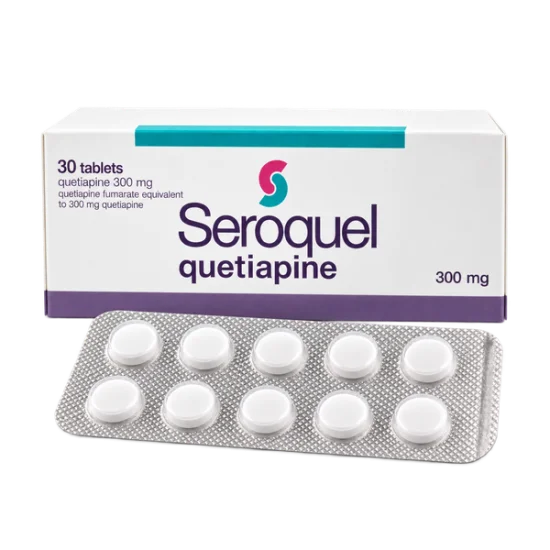
The product supplied on this page contains quetiapine in tablet form, with 30 tablets per pack. The amount taken at each intake is selected individually rather than being one fixed amount for every person.
How it affects the body
Quetiapine interacts with several neurotransmitter receptors rather than acting through one pathway. It blocks dopamine D2 receptors and serotonin 5-HT2A receptors in the central nervous system. This combination is associated with antipsychotic activity and may produce a different side-effect pattern from medicines acting mainly on dopamine.
Serotonin 5-HT1A activity also contributes to quetiapine’s wider pharmacological profile. Its metabolite, norquetiapine, has activity at several receptors, including effects relevant to mood and anxiety symptoms. Histamine H1 receptor blockade helps explain somnolence and increased appetite. Alpha-1 adrenergic blockade can contribute to dizziness and postural hypotension.
In plain language, quetiapine lowers excessive dopamine signalling in pathways associated with psychosis while modifying serotonin signalling in other brain circuits. The same receptor activity that supports symptom control can also make a person sleepy, light-headed, or hungry. The EMA describes these receptor effects in the product information for quetiapine [2].
Therapeutic indications
Seroquel belongs to the atypical antipsychotic class. Its active ingredient, quetiapine, is used in the management of schizophrenia and bipolar disorder, including manic episodes and depressive episodes associated with bipolar illness. Depending on the formulation and clinical plan, quetiapine may also be used alongside another medicine for major depressive disorder. Health Canada product information describes quetiapine as a prescription treatment requiring dose selection and monitoring based on the individual patient [1]. Treatment response should be reviewed before any further dose change.
Management of schizophrenia
Schizophrenia can involve hallucinations, delusions, disorganised thinking, reduced motivation, and social withdrawal. Quetiapine helps reduce psychotic symptoms by influencing dopamine and serotonin signalling. Keeping treatment continuous may reduce the risk of symptom recurrence, while abrupt stopping can cause withdrawal symptoms or return of illness.
Untreated schizophrenia may interfere with work, relationships, sleep, and personal safety. Clinical treatment usually combines medication review with assessment of mood, sleep, functioning, substance use, and physical health, consistent with NICE guidance.
Common mistakes
- Stopping quetiapine suddenly because sleep improves.
- Taking an extra tablet after a difficult night.
- Crushing a tablet without confirming whether it is immediate-release or extended-release.
- Driving before understanding the degree of morning sedation.
- Ignoring rapid weight gain, excessive thirst, or frequent urination.
- Drinking alcohol to counter anxiety or help with sleep.
- Missing appointments where blood pressure, weight, glucose, lipids, or blood counts are reviewed.
- Treating restlessness as ordinary anxiety instead of reporting a possible extrapyramidal symptom.
- Sharing tablets with a family member who has similar symptoms.
One subtle mistake is judging the medicine only by its sedative effect. Falling asleep quickly does not prove that the antipsychotic treatment is controlling psychosis or stabilising mood.
Reasons not to use it
Quetiapine is contraindicated in anyone with a known hypersensitivity to quetiapine or an ingredient in the tablet. It also requires caution when a person has significant central nervous system depression, coma, severe liver disease, cardiovascular disease, low blood pressure, diabetes, seizures, or a history of low white blood cell counts.
Bone-marrow suppression is a precaution requiring blood-count monitoring rather than a universal contraindication. Coma and severe central nervous system depression also require urgent medical management, because additional sedation may impair breathing or protective reflexes.
When this is not for you
This medication is not suitable for you if:
- You have previously experienced an allergic reaction to quetiapine.
- You are unconscious or have severe central nervous system depression.
- You have a serious medical condition that makes sedation or blood-pressure reduction hazardous.
- You have uncontrolled diabetes or severe metabolic disease without a monitoring plan.
- You have a history of severe neutropenia or bone-marrow problems that could worsen with treatment.
- You have current suicidal thoughts, rapidly worsening depression, or unusual behavioural changes requiring urgent assessment.
Possible side effects
Quetiapine commonly causes somnolence, sedation, dizziness, dry mouth, constipation, increased appetite, and weight gain. These effects may be strongest during initiation or after a dose increase. The Canadian product monograph also describes metabolic changes, including increases in blood glucose, lipids, and body weight, which may require monitoring [3].
Sedation can affect driving, studying, childcare, and work with machinery. Dizziness may be worse when standing quickly, especially during early treatment or after an increase. Extrapyramidal symptoms such as tremor, muscle stiffness, restlessness, or slowed movement can occur, although their frequency varies with dose and patient factors.
More serious symptoms require prompt clinical assessment:
- Fainting, severe dizziness, or a fast or irregular heartbeat.
- High fever, marked muscle stiffness, confusion, or heavy sweating.
- New uncontrolled movements of the tongue, jaw, face, or limbs.
- Severe constipation with abdominal swelling or vomiting.
- Symptoms of high blood sugar, such as unusual thirst, frequent urination, or marked weakness.
- A major change in mood, suicidal thoughts, or unusual behaviour.
- Signs of a severe allergic reaction, including facial swelling or breathing difficulty.
Weight can increase quietly. A person may notice only that clothing fits differently after several weeks, so weight, waist measurement, blood pressure, glucose, and lipid monitoring can reveal changes earlier.
A second practical point concerns constipation. Reduced activity, increased appetite, and anticholinergic effects can combine to make bowel symptoms more persistent; prolonged constipation, severe pain, or vomiting needs medical attention.
Quetiapine is mainly metabolised through the CYP3A4 enzyme pathway. Strong CYP3A4 inhibitors can raise quetiapine exposure, while strong CYP3A4 inducers can lower it and reduce symptom control. Examples of clinically relevant interacting medicines include certain antifungals, some macrolide antibiotics, selected HIV medicines, carbamazepine, and rifampicin. The exact interaction depends on the medicine and treatment plan.
Alcohol can add to quetiapine’s sedative and blood-pressure-lowering effects. Combining them may increase drowsiness, poor coordination, confusion, falls, and postural hypotension. Health Canada’s quetiapine safety information advises avoiding alcohol during treatment [4].
| Interaction | Possible clinical effect |
|---|---|
| Alcohol or other CNS depressants | More sedation, impaired coordination, and low blood pressure |
| Strong CYP3A4 inhibitors | Higher quetiapine exposure and more adverse effects |
| Strong CYP3A4 inducers | Lower quetiapine exposure and reduced treatment response |
Tell the prescriber about medicines for sleep, anxiety, pain, allergies, seizures, infection, HIV, blood pressure, and heart rhythm. Grapefruit products can affect CYP3A4 activity and may be unsuitable with quetiapine.
Comparison
Atypical antipsychotics share some clinical uses but differ in receptor activity, sedation, metabolic effects, movement-related effects, and prolactin effects. A prescriber may select another option when quetiapine causes excessive daytime sleepiness, weight gain, dizziness, or insufficient symptom control.
| Pharmacological approach | Main clinical trade-off |
|---|---|
| Quetiapine-based treatment | Sedation and metabolic effects may be prominent; movement symptoms may still occur |
| More activating atypical antipsychotic approach | May cause restlessness, insomnia, or agitation |
| Lower-sedation treatment approach | May be preferable for daytime functioning but can have different movement or metabolic risks |
The choice depends on the diagnosis, previous response, cardiovascular risk, glucose status, sleep pattern, and other medicines. Changing from quetiapine to another antipsychotic usually requires a planned cross-taper or switch schedule rather than stopping one tablet and starting another without supervision.
What doctors say
In clinical practice, prescribers usually judge quetiapine by more than symptom relief. They assess sleep, organisation of thought, hallucinations, mood stability, appetite, daytime alertness, weight, blood pressure, glucose, and lipid results.
A physician may describe quetiapine as useful when psychotic symptoms coexist with insomnia or mood symptoms, while also warning that sedation and weight gain can become treatment-limiting. The balance can change after several weeks. Early sleepiness may lessen, while metabolic changes may become clearer later.
WHO guidance on psychosis care supports continuity, functional recovery, physical-health monitoring, and attention to adverse effects during antipsychotic treatment, with its current framework updated through 2023 [5].
Comparison
Common questions
How long does a Seroquel course last, and is long-term use acceptable?
Treatment length varies from a short supervised course to long-term maintenance, depending on schizophrenia, bipolar disorder, or another approved indication. Canadian prescribing practice supports continuing treatment when benefits remain clear and adverse effects are monitored. Health Canada product information available in 2025 describes ongoing assessment of response, metabolic health, and tolerability during maintenance treatment. Stopping after symptoms improve can increase the risk of relapse.
Does Seroquel cause weight gain?
Yes, quetiapine can increase appetite, body weight, blood glucose, and lipid levels. EMA safety information reviewed in 2024 includes metabolic monitoring as part of antipsychotic care. The risk differs between individuals and may rise with longer treatment, higher intake, reduced activity, or other medicines. A sudden increase in thirst, urination, or weight should be reported promptly.
What should I do after a missed dose?
Take the missed tablet when remembered unless the next scheduled dose is close. EMA patient information from 2024 advises avoiding a double dose to compensate for a missed intake. If several doses have been missed, restarting the previous amount may be unsuitable because tolerance to sedation and low blood pressure can change. A clinician may need to provide a restart schedule after a prolonged interruption.
How should Seroquel be stored at home and while travelling?
Keep the tablets in a dry place at ordinary room temperature, protected from excessive heat and moisture. Health Canada storage instructions current in 2025 support keeping medicines away from children and avoiding storage in damp bathroom conditions. During travel, retain the tablets in their original pharmacy packaging and carry them in hand luggage rather than in a hot vehicle or checked suitcase. Do not leave them exposed to direct sunlight.
Can I drink alcohol while using Seroquel?
Alcohol can intensify quetiapine-related sedation, dizziness, impaired coordination, and postural hypotension. WHO alcohol guidance published in 2023 supports avoiding combinations that increase impairment or injury risk. The interaction may be stronger after starting treatment or increasing the dose. Avoid alcohol until the prescriber has confirmed that it does not create an unacceptable risk.
How long does one Seroquel dose keep working?
The clinical effect depends on the formulation, prescribed schedule, dose, metabolism, and treatment goal. FDA prescribing information updated in 2024 distinguishes immediate-release and extended-release quetiapine products, so one tablet cannot be assigned a universal duration. Sedation may be noticed within hours, while improvement in psychosis or mood can require days to weeks. Do not take another tablet because the expected symptom improvement has not appeared quickly.
Do you offer anonymous delivery?
Your order will be securely packed and shipped within 24 hours. This is exactly what your package will look like (images of an actual item sent). It has the size and look of a regular private letter (24x11x0.7 cm) and its contents cannot be seen.
Customer Feedback on Seroquel
After taking 300 mg for two months, Seroquel helped me sleep and reduced suspicious thoughts. I disliked the dry mouth and gained weight, so my doctor added physical-health checks and reviewed the dose.
After starting 300 mg, the tablets made me feel calmer at night, though I had dizziness when standing during the first few days. Taking more care when getting out of bed solved the immediate problem.
I took 300 mg of quetiapine for several weeks for mood stability. It helped reduce severe mood swings, but morning concentration was poor at first, which mattered because I was still working.
After taking 300 mg for several weeks, the treatment reduced voices and helped me keep a routine. Constipation became uncomfortable, and I needed to address it rather than waiting for it to disappear.
Sources
- Health Canada (2023). Product monograph — Seroquel (quetiapine fumarate).
- European Medicines Agency (2024). Summary of Product Characteristics — quetiapine.
- Health Canada (2023). Canadian product information for quetiapine: adverse reactions and metabolic monitoring.
- U.S. Food and Drug Administration (2024). SEROQUEL (quetiapine fumarate) prescribing information.
- World Health Organization (2023). Guidance on community mental health services: promoting person-centred and rights-based approaches.