Edmonton, I was prescribed the 10 mg tablets for a short episode of severe nausea. The first doses helped me keep fluids down, but I felt sleepy and stopped driving until I knew how I reacted.
Metoclopramide
Metoclopramide is used for nausea, vomiting, and selected gastrointestinal motility disorders. It combines anti-emetic activity with prokinetic effects that help move stomach contents into the small intestine.
Overview
Metoclopramide is a substituted benzamide derivative with two clinically useful actions. As an anti-emetic, it reduces nausea and vomiting. As a prokinetic agent, it increases coordinated movement in the upper gastrointestinal tract and can accelerate gastric emptying.
Dosage and administration
The regimen for the chosen strength must be confirmed with a healthcare professional before starting. The frequency and schedule are determined according to the reason for treatment and the individual patient.
A clinician may instruct the tablet to be taken approximately 30 minutes before meals and, when prescribed, at bedtime. The exact timing depends on the reason for treatment and the schedule selected for the individual patient.
Practical administration points include:
- Take the tablet by mouth with water.
- Use only the frequency and duration confirmed before treatment begins.
- Do not take extra tablets to compensate for vomiting or a missed dose unless specifically instructed.
- If a dose is missed, take it when remembered unless the next scheduled dose is near; do not double the next dose.
- Avoid extending treatment because nausea has not completely resolved.
Metoclopramide is generally used for a short course. European Medicines Agency restrictions introduced in 2013 limited routine use to short-term treatment because prolonged exposure increases the risk of neurological adverse effects [2]. Treatment for diabetic gastroparesis may follow a separate specialist plan, with duration and monitoring determined by the prescriber.
Formulation
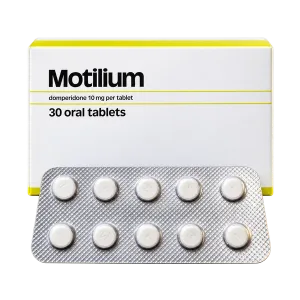
Metoclopramide tablets contain metoclopramide as the active substance. The pharmaceutical salt used in many products is metoclopramide hydrochloride, also written as metoclopramide HCl.
The product is supplied as oral tablets. Oral treatment allows the active substance to be absorbed through the digestive tract and is commonly used when the patient can retain oral medication.
Available Oral and Liquid Dosage Strengths
Metoclopramide exists in more than one pharmaceutical form in clinical practice, including:
- Oral tablets
- Oral liquid formulations
- Injectable formulations used in supervised medical settings
- Orally disintegrating tablets in some jurisdictions
The product on this page is an oral tablet, not a syrup or injection.
How it affects the body
Metoclopramide blocks dopamine D2 receptors in the chemoreceptor trigger zone, an area involved in detecting chemical signals that can provoke vomiting. This central dopamine antagonism reduces signals travelling to the vomiting centre in the brainstem.
The drug also acts in the gastrointestinal tract. Peripheral dopamine blockade allows cholinergic activity in the myenteric plexus to become more prominent, strengthening coordinated contractions in the upper digestive tract. Gastric emptying may become faster, while movement through the duodenum and small intestine is better coordinated.
Metoclopramide does not simply suppress nausea by causing sedation. Its gastrointestinal activity gives it a prokinetic role that distinguishes it from anti-emetics acting mainly through serotonin, histamine, or muscarinic pathways.
The same dopamine blockade explains both its benefit and its main neurological limitation. It can reduce vomiting, yet it can also cause restlessness, muscle spasms, tremor, or other extrapyramidal symptoms in susceptible people. The FDA prescribing information describes these neurological risks and the need to limit prolonged exposure [1].
Therapeutic indications
Metoclopramide may be considered for:
- Nausea and vomiting caused by gastrointestinal illness, medication, migraine, or medical treatment
- Diabetic gastroparesis, where stomach emptying is delayed
- Short-term support for upper gastrointestinal motility
- Selected clinical situations involving severe vomiting, including some treatment-related causes
- Certain reflux symptoms when delayed gastric emptying is a relevant factor
The drug does not treat every cause of nausea. Vomiting caused by bowel obstruction, gastrointestinal bleeding, or abdominal perforation requires urgent assessment rather than prokinetic treatment.
Metoclopramide is intended for targeted treatment. Longer exposure increases the chance of movement disorders, so clinicians generally use the shortest suitable course.
Common mistakes
Poor outcomes often result from administration errors rather than complete lack of response. Common mistakes include:
- Taking extra tablets after vomiting
- Continuing the drug for weeks without a planned review
- Combining it with another dopamine-blocking anti-emetic
- Drinking alcohol while already experiencing drowsiness
- Ignoring restlessness, jaw stiffness, or abnormal eye movements
- Using the tablets for abdominal pain when obstruction has not been excluded
- Assuming a 10 mg tablet is appropriate for every adult or every medical condition
- Driving before knowing whether the medicine causes sedation or dizziness
Crushing or chewing is also unnecessary for a standard tablet unless a prescriber or pharmacist has given a formulation-specific instruction. Crushing can make swallowing easier for some medicines, but it should not be used to alter the intended administration method without confirmation.
Diabetes adds another practical concern. Delayed gastric emptying can make the relationship between food, glucose readings, and insulin timing less predictable. Improving gastric movement does not remove the need to monitor diabetes treatment as directed.
Reasons not to use it
- Gastrointestinal bleeding
- Mechanical bowel obstruction
- Gastrointestinal perforation
- Pheochromocytoma or suspected catecholamine-secreting tumour
- Previous neuroleptic malignant syndrome or severe metoclopramide-related dystonia
- Known allergy to metoclopramide
- Parkinson’s disease when dopamine blockade could worsen symptoms
- Epilepsy or a history of seizures unless a specialist has specifically assessed the risk
- A previous serious movement disorder caused by a dopamine-blocking medicine
Kidney impairment can increase exposure because metoclopramide is cleared partly through the kidneys. Reduced doses or less frequent administration may be needed. Severe liver disease can also require adjustment.
Important interactions include antipsychotic medicines, other anti-emetics that block dopamine, sedatives, opioids, alcohol, and medicines that affect gastrointestinal movement. Metoclopramide may oppose dopamine agonists used in Parkinson’s disease. It can also alter the absorption of some oral medicines by changing gastric emptying.
Pregnancy and breastfeeding require an individual assessment. Metoclopramide crosses the placenta and enters breast milk, so the expected benefit and infant exposure must be considered before use.
When this is not for you
Metoclopramide is not suitable for everyone. This medication is not for you if you have a condition in which increased gastrointestinal movement could cause harm.
Do not use it if you have gastrointestinal bleeding, a bowel blockage, a perforation, a known allergy to metoclopramide, Parkinson’s disease, epilepsy, or a previous serious movement reaction to a dopamine-blocking medicine. Speak with a healthcare professional before use if you have kidney or liver disease, are pregnant or breastfeeding, or take antipsychotics, sedatives, opioids, alcohol, or other anti-emetics.
Possible side effects
Common adverse effects include drowsiness, fatigue, restlessness, headache, dizziness, and diarrhoea. Some people experience abdominal discomfort or a feeling of agitation. Drowsiness and dizziness can impair driving, cycling, or work requiring rapid reactions.
The most clinically significant concern is a movement disorder. Extrapyramidal symptoms may include:
- Involuntary muscle spasms
- Neck or jaw stiffness
- Eye deviation or an upward fixed gaze
- Tremor
- Muscle rigidity
- Restlessness with an inability to sit still
- Uncontrolled movements of the face, tongue, or limbs
An acute dystonic reaction can appear after one or several doses, especially in younger patients and people receiving other dopamine-blocking medicines. Tardive dyskinesia involves repetitive involuntary movements and is more associated with cumulative exposure. Some movement disorders may persist after treatment stops.
Metoclopramide can also rarely contribute to neuroleptic malignant syndrome, a medical emergency involving severe rigidity, high fever, confusion, sweating, and unstable pulse or blood pressure. Seizures, severe allergic reactions, and significant mental-status changes also require urgent evaluation.
Patients who feel sleepy should avoid alcohol and activities requiring full alertness. Diarrhoea may improve when treatment ends, but severe diarrhoea, dehydration, fainting, or inability to keep fluids down needs medical attention.

Comparison
The best anti-emetic depends on the cause of nausea, the need for gastrointestinal motility, the patient’s neurological history, and other medicines being taken. Metoclopramide is distinctive because it combines central anti-emetic activity with upper gastrointestinal prokinetic action.
| Option | Main pharmacological role | Key limitation |
|---|---|---|
| Metoclopramide | Dopamine D2 antagonist and prokinetic | Movement disorders, drowsiness, short-course restrictions |
| Prochlorperazine | Phenothiazine anti-emetic with dopamine blockade | Sedation, hypotension, extrapyramidal symptoms |
| Scopolamine | Muscarinic antagonist used mainly for motion-related nausea | Dry mouth, blurred vision, confusion, urinary retention |
Prochlorperazine may be selected when dopamine-mediated vomiting is the main concern and increased gastric motility is not needed. It does not provide the same prokinetic effect as metoclopramide.
Scopolamine is pharmacologically different. It is more closely associated with motion sickness and vestibular nausea, and its anticholinergic effects may be unsuitable for people with glaucoma, urinary retention, or cognitive vulnerability.
Other anti-emetic classes act through serotonin, histamine, or neurokinin pathways. A clinician selects among them according to the trigger for vomiting rather than treating all nausea as the same condition.
What doctors say
In clinical practice, physicians usually view metoclopramide as a focused, short-term option rather than a routine daily medicine. Its ability to improve gastric emptying is useful when nausea is linked to delayed upper gastrointestinal transit, but that benefit must be weighed against dopamine-related neurological effects.
A prescriber will usually review the cause of vomiting, kidney function, neurological history, concurrent anti-emetics, antipsychotics, sedatives, and opioid use. The treatment plan should define the dose, timing, and intended stopping point before the first tablet is taken.
One practical issue is that symptom relief can encourage patients to continue treatment beyond the planned course. This is risky when the underlying problem remains undiagnosed. Recurrent vomiting, unexplained weight loss, progressive swallowing difficulty, or repeated abdominal distension needs further investigation.
Health Canada, the EMA, and the UK's Medicines and Healthcare products Regulatory Agency (MHRA) all reflect the need for careful dosing and limited exposure with metoclopramide. The EMA’s safety review led to restrictions designed to reduce neurological harm, while Canadian prescribing information places emphasis on patient selection and adverse-effect monitoring [3].
Comparison
Common questions
What happens after stopping Metoclopramide, and does it need tapering?
Short courses of metoclopramide are generally stopped rather than tapered, but the prescriber’s plan determines the correct approach. Symptoms such as nausea or delayed gastric emptying may return if the underlying condition remains active. The EMA safety restrictions published in 2013 support limiting exposure and avoiding unnecessary continuation. New abnormal movements after stopping still require prompt medical assessment because some neurological reactions can persist. Prompt review is appropriate if symptoms continue.
Can the tablet be split, crushed, or chewed?
A standard metoclopramide tablet should be swallowed with water unless a healthcare professional has provided different instructions for the specific formulation. Splitting may produce unequal portions and can make accurate dosing difficult. The 2022 FDA prescribing information for metoclopramide tablets describes oral administration and does not support changing the tablet form as a routine way to adjust treatment. Crushing or chewing is unsuitable when swallowing problems have not been assessed.
Can people under 18 use Metoclopramide?
Use in children and adolescents is restricted because younger patients have a higher risk of acute dystonic reactions and other extrapyramidal symptoms. Health Canada's 2023 paediatric safety information and European regulatory guidance limit use to selected indications and carefully calculated doses. A child or adolescent should not receive an adult 10 mg tablet simply because vomiting is severe. Urgent assessment is needed if a young person develops neck spasms, abnormal eye movements, stiffness, or agitation.
Is Metoclopramide suitable during pregnancy or breastfeeding?
Metoclopramide may be used during pregnancy or breastfeeding only when the expected benefit supports treatment and the regimen has been assessed individually. The active substance crosses the placenta and can enter breast milk. The WHO medication safety framework published in 2022 supports weighing maternal treatment needs against infant exposure for medicines used during lactation. Breastfed infants should be observed for unusual sleepiness, feeding difficulty, or abnormal movements when maternal treatment is prescribed.
Can alcohol be used while taking Metoclopramide?
Alcohol can add to metoclopramide-related drowsiness, dizziness, impaired coordination, and reduced alertness. The FDA's 2022 medication guidance for metoclopramide advises caution with substances that increase central nervous system depression. Avoiding alcohol during treatment is the safer practical choice, especially after the first dose or when other sedating medicines are involved. Driving or operating machinery should also wait until the individual response is known.
Which symptoms mean stopping Metoclopramide and seeking urgent medical help?
Urgent assessment is needed for involuntary movements, severe muscle spasms, fixed upward eye deviation, marked agitation, confusion, fever with rigidity, fainting, seizures, facial swelling, or breathing difficulty. The EMA's 2013 neurological safety review identifies acute dystonia, tardive dyskinesia, and neuroleptic malignant syndrome as serious reactions requiring prompt attention. Blood in vomit, black stools, severe abdominal swelling, or intense abdominal pain may indicate a gastrointestinal emergency rather than an ordinary medicine side effect. Do not take another dose while waiting for urgent clinical advice if a severe neurological or allergic reaction occurs.
Do you offer anonymous delivery?
Your order will be securely packed and shipped within 24 hours. This is exactly what your package will look like (images of an actual item sent). It has the size and look of a regular private letter (24x11x0.7 cm) and its contents cannot be seen.
Customer Feedback on Metoclopramide
Lethbridge, I used the 10 mg tablets before meals for several days after a stomach problem. The nausea settled, although I noticed restlessness on the second day and contacted the clinic rather than taking more.
Kingston, The 10 mg tablets helped with the heavy, full feeling associated with delayed stomach emptying during a short course. It was less useful when the vomiting returned later, so the treatment plan had to be reviewed instead of simply continuing the tablets.
Sources
- U.S. Food and Drug Administration (2022). Reglan (metoclopramide hydrochloride) tablets prescribing information.
- European Medicines Agency (2013). Metoclopramide-containing medicines: referral and restrictions on use.
- Health Canada (2023). Product monograph for metoclopramide.