Skip to content
Fosamax
Active ingredient: Alendronate

Fosamax

Quality products
24/7 Support
Fast delivery
Delivery from 4 days
Select pack Package Per unit Price

Free delivery on orders from $ 312.00, free express delivery from $ 468.00

Secure Payments
Track your order
Best price guarantee

Fosamax contains alendronate sodium, which slows the removal of old bone and helps preserve skeletal strength. It is used for osteoporosis in postmenopausal women and men, with a weekly tablet regimen for many patients. Correct morning administration improves absorption and reduces upper digestive tract irritation.

Overview

Fosamax may also be prescribed for Paget’s disease of bone, a condition involving abnormal bone remodelling. Health Canada recognizes alendronate as an option for osteoporosis treatment in suitable adults [1].

Dosage and administration

The Fosamax product described here contains alendronate sodium and is supplied as pills in tablet form. Dosing differs between strengths and between users, so no single amount suits everyone.

A suitable schedule can differ according to the diagnosis, kidney function, fracture risk, treatment history, and prescribing decision. The tablet should not be treated as a universal dose for every person or every bone condition. The prescriber should confirm the intended strength and interval. Treatment duration also depends on response and safety. Patients should not change the schedule without medical advice.

Form Active ingredient Usual treatment pattern
Tablet Alendronate sodium Once weekly when prescribed for osteoporosis

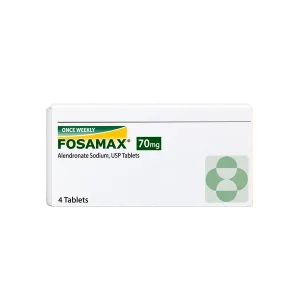
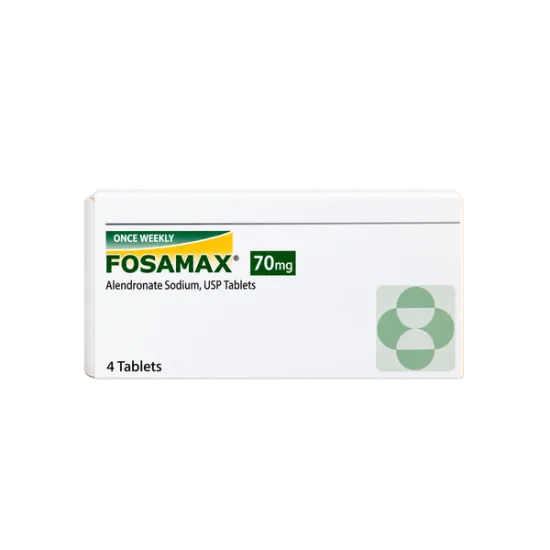
The four-tablet presentation corresponds to a short supply for a weekly schedule. It does not mean that every patient should use treatment for only a short period. Duration is determined by the clinical response and the person’s continuing fracture risk.

Take Fosamax immediately after getting up for the day, before eating, drinking anything other than plain water, or taking other oral medicines.

  • Swallow one prescribed tablet whole with a full glass of plain water.
  • Remain sitting or standing for at least 30 minutes.
  • Do not lie down during this period.
  • Wait at least 30 minutes before breakfast, coffee, juice, calcium, vitamins, antacids, or other oral medicines.
  • Take the tablet on the same weekday each week if the regimen is once weekly.
  • If a weekly dose is missed, take one tablet the morning after it is remembered; do not take two tablets on the same day.

The upright position helps the tablet pass into the stomach and reduces contact with the oesophagus. Coffee, mineral water, juice, and food can reduce absorption compared with plain water. FDA prescribing information gives these administration rules because poor technique can increase upper gastrointestinal irritation and reduce the amount of alendronate absorbed [3].

Keep calcium tablets and multivitamins for later in the day. Taking them with alendronate can interfere with absorption, even when the calcium product seems mild or routine.

A missed tablet should not be replaced with two tablets together. If repeated vomiting, painful swallowing, chest pain, or new heartburn develops after treatment, stop further doses until the prescriber assesses the symptom.

Formulation

The active ingredient is alendronate sodium, also called sodium alendronate. Alendronate is a nitrogen-containing bisphosphonate. In the body, it has a strong affinity for mineralized bone surfaces.

How it affects the body

During normal bone remodelling, osteoclasts remove older bone and osteoblasts build new bone. Alendronate becomes concentrated at sites where bone is being resorbed. When osteoclasts attach to treated bone, alendronate interferes with intracellular pathways required for their activity and survival.

This lowers bone resorption. Bone formation can then catch up over time, helping preserve bone architecture and improve bone mineral density. The European Medicines Agency describes this antiresorptive action as the central pharmacological effect of alendronate [2].

The treatment does not instantly rebuild fragile bone. Its benefit develops through continued suppression of excessive turnover, supported by adequate calcium and vitamin D.

Therapeutic indications

Fosamax is used to treat osteoporosis, reduce bone loss, and lower the risk of fractures in appropriate patients. Fosamax may also be prescribed for Paget’s disease of bone, a condition involving abnormal bone remodelling.

Osteoporosis develops when bone breakdown exceeds bone formation. The result is lower bone mass and a higher chance of fractures in the spine, hip, wrist, or other skeletal sites. Health Canada recognizes alendronate as an option for osteoporosis treatment in suitable adults [1].

Target Patient Populations

Postmenopausal women can experience faster bone turnover because reduced oestrogen levels remove an important restraint on osteoclast activity. Osteoclasts are cells that dissolve old bone. Fosamax reduces this excessive resorption, helping maintain bone mineral density.

Men with osteoporosis may also receive alendronate when fracture risk is elevated. The decision depends on bone-density results, previous fractures, age, medical history, kidney function, and other risk factors. Paget’s disease of bone involves disorganized remodelling and may require a different treatment schedule from osteoporosis.

Fosamax is not a general painkiller. It acts gradually on bone metabolism, so a person may not feel a direct sensation after taking a tablet.

Take the weekly tablet on the same weekday whenever possible. A fixed routine, such as taking it immediately after waking, reduces missed doses.

Common mistakes

The following errors can reduce absorption or increase irritation:

  • Taking Fosamax with coffee, tea, juice, milk, or mineral water.
  • Eating breakfast before the required waiting period ends.
  • Taking calcium, iron, magnesium, antacids, or multivitamins at the same time.
  • Lying down after swallowing the tablet.
  • Crushing or chewing the tablet.
  • Taking two weekly tablets after forgetting one dose.
  • Continuing through painful swallowing or severe heartburn.
  • Forgetting to mention Fosamax before dental extraction.
  • Assuming a normal DEXA result means treatment can be stopped without reassessment.

A useful practical routine is to place the weekly dose beside a morning reminder, then take it only when plain water and 30 minutes upright time are available. Do not take it at bedtime.

Reasons not to use it

Fosamax is contraindicated in patients who:

  • Have an abnormality of the oesophagus that delays emptying, such as a stricture or achalasia.
  • Cannot remain upright for at least 30 minutes after taking the tablet.
  • Have low blood calcium that has not been corrected.
  • Have had a serious allergic reaction to alendronate or an excipient in the formulation.
  • Have severe kidney impairment where alendronate is unsuitable.
  • Are taking the tablet with inadequate access to plain water or reliable morning administration.

When this is not for you

Do not use Fosamax if swallowing problems could delay the tablet reaching your stomach, or if you cannot stay upright for at least 30 minutes afterward. It may also be unsuitable if you have untreated low calcium, severe kidney impairment, or a serious allergy to alendronate or one of the tablet’s ingredients. Tell the prescribing clinician about dental procedures, kidney disease, swallowing problems, low calcium, vitamin D deficiency, or previous fractures.

Possible side effects

The most relevant tolerability issue with Fosamax is irritation of the upper digestive tract. Possible symptoms include heartburn, abdominal discomfort, nausea, indigestion, constipation, diarrhoea, or pain when swallowing.

Taking the tablet with anything other than plain water, lying down too soon, or chewing it can increase local irritation. Some people tolerate alendronate well when administration instructions are followed, while others develop symptoms despite careful use.

New or worsening difficulty swallowing should not be treated as ordinary indigestion. It can signal oesophageal irritation and needs prompt medical assessment before another dose is taken.

Serious Adverse Effects

Urgent medical attention is required for chest pain, painful swallowing, severe difficulty swallowing, vomiting blood, black stools, or persistent severe heartburn. These symptoms may indicate significant injury to the oesophagus or upper digestive tract.

Rare complications associated with bisphosphonate therapy include osteonecrosis of the jaw and atypical femoral fractures. Osteonecrosis involves delayed healing or exposed bone in the jaw. Risk is higher with invasive dental procedures, cancer treatment, corticosteroids, poor oral health, and prolonged or intensive antiresorptive exposure.

Atypical femoral fractures can present as new or persistent pain in the thigh or groin before a complete fracture occurs. The FDA has described this warning for long-term bisphosphonate use [4].

Comparison

Different osteoporosis treatments act through different biological pathways. The choice depends on fracture pattern, kidney function, digestive tolerance, prior treatment, adherence, cancer history, and the severity of bone loss.

Treatment category Main action and route
Oral bisphosphonates such as alendronate, ibandronate, risedronate, and etidronate Slow osteoclast-mediated bone resorption; taken orally on a scheduled basis
Injectable antiresorptive therapy such as denosumab or zoledronic acid Suppresses bone resorption through injection or intravenous infusion
Bone-forming therapy such as teriparatide or abaloparatide Stimulates bone formation in selected patients at very high fracture risk

Other bisphosphonates include ibandronate, risedronate, pamidronate, etidronate, and zoledronic acid. Their dosing intervals, routes, approved uses, and evidence for specific fracture types differ.

Denosumab is a RANKL inhibitor. It blocks a signal needed for osteoclast formation and activity. It may be considered when oral treatment is unsuitable, though stopping it without a planned follow-on strategy can lead to rapid bone turnover and vertebral fracture risk.

Teriparatide and abaloparatide are anabolic therapies. They are used for selected patients with very high fracture risk and are not interchangeable with a weekly oral bisphosphonate. Raloxifene acts through oestrogen-receptor pathways and may suit selected postmenopausal women, though its risks and benefits differ from those of Fosamax.

What doctors say

In clinical practice, physicians often focus on administration technique before judging whether alendronate has failed. A person who takes the tablet with coffee or breakfast may receive much less absorbed drug than expected, even when no doses are missed.

Doctors also review fracture risk at intervals rather than continuing treatment without reassessment. Bone-density results, new fractures, age, falls, steroid exposure, kidney function, and adverse effects help determine whether treatment should continue, change, or pause.

A common prescribing mistake is treating Fosamax as a pain-relief tablet. It does not provide immediate relief for back or hip pain caused by a fracture. New severe bone pain requires assessment for a fracture or another diagnosis.

Patients with dental surgery planned should report their Fosamax use well before the procedure. The risk of jaw complications is uncommon in routine osteoporosis treatment, but risk assessment becomes more important when several risk factors are present.

Comparison

Comparison table: Osteoporosis

Common questions

Does Fosamax cause heartburn?

Heartburn, indigestion, and irritation of the oesophagus are recognized adverse effects of alendronate. Health Canada’s 2023 safety information supports taking the tablet with plain water and remaining upright to reduce this risk. Symptoms that are severe, persistent, or associated with painful swallowing require prompt medical assessment rather than repeated self-treatment.

How long does one Fosamax dose keep working?

The 70 mg regimen is designed for weekly administration, with alendronate remaining associated with bone mineral for an extended period. The FDA’s 2020 prescribing information describes a prolonged skeletal residence time, which supports intermittent dosing. A missed dose should be handled according to the weekly schedule and should never be replaced by two tablets on one day.

Which condition rules out Fosamax?

An oesophageal disorder that delays emptying, such as achalasia or a significant stricture, can rule out oral alendronate. The European Medicines Agency’s 2022 product information also identifies inability to remain upright for at least 30 minutes as a major practical contraindication. Uncorrected hypocalcemia and serious hypersensitivity to alendronate are additional reasons treatment is unsuitable.

How soon does Fosamax improve bone health?

Fosamax changes bone turnover before a person can feel any effect. Bone mineral density is assessed through follow-up DEXA testing, while fracture-risk reduction develops through continued treatment rather than after one dose. WHO osteoporosis guidance published in 2023 supports evaluating response over time using bone density, fracture history, and clinical risk factors.

Can Fosamax be taken with calcium or vitamin supplements?

Calcium, iron, magnesium, antacids, and multivitamins can reduce alendronate absorption when taken together. Health Canada’s 2023 information supports separating these products from the Fosamax dose and taking Fosamax first with plain water. The exact timing of later supplements should fit the prescribed regimen and the person’s nutritional needs.

Can Fosamax affect driving, concentration, or machinery work?

Fosamax is not expected to directly impair driving, concentration, or machinery operation in most patients. Dizziness, muscle pain, severe gastrointestinal symptoms, or an allergic reaction could make work unsafe and require medical attention. WHO guidance published in 2023 recognizes the importance of assessing symptoms rather than assuming every medicine affects alertness in the same way.

Do you offer anonymous delivery?

Your order will be securely packed and shipped within 24 hours. This is exactly what your package will look like (images of an actual item sent). It has the size and look of a regular private letter (24x11x0.7 cm) and its contents cannot be seen.

Customer Feedback on Fosamax

3.2
Based on 3 reviews
Daniel, 69 St. John's Several months
Verified
Rating: 3 out of 5

I used the 70 mg tablet once each week for several months. My first mistake was taking it with coffee, and I developed heartburn. After moving it to plain water immediately after waking, the problem settled.

Oct 28, 2026
Wendy, 26 Quebec City Three months
Verified
Rating: 3.5 out of 5

I used the 70 mg tablet once each week for three months. The schedule was convenient, but separating calcium from Fosamax and staying upright made treatment less convenient than I expected.

Nov 4, 2026
Elaine, 26 Moncton Several months
Verified
Rating: 3 out of 5

I used the 70 mg tablet once each week for several months for a specific bone-health problem rather than routine age-related osteoporosis. The upright rule was inconvenient on busy mornings, and I missed one dose, but taking it the next morning avoided doubling.

Oct 6, 2026

Sources

  1. Health Canada (2023). Fosamax (alendronate sodium) Product Monograph.
  2. European Medicines Agency (2022). Summary of Product Characteristics (SmPC) — alendronic acid.
  3. U.S. Food and Drug Administration (2020). Fosamax (alendronate sodium) Prescribing Information.
  4. U.S. Food and Drug Administration (2010). Drug Safety Communication: Bisphosphonates and atypical subtrochanteric femur fractures.
Get our free app Shop faster and track your orders Install