Skip to content
Elidel
Active ingredient: Pimecrolimus

Elidel

Quality products
24/7 Support
Fast delivery
Delivery from 4 days
Select pack Package Per unit Price

Free delivery on orders from $ 312.00, free express delivery from $ 468.00

Secure Payments
Track your order
Best price guarantee

Pimecrolimus, the active ingredient of Elidel, is a topical calcineurin inhibitor for mild-to-moderate atopic dermatitis and eczema. Elidel cream reduces inflammatory signalling in the skin without using a corticosteroid. It is applied as a thin layer to affected areas, including sensitive sites such as the face and neck.

Overview

Elidel is a prescription-strength cream containing 1% pimecrolimus. It belongs to the topical calcineurin inhibitor class and is used for mild-to-moderate atopic dermatitis, also called eczema or dermatitis. The cream is intended for people aged 2 years and older when topical corticosteroids are unsuitable, have not provided adequate control, or need to be limited because of the treatment site.

Atopic dermatitis causes an impaired skin barrier and an exaggerated immune response. This combination can lead to redness, itching, dryness, scaling, and recurrent flare-ups. Elidel acts on the inflammatory component rather than supplying a moisturising barrier ingredient.

Targeted skin conditions

Elidel cream is used on areas affected by:

  • Mild-to-moderate atopic dermatitis
  • Eczema-related redness and itching
  • Recurrent dermatitis flares
  • Sensitive areas where prolonged corticosteroid exposure may be undesirable

It is not intended for untreated bacterial, viral, or fungal skin infections. Active infection can worsen beneath anti-inflammatory treatment and may require separate management.

Pimecrolimus has low systemic absorption when applied to intact or inflamed skin in the recommended manner. Its action remains concentrated in the skin, which is why it is useful for localised inflammatory disease.

Apply Elidel only to areas affected by eczema. Using it on clear skin does not improve protection and increases unnecessary exposure.

Dosage and administration

Elidel is applied to affected skin twice daily, usually once in the morning and once in the evening. Treatment can begin at the first signs of eczema, such as itching or redness, rather than waiting for a severe flare.

  • Apply a thin layer to the affected skin.
  • Rub it in gently until the cream disappears.
  • Avoid the eyes, inside of the mouth, and other mucous membranes.
  • Wash hands after application unless the hands are being treated.
  • Stop treatment when the eczema signs and symptoms have cleared.
  • Restart treatment at the first signs of a new flare if this intermittent plan was prescribed.
  • Use moisturiser when needed, allowing time between products so the cream is not immediately removed.

The dose per application is set individually for each person rather than being one fixed number. Elidel should not be covered with airtight dressings, plastic wrap, or other occlusive materials unless a clinician has specifically directed this.

If a dose is missed, apply the cream when remembered if it is still close to the usual treatment time. If the next application is due soon, skip the missed application and continue the regular schedule. Do not apply a thick layer to compensate.

Clinical guidance from the National Institute for Health and Care Excellence supports topical calcineurin inhibitors as treatment options in selected atopic eczema cases, with use tailored to disease severity and treatment location [2].

Formulation

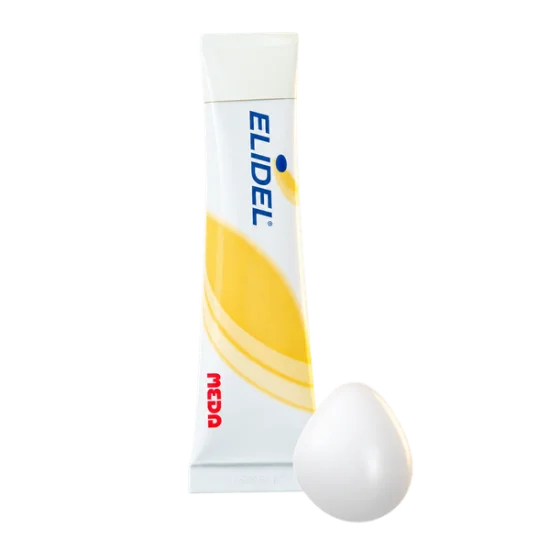
The product is supplied as a 1% pimecrolimus cream in a tube. The available tube presentation is 15 g. The amount used per application is determined individually for each person according to the affected surface area, so one fixed amount does not suit every person.

Elidel is a topical product, not an oral capsule, tablet, or injection. The amount used per application is determined individually according to the affected surface area, so one fixed amount does not suit every person.

Prescription status applies to Elidel in Canada. The product should be used for the person and skin condition for which it was prescribed.

A fingertip-unit approach can help estimate topical quantities, but the appropriate amount depends on the body site and surface area. A small facial patch needs much less cream than eczema covering both arms.

How it affects the body

Pimecrolimus is an ascomycin macrolactam derivative. It binds to the intracellular protein macrophilin-12, also called FKBP-12. This complex inhibits calcineurin, an enzyme needed for activation of T-cells.

Activated T-cells release inflammatory cytokines that contribute to eczema symptoms. By reducing calcineurin activity, pimecrolimus decreases the transcription and release of several inflammatory mediators. The result is less immune-cell activation in the treated skin.

The process can be understood in four steps:

  1. Eczema activates immune cells in the skin.
  2. T-cells begin producing inflammatory cytokines.
  3. Calcineurin helps switch on this cytokine response.
  4. Pimecrolimus blocks calcineurin-dependent signalling and reduces inflammation.

The mechanism differs from that of topical corticosteroids. Corticosteroids influence a wider range of inflammatory pathways and can cause skin atrophy with prolonged or inappropriate use. Pimecrolimus has a more selective effect on T-cell activation. Clinical information reviewed by Health Canada describes pimecrolimus as a topical treatment for atopic dermatitis with low systemic exposure when used as directed [1].

Therapeutic indications

Elidel is a prescription-strength cream containing 1% pimecrolimus. It belongs to the topical calcineurin inhibitor class and is used for mild-to-moderate atopic dermatitis, also called eczema or dermatitis. The cream is intended for people aged 2 years and older when topical corticosteroids are unsuitable, have not provided adequate control, or need to be limited because of the treatment site.

Elidel cream is used on areas affected by:

  • Mild-to-moderate atopic dermatitis
  • Eczema-related redness and itching
  • Recurrent dermatitis flares
  • Sensitive areas where prolonged corticosteroid exposure may be undesirable

Common mistakes

Several application habits can reduce benefit or increase irritation:

  • Applying a thick layer in the belief that more cream works faster
  • Using Elidel on clear skin as a general moisturiser
  • Covering treated areas with plastic or airtight dressings
  • Applying it to an untreated infection
  • Stopping moisturiser because the anti-inflammatory cream is being used
  • Waiting until eczema is severe before starting a prescribed flare plan
  • Applying the cream immediately before washing the area
  • Forgetting that hands can transfer cream into the eyes
  • Using tanning beds during treatment
  • Continuing treatment indefinitely without reassessment

One small but useful habit is to apply Elidel after washing and drying the skin, not while the area is still wet. Water can dilute the cream and make it spread unpredictably.

Another common problem is confusing persistent burning with therapeutic action. Stinging is a side effect, not proof that inflammation is being controlled. If it remains strong or worsens, the treatment plan needs review.

Reasons not to use it

Elidel is not suitable for everyone. It should not be used by a person with a known allergy to pimecrolimus or any cream ingredient. It should also be avoided on clinically infected skin until the infection has been assessed and treated.

  • You have had an allergic reaction to pimecrolimus or an excipient.
  • The treatment area has an untreated bacterial, viral, or fungal infection.
  • You have a malignant or unexplained skin lesion requiring assessment.
  • You have severe immune suppression unless a specialist has directed treatment.
  • The cream is intended for a child under 2 years of age.
  • The skin condition has not been diagnosed and could be a different inflammatory or infectious disorder.

Drug interactions are limited because little pimecrolimus reaches the bloodstream. Extra caution is appropriate with systemic immunosuppressants or in people receiving treatment that substantially weakens immune function.

The FDA prescribing information describes these precautions and the need to consider maternal benefit against potential fetal or infant exposure [3].

When this is not for you

Elidel is not for you if you have an allergy to pimecrolimus or any cream ingredient, or if the area you want to treat has an untreated infection. Do not use it on an unexplained rash, a suspicious skin lesion, or if you have severe immune suppression unless a specialist has advised you to do so. It is not intended for children under 2 years of age.

Avoid excessive natural or artificial ultraviolet exposure while using Elidel. Use protective clothing and a broad-spectrum sunscreen on exposed skin when appropriate. Do not use tanning beds or sunlamps during treatment.

Pregnancy and breastfeeding require an individual risk assessment. Although topical absorption is low, the cream should not be applied to the breast immediately before breastfeeding because the infant could ingest residue.

Possible side effects

The most frequent early reaction is a short-lived burning, warmth, stinging, or tingling sensation at the application site. This usually becomes less noticeable after the first few days as the inflamed skin settles.

Common local reactions include:

  • Burning or warmth
  • Redness
  • Itching
  • Irritation
  • Folliculitis
  • Increased sensitivity at the treated area

Some people develop flushing or facial warmth after drinking alcohol during treatment. This reaction is usually temporary, but repeated episodes should be discussed with the prescriber.

Pimecrolimus is minimally absorbed through the skin in usual use, so systemic adverse effects are less expected than with medicines taken by mouth. The clinical safety discussion still includes caution in people with weakened immune systems and in anyone with a serious or unusual skin infection.

Seek prompt medical assessment if treated skin becomes rapidly painful, swollen, weeping, crusted, blistered, or covered with spreading sores. These signs may indicate infection or another skin disorder rather than a routine Elidel reaction.

One practical detail is easy to miss: the first application may sting more on cracked eczema than on intact skin. Applying more cream does not shorten that sensation and may increase irritation.

If burning is severe, persistent, or accompanied by swelling, stop applying the cream until the reaction has been assessed. Mild warmth that settles soon after application is a recognised local reaction.

Comparison

Treatment selection depends on eczema severity, body location, age, flare frequency, and the condition of the skin barrier. Elidel is one topical anti-inflammatory option rather than a universal replacement for every eczema treatment.

Treatment category Main role
Pimecrolimus cream Steroid-free control of mild-to-moderate atopic dermatitis, especially on sensitive sites
Topical corticosteroid Rapid control of inflammatory flares, selected by potency and body site
Barrier moisturiser Reduces dryness and supports the skin barrier during and between flares

Regular moisturising remains useful even when Elidel controls the inflammation. A fragrance-free emollient can reduce water loss and help prevent cracking. It does not replace anti-inflammatory treatment during a significant flare.

Topical corticosteroids may be preferred for short courses when inflammation is intense, thickened, or widespread. The selected potency should match the body site and the severity of the flare. The trade-off is the risk of skin thinning and other local effects when potent products are used incorrectly or for too long.

Other topical calcineurin inhibitors may be considered in selected cases, while phototherapy or systemic treatment may be used for persistent moderate-to-severe disease under specialist supervision. A Cochrane review found that topical calcineurin inhibitors have an established role in atopic dermatitis, with local application-site reactions among the main tolerability concerns [4].

What doctors say

In clinical practice, dermatology teams often focus on three points: correct diagnosis, treatment location, and repeated early use during flares. Elidel tends to be most useful when eczema is mild to moderate and affects areas where repeated corticosteroid use creates concern.

A physician may recommend applying the cream at the first return of itching instead of waiting until the skin is intensely red. This approach can shorten the inflammatory phase for some patients. It does not mean that every itchy patch is eczema; infection, contact dermatitis, and other conditions can look similar.

Treatment response is gradual. Some people notice less itching within several days, while visible redness and scaling take longer to settle. A lack of improvement, worsening pain, or spreading lesions calls for reassessment of the diagnosis.

Older adults can use Elidel when clinically appropriate. Age-related dryness, thinner skin, multiple medicines, and a higher risk of infection make personalised treatment planning useful. The cream should be applied to diagnosed eczema rather than unexplained rashes. Follow-up is useful when symptoms recur frequently. Persistent or worsening changes warrant reassessment.

Comparison

Comparison table: Eczema

Common questions

How does Elidel differ from topical corticosteroids?

Elidel contains pimecrolimus, which inhibits calcineurin-dependent T-cell signalling, while corticosteroids activate glucocorticoid receptors and influence a broader inflammatory response. The two categories can both reduce eczema inflammation, but they have different safety considerations and treatment roles. Clinical guidance from Health Canada and the European Medicines Agency describes pimecrolimus as a non-corticosteroid topical option for selected atopic dermatitis cases. Health Canada reviewed this distinction in 2022. This distinction is clinically useful when eczema affects the face, eyelids, neck, or skin folds [5].

Can I be exposed to sunlight while using Elidel?

Sun exposure should be limited during Elidel treatment. Avoid tanning beds and sunlamps, use protective clothing, and apply suitable sunscreen to exposed areas. The recommendation applies because the long-term effects of combining topical pimecrolimus with intense ultraviolet exposure require caution. Health Canada safety information continues to include ultraviolet protection as part of responsible use in 2026.

Can Elidel be used during pregnancy or breastfeeding?

Pregnancy and breastfeeding should be discussed with the prescribing clinician before treatment begins. Low skin absorption reduces systemic exposure, yet the benefit of treating the mother must be considered alongside potential fetal or infant exposure. During breastfeeding, do not apply Elidel to the nipple or breast immediately before feeding. FDA prescribing information and clinical practice guidance available through 2026 support avoiding direct infant contact with treated skin.

Is Elidel suitable for older adults?

Older adults may use Elidel when the diagnosis and treatment plan support it. Age itself does not automatically prevent topical pimecrolimus use, but dry skin, fragile skin, infection risk, and multiple medicines can alter treatment decisions. A clinician may also check whether a persistent rash could represent contact dermatitis, infection, or another condition. Health Canada information supports individual assessment rather than a single age-based dose. This information was reviewed in 2022.

Can I drink alcohol while using Elidel?

There is no general requirement to avoid all alcohol, but some people develop temporary facial flushing, warmth, or irritation after drinking during pimecrolimus treatment. This reaction does not mean that the cream has stopped working, but it can be uncomfortable. Avoid alcohol if it repeatedly triggers symptoms or worsens facial eczema. The Elidel prescribing information recognised by Health Canada describes alcohol-related application-site reactions as a practical precaution through 2026.

How should Elidel be applied, and should I wash my hands or cover the area?

Apply a thin layer twice daily to affected skin, then rub it in gently. Wash your hands after application unless your hands are the treated area, and avoid the eyes and mucous membranes. Do not cover the treated area with an airtight dressing or plastic wrap unless specifically instructed. The European Medicines Agency patient information from 2020 supports this topical method and advises stopping when eczema signs have cleared.

Do you offer anonymous delivery?

Your order will be securely packed and shipped within 24 hours. This is exactly what your package will look like (images of an actual item sent). It has the size and look of a regular private letter (24x11x0.7 cm) and its contents cannot be seen.

Customer Feedback on Elidel

4
Based on 5 reviews
Karen, 56 Kamloops Two weeks
Verified
Rating: 4 out of 5

The itching eased after several days, and I liked having a steroid-free option for my cheeks. The first applications felt hot for about twenty minutes, so I used less and applied it only to the red areas.

Oct 6, 2026
Alison, 67 Kingston Three weeks
Verified
Rating: 3 out of 5

It helped the redness without making my skin feel thinner. I still needed moisturiser every day, and the cream alone did not prevent every flare.

Oct 14, 2026
Natalie D., 62 Regina One week
Verified
Rating: 5 out of 5

The location was the main reason it was chosen. The first week brought some stinging, but that settled. I had to be careful not to rub my eyes after applying it.

Oct 18, 2026
Lucy, 58 St. Catharines Two weeks
Verified
Rating: 3 out of 5

The cream reduced the itching, although one flare was infected and needed separate treatment. It was not useful on that area until the infection had cleared.

Oct 24, 2026
Nicola, 41 Winnipeg Three weeks
Verified
Rating: 5 out of 5

I noticed improvement within the first week. Alcohol caused facial warmth after one application, so I avoided drinking on treatment days.

Nov 2, 2026

Sources

  1. Health Canada (2022). Product Monograph: Elidel (pimecrolimus) Cream 1%.
  2. National Institute for Health and Care Excellence (2023). Atopic eczema in under 12s: diagnosis and management.
  3. U.S. Food and Drug Administration (2021). Elidel (pimecrolimus) Cream Prescribing Information.
  4. Cochrane (2016). Topical calcineurin inhibitors for atopic dermatitis.
  5. European Medicines Agency (2020). Pimecrolimus: European regulatory product information.
Get our free app Shop faster and track your orders Install