The shoulder became easier to move after several days, and the improvement lasted longer than the tablets I had tried. I had trouble sleeping for two nights and my glucose readings were higher than usual, so the short-term benefit came with things to monitor.
Depo-Medrol
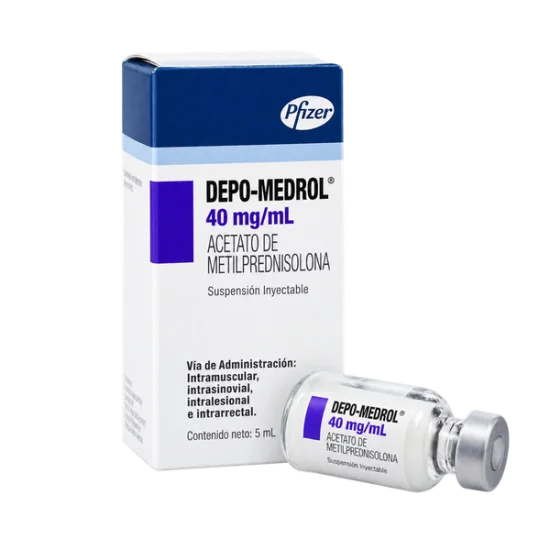
Depo-Medrol is an injectable corticosteroid for inflammatory and immune-mediated conditions requiring targeted or prolonged treatment. It contains methylprednisolone acetate, which reduces inflammatory activity in joints, soft tissues, skin, and selected systemic disorders.
Overview
Administration is performed by trained healthcare professionals. Depo-Medrol is an injectable corticosteroid for inflammatory and immune-mediated conditions requiring targeted or prolonged treatment.
Dosage and administration
The Depo-Medrol presentation covered here is a 40 mg/mL methylprednisolone acetate injectable suspension supplied in a vial. The vial is intended for clinical preparation and administration, not oral use.
Depo-Medrol is administered by qualified healthcare personnel using an aseptic technique. The intended route may be intra-articular, intralesional, or intramuscular, depending on the condition being treated.
Key administration principles include:
- Confirm the diagnosis and treatment site before injection.
- Exclude infection at the injection site and assess for systemic infection risk.
- Use the route selected for methylprednisolone acetate suspension.
- Avoid injecting into a tendon itself, because corticosteroid exposure can weaken tendon tissue.
- Avoid injecting into unstable or severely damaged joints unless the clinical plan specifically supports it.
- Do not administer the acetate suspension intravenously.
- Do not mix the suspension with another injectable product unless compatibility has been established by the administering service.
Intravenous use is unsuitable for this depot acetate suspension. A soluble methylprednisolone formulation may be selected when intravenous corticosteroid therapy is required, but that is a different pharmaceutical preparation.
Different methylprednisolone acetate concentrations and volumes may exist in clinical settings, but the regimen for the chosen strength must be confirmed with a healthcare professional before starting. A dose cannot be selected safely from the concentration alone. The diagnosis, injection site, tissue depth, previous corticosteroid exposure, and patient-specific risks all affect the treatment plan.
Formulation
Depo-Medrol contains methylprednisolone acetate, a synthetic glucocorticoid corticosteroid formulated as an injectable suspension. The product strength represented here is 40 mg/mL in a vial. Methylprednisolone acetate acts on glucocorticoid receptors and changes the activity of genes involved in inflammation, immune-cell migration, swelling, and tissue irritation [1].
Unlike a rapidly cleared soluble injection, the acetate suspension forms a depot at the administration site. The drug is released gradually, so its anti-inflammatory action can last longer than the immediate presence of the injection in the bloodstream. Duration varies with the injection site, dose, tissue blood flow, disease activity, and the patient’s response.
Active Ingredient Mechanics
Methylprednisolone acetate is converted to methylprednisolone, the active corticosteroid component. It suppresses several inflammatory pathways, including the release of cytokines and other mediators that contribute to pain, redness, heat, swelling, and impaired movement.
The depot effect is useful when a clinician needs sustained local or systemic corticosteroid exposure without repeated daily tablets. It also means that unwanted effects may persist after administration. A depot injection cannot be removed once administered.
How it affects the body
Methylprednisolone acetate is a glucocorticoid receptor agonist. After conversion to methylprednisolone, it alters gene transcription and suppresses cytokine release, inflammatory-cell migration, vascular permeability, and other pathways that produce swelling, pain, redness, heat, and tissue irritation. Its acetate formulation creates a local depot from which corticosteroid is released gradually.
Therapeutic indications
Depo-Medrol may be prescribed when inflammation is severe, persistent, or concentrated in a specific tissue. The choice depends on diagnosis, affected anatomy, previous treatment, infection risk, blood-glucose status, and the need for local or systemic corticosteroid exposure.
Clinical applications can include:
- Joint inflammation: selected inflammatory arthritis, synovitis, bursitis, and other conditions affecting a joint or periarticular tissue.
- Soft-tissue disorders: tendon-sheath inflammation, bursitis, and localized inflammatory pain when injection is clinically appropriate.
- Dermatological disease: selected inflammatory skin lesions treated by intralesional injection.
- Allergic and immune-mediated disease: situations in which a corticosteroid is needed to reduce excessive immune activity.
- Systemic inflammatory illness: selected disorders requiring corticosteroid treatment when an injectable depot formulation is judged appropriate.
The route depends on the treatment objective. Intra-articular administration places the suspension into a joint space. Intralesional administration targets a defined skin or soft-tissue lesion. Intramuscular administration may be used for selected systemic indications.
| Treatment area | Typical route | Clinical aim |
|---|---|---|
| Joint or periarticular inflammation | Intra-articular or soft-tissue injection | Reduce local swelling, pain, and inflammatory activity |
| Defined skin or lesion-based inflammation | Intralesional injection | Suppress inflammation within the affected lesion |
| Selected systemic disorders | Intramuscular injection | Provide corticosteroid exposure beyond one local site |
Corticosteroid injection is not appropriate for every painful joint or swollen area. An untreated bacterial, fungal, or viral infection can worsen when local immune activity is suppressed. Diagnosis must come before injection.
Common mistakes
Several errors make corticosteroid treatment less useful or less safe:
- Assuming every painful joint is suitable for steroid injection.
- Failing to mention a fever, skin infection, dental infection, or recent antibiotic course.
- Not reporting diabetes before treatment.
- Treating post-injection pain as proof that the injection failed.
- Repeating injections too frequently without reassessing the diagnosis.
- Using oral, inhaled, topical, and injected corticosteroids without adding their total exposure.
- Stopping long-term corticosteroid treatment suddenly when adrenal suppression is possible.
- Forgetting to mention Naprosyn, anticoagulants, Dapsone, or recent vaccines.
- Returning to intense tendon loading immediately after an injection near a tendon.
One easily missed detail is that symptom relief can outlast the patient’s awareness of the original disease process. Improvement does not prove that the joint or lesion has healed.
Reasons not to use it
Depo-Medrol is not suitable for everyone. Treatment requires a risk assessment when any of the following applies:
- Known allergy to methylprednisolone acetate or an excipient.
- Untreated systemic infection.
- Infection at the planned injection site.
- Suspected septic arthritis.
- Previous serious reaction to corticosteroid injection.
- Certain bleeding disorders or anticoagulant treatment.
- Poorly controlled diabetes.
- Uncontrolled hypertension or significant heart failure.
- Glaucoma or severe osteoporosis.
- Active peptic ulcer disease.
- A history of severe steroid-related psychiatric symptoms.
- Pregnancy or breastfeeding, where the indication and route require individual assessment.
Combining systemic corticosteroid exposure with an NSAID such as Naprosyn, whose active ingredient is naproxen, may increase the risk of stomach irritation, ulceration, and gastrointestinal bleeding. The risk rises with a history of ulcers, anticoagulant use, heavy alcohol intake, older age, or repeated corticosteroid treatment.
Live vaccines may be unsuitable during significant immunosuppression.
When this is not for you
This is not for you if you have an untreated infection, a suspected infected joint, or an infection where the injection would be given. Tell the clinician before treatment if you have had a serious reaction to steroid injections, take blood thinners, or have diabetes that is not well controlled.
You should also discuss uncontrolled high blood pressure, heart failure, glaucoma, severe osteoporosis, stomach ulcers, serious steroid-related mood symptoms, pregnancy, and breastfeeding before administration. Do not decide on an injection based only on the concentration shown on the vial.
Possible side effects
Corticosteroid adverse effects depend on dose, route, frequency, injection site, and total exposure from all corticosteroid products. A single local injection may produce fewer systemic effects than prolonged oral treatment, but systemic absorption can still occur.
Possible local effects include:
- Injection-site pain or temporary flare of discomfort.
- Skin thinning or a depression in the fatty tissue beneath the skin.
- Lightening of skin colour at the injection site.
- Tendon weakening or rupture risk if the injection is placed incorrectly.
- Joint damage with repeated intra-articular injections.
- Local infection or septic arthritis.
Possible systemic effects include:
- Temporary elevation of blood glucose.
- Increased blood pressure or fluid retention.
- Mood changes, agitation, insomnia, or altered concentration.
- Indigestion or increased ulcer risk.
- Increased susceptibility to infection.
- Delayed wound healing.
- Adrenal suppression after repeated or prolonged exposure.
- Cataracts, glaucoma, osteoporosis, or muscle weakness with cumulative corticosteroid exposure.
People with diabetes may notice higher glucose readings after treatment, sometimes for several days. The rise can be greater after a large-joint injection or repeated injections. A person using insulin or glucose-lowering medicine may require a temporary monitoring plan.
A temporary metallic taste, facial flushing, sleep disturbance, or mood change can occur after corticosteroid exposure. These effects may feel disproportionate to the size of the injection because the drug can enter the circulation from the treated tissue.
Urgent symptoms include difficulty breathing, swelling of the face or throat, collapse, severe weakness, confusion, black stools, severe abdominal pain, high fever, or rapidly worsening pain and redness at the injection site.

Comparison
Depo-Medrol differs from oral methylprednisolone and oral prednisolone mainly through its formulation and route. It is a depot suspension, while oral products are absorbed through the gastrointestinal tract and usually require repeated dosing to maintain exposure.
| Option | Route and formulation | Main clinical distinction |
|---|---|---|
| Depo-Medrol | Injection containing methylprednisolone acetate suspension | Depot action at a selected site or after intramuscular administration |
| Medrol or Medrone | Oral methylprednisolone tablets | Flexible daily dosing and easier dose adjustment or discontinuation |
| Prednisolone | Oral corticosteroid | Systemic treatment with a different corticosteroid molecule and oral dosing pattern |
Oral tablets may be preferred when the clinician needs to adjust the dose frequently, stop treatment quickly, or treat a condition requiring predictable daily systemic exposure. Depo-Medrol may be considered when local treatment is suitable or when a longer-lasting depot effect is clinically useful.
These options are not interchangeable milligram for milligram. Their potency, pharmacokinetics, salt or ester form, route, and clinical use differ. A patient should not replace a prescribed oral corticosteroid with an injection or use both without a documented treatment plan.
What doctors say
In clinical practice, physicians usually weigh three issues before selecting a depot corticosteroid: whether inflammation is the correct target, whether infection has been excluded, and whether the expected benefit justifies persistent steroid exposure. A rheumatology or sports-medicine clinician may use local injection when inflammation is concentrated in one joint or bursa. A dermatologist may consider intralesional treatment for a defined inflammatory lesion. A physician treating a systemic condition may choose an oral or soluble injectable corticosteroid instead when close dose adjustment is needed. The practical limitation is duration of control. Depo-Medrol can reduce inflammatory symptoms without correcting the underlying mechanical, infectious, autoimmune, or metabolic cause. Repeated relief should not automatically lead to repeated injections.
Comparison
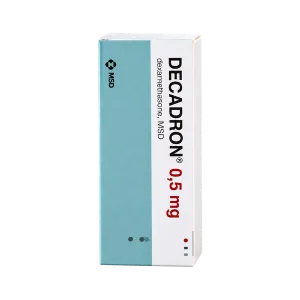
Decadron
Depo-Medrol Current
Common questions
Which symptoms mean stopping and seeking urgent medical care?
Severe breathing difficulty, facial or throat swelling, collapse, confusion, black stools, severe abdominal pain, or rapidly worsening injection-site redness requires urgent medical attention. Fever with increasing joint pain can indicate a serious infection after intra-articular treatment. Health Canada (2023) corticosteroid safety information treats infection, allergic reactions, and gastrointestinal bleeding as clinically significant concerns [2]. Do not wait for routine follow-up if these symptoms develop.
What should happen after a missed dose or application?
Depo-Medrol is administered by a healthcare professional, so there is usually no home dose to replace. If an appointment is missed, contact the treating service to arrange a new clinical plan rather than arranging an extra injection. The FDA (2023) prescribing information describes Depo-Medrol as a product selected according to indication, route, and clinical response [3]. Never double a later dose to compensate for a missed appointment.
What happens when Depo-Medrol is stopped, and does it need tapering?
A single local injection generally does not create the same tapering requirement as prolonged systemic corticosteroid therapy. Repeated injections, high cumulative exposure, or concurrent oral and inhaled corticosteroids can suppress adrenal function. The WHO (2021) guidance on corticosteroid use supports assessing total exposure when treatment is reduced or stopped [4]. Tapering is decided from the entire corticosteroid history, not from the injection name alone.
How soon can the effect become noticeable?
The timing depends on the treated tissue, inflammatory condition, injection technique, and individual response. Some patients notice changes within several days, while local pain or inflammation may take longer to settle. The European Medicines Agency (2022) describes corticosteroid response as dependent on indication, formulation, dose, and route [5]. Increasing pain, fever, or spreading redness is not a normal sign that the medicine is beginning to work.
Can Depo-Medrol cause insomnia or mood changes?
Yes. Corticosteroids can cause insomnia, restlessness, irritability, mood elevation, anxiety, or low mood, even when treatment is delivered locally. The FDA label (2023) notes that these effects are more likely with greater systemic absorption or repeated exposure, and people with previous steroid-related psychiatric symptoms require extra caution. Sleep disruption after an injection should be reported if it is severe, prolonged, or accompanied by confusion or extreme mood change.
Can Depo-Medrol be used during pregnancy or breastfeeding?
Pregnancy and breastfeeding require an individual assessment of the medical indication, injection site, dose, and alternatives. A clinically necessary corticosteroid injection may still be considered, but it should not be scheduled solely for convenience. Health Canada (2023) product information advises reviewing corticosteroid exposure during pregnancy and lactation . The treating clinician should know about pregnancy, plans for pregnancy, or breastfeeding before administration.
What should be discussed before starting treatment?
Discuss allergies, diabetes, hypertension, glaucoma, osteoporosis, ulcers, infection symptoms, tuberculosis exposure, psychiatric reactions to steroids, pregnancy, breastfeeding, and all current medicines. Include Naprosyn, Dapsone, anticoagulants, diuretics, vaccines, inhaled steroids, skin creams, and recent injections. The FDA (2023) label requires attention to contraindications, interactions, infection risk, and systemic corticosteroid effects . The planned route and strength should be confirmed before treatment begins.
Do you offer anonymous delivery?
Your order will be securely packed and shipped within 24 hours. This is exactly what your package will look like (images of an actual item sent). It has the size and look of a regular private letter (24x11x0.7 cm) and its contents cannot be seen.
Customer Feedback on Depo-Medrol
The first day was uncomfortable and the knee felt sore before it settled. Walking improved during the next week, but the benefit faded later, so the injection did not solve the underlying problem.
The injection reduced the swelling, and I did not need repeated daily doses. I noticed facial flushing and a restless night afterward. The clinician also advised me to avoid heavy activity while the treated tissue recovered.
Sources
- Pfizer (2023). DEPO-MEDROL (methylprednisolone acetate injectable suspension) Prescribing Information.
- Health Canada (2023). Product Monograph: Depo-Medrol Methylprednisolone Acetate Injectable Suspension.
- U.S. Food and Drug Administration (2023). DEPO-MEDROL (methylprednisolone acetate injectable suspension) Label.
- World Health Organization (2023). WHO Model List of Essential Medicines — corticosteroids.
- European Medicines Agency (2024). Summary of Product Characteristics (SmPC) — methylprednisolone.