The first week brought mild nausea and a dry mouth. By the fourth week I was finishing work tasks with fewer reminders, although I did not feel any sudden boost in concentration.
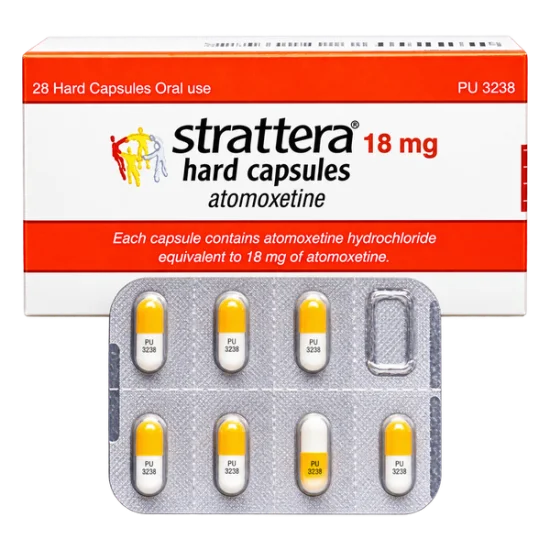
Strattera is an oral hard capsule containing atomoxetine for the treatment of Attention Deficit/Hyperactivity Disorder (ADHD) in children, adolescents, and adults. Atomoxetine increases noradrenaline activity in brain areas involved in attention and impulse control.
Overview
Strattera is an oral hard capsule containing atomoxetine, a non-stimulant ADHD medicine. It belongs to the selective noradrenaline transporter inhibitor class and is used for children, adolescents, and adults with ADHD.
Dosage and administration
- Dose: Strattera 18 mg hard capsule; the exact dose for the selected strength must be confirmed with a healthcare professional before starting.
- Frequency: Take it as prescribed; the exact number of doses per day is not established here.
- Timing: The prescribed time of day and whether to take it before or after meals must be confirmed with a healthcare professional. Taking it with food may reduce nausea for some patients.
- Duration: Continue for the duration prescribed by a healthcare professional; the treatment duration is not established here.
- Route: Take the capsule by mouth and swallow it whole. Do not open, crush, or chew it.
Formulation
The product form is a hard capsule for oral use. The regimen for the chosen strength should be confirmed with a healthcare professional before starting.
How it affects the body
Atomoxetine acts as a selective inhibitor of the noradrenaline transporter, also called the norepinephrine transporter. By reducing noradrenaline reuptake, it increases noradrenergic signalling in brain networks involved in sustained attention, working memory, response inhibition, and executive function.
Atomoxetine can influence heart rate, blood pressure, appetite, sleep, and urinary function because noradrenaline also affects the autonomic nervous system. The result is not limited to attention. Monitoring needs to consider the whole patient.
The liver converts atomoxetine mainly through cytochrome P450 2D6, known as CYP2D6. Its principal active metabolite is 4-hydroxyatomoxetine, which is later conjugated. N-desmethylatomoxetine is another metabolite, though it contributes less to the clinical effect than the parent compound and 4-hydroxyatomoxetine.
Therapeutic indications
Strattera contains atomoxetine, a non-stimulant treatment for Attention Deficit/Hyperactivity Disorder. It is used when ADHD symptoms such as distractibility, impulsive behaviour, poor task persistence, and excessive activity interfere with school, work, relationships, or daily responsibilities. Health Canada recognizes atomoxetine as an ADHD treatment for appropriate patients, with selection based on age, symptoms, medical history, and response to treatment [1].
Atomoxetine may be prescribed for children, adolescents, and adults who meet established diagnostic criteria for ADHD. Diagnosis involves persistent symptoms, impairment in more than one setting, and evidence that symptoms are not better explained by another condition.
Common mistakes
Several avoidable errors can make atomoxetine appear less useful or less tolerable:
- Expecting a rapid effect after the first capsule
- Changing the dose without confirmation from a healthcare professional
- Stopping after a few days because early nausea or fatigue feels discouraging
- Forgetting to mention fluoxetine, paroxetine, quinidine, or other interacting medicines
- Ignoring a sustained increase in pulse or blood pressure
- Opening or chewing the capsule
- Taking a missed dose twice to compensate
- Failing to report jaundice, dark urine, severe abdominal pain, or fainting
- Judging treatment only by subjective concentration instead of tracking practical functioning
- Overlooking poor sleep, irregular meals, or untreated anxiety that can imitate worsening ADHD
A capsule should not be opened or handled carelessly because atomoxetine powder can irritate the eyes. This is an easy mistake to prevent.
People sometimes confuse a temporary reduction in appetite with a harmless effect. Persistent appetite loss, weight loss, or slowed growth in a child needs review.
Reasons not to use it
- Current treatment with a monoamine oxidase inhibitor, or use within the preceding 14 days
- Pheochromocytoma or a history suggesting this catecholamine-producing tumour
- Narrow-angle glaucoma
- Serious cardiovascular disease where a rise in pulse or blood pressure could worsen risk
- Severe liver injury or unexplained persistent liver abnormalities
- Previous serious reaction to atomoxetine or an excipient
- Urinary retention or significant bladder-outflow symptoms requiring assessment
Combining it with monoamine oxidase inhibitors is contraindicated because of the risk of serious cardiovascular and neurological reactions.
The World Health Organization emphasizes medication review and patient-specific risk assessment when medicines affect central nervous system function and cardiovascular parameters [2].
When this is not for you
Strattera is not suitable for everyone. It is NOT for you if a clinician has identified a listed contraindication, a serious interaction, or an unassessed medical risk.
It may not be suitable if you have serious heart disease, severe liver problems, glaucoma, urinary retention, or a previous serious reaction to atomoxetine. Tell your clinician if you have had fainting, chest pain, seizures, or unexplained loss of consciousness. Medicines including fluoxetine, paroxetine, and quinidine can interact with atomoxetine, and medicines for asthma, depression, blood pressure, or heart rhythm also deserve review before the regimen is confirmed.
Possible side effects
Atomoxetine’s adverse effects often involve the gastrointestinal, nervous, cardiovascular, and autonomic systems. The Canadian product monograph lists nausea, dry mouth, reduced appetite, abdominal discomfort, constipation, dizziness, fatigue, and sleep changes among reported reactions. Erectile dysfunction and other sexual adverse effects can occur in adults.
Common or clinically relevant effects include:
- Nausea or stomach discomfort
- Dry mouth
- Reduced appetite
- Constipation
- Dizziness
- Fatigue or sleepiness
- Insomnia or difficulty falling asleep
- Headache
- Increased heart rate
- Increased blood pressure
- Erectile dysfunction or reduced sexual function
Seek urgent medical attention for chest pain, fainting, severe palpitations, yellowing of the skin or eyes, dark urine, severe abdominal pain, facial swelling, breathing difficulty, or new suicidal thoughts. Children, adolescents, and young adults require observation for marked mood changes, agitation, hostility, or suicidal thinking during treatment changes.
Comparison
Atomoxetine and methylphenidate both target ADHD symptoms, but their pharmacology, timing, and prescribing considerations differ.
| Feature | Atomoxetine | Methylphenidate |
|---|---|---|
| Drug class and action | Non-stimulant; selective noradrenaline transporter inhibitor | Stimulant; increases dopamine and noradrenaline signalling |
| Clinical timing | Benefits build gradually over repeated dosing | Attention effects may appear sooner after a dose |
| Misuse and control profile | Not a controlled stimulant in Canada | Controlled stimulant with misuse and diversion considerations |
Methylphenidate may be chosen when a rapid, noticeable change in attention is needed and stimulant treatment is clinically appropriate. Atomoxetine may suit patients who need an all-day non-stimulant approach, have concerns about stimulant misuse, or experience troublesome stimulant-related effects.
The trade-off is timing. Atomoxetine is not a reliable “take it once and feel focused within an hour” treatment. Some patients notice changes after several weeks, while the full response may take longer. A slower onset can make early treatment feel disappointing if expectations are based on stimulant treatment.
Atomoxetine can also cause nausea, tiredness, reduced appetite, or increased pulse. Methylphenidate has its own limitations, including appetite suppression, insomnia, increased heart rate, and misuse potential. The choice depends on symptom pattern, medical history, coexisting conditions, previous treatment response, and the patient’s daily schedule.
What doctors say
Clinicians generally set expectations that atomoxetine requires patience. The absence of an immediate stimulant sensation does not mean that the treatment cannot help, but early improvement may be subtle. Better task completion, fewer careless errors, less interrupting, and improved follow-through are more useful markers than a feeling of being “energized.”
Doctors also look for measurable tolerability. Weight, appetite, sleep, blood pressure, pulse, mood, urinary symptoms, and sexual function can all influence whether treatment remains suitable.
One practical clinical observation is that a patient may report improved concentration while a partner or teacher first notices fewer interruptions and better organization. Gathering feedback from more than one setting can produce a clearer picture of response.
Another is that poor response may reflect an unsuitable dose, insufficient treatment duration, an interacting medicine, untreated sleep problems, anxiety, depression, or an incorrect diagnosis. Increasing the dose is not always the right answer.

Common questions
What should I do after missing a Strattera dose?
Take the missed dose when remembered unless it is close to the next scheduled dose. If the next dose is near, skip the missed dose and resume the established regimen; do not double the amount. Health Canada patient information from 2024 advises avoiding extra doses after a missed dose because higher exposure can increase adverse effects. A repeated pattern of missed doses should be discussed during the next treatment review.
What should I do if the expected result does not come?
Do not increase the dose independently or stop after only a few days. Atomoxetine may require several weeks before functional benefits become clear, and the response should be assessed through attention, task completion, impulsivity, sleep, appetite, pulse, and blood pressure. The European Medicines Agency’s product information available in 2025 supports reviewing dose, adherence, interactions, and diagnosis when improvement is insufficient. A structured symptom record can help distinguish inadequate response from an untreated sleep or mood problem.
Can Strattera capsules be split, crushed, or chewed?
The hard capsules should be swallowed whole. Do not split, crush, open, or chew them, because atomoxetine powder can irritate the eyes and mouth. FDA safety information from 2025 continues to describe careful handling of atomoxetine capsules as a practical safety requirement. If a capsule breaks and powder reaches the eye, rinse thoroughly with water and obtain medical advice if symptoms persist.
How does Strattera differ from methylphenidate?
Strattera contains atomoxetine, which selectively blocks the noradrenaline transporter, while methylphenidate is a stimulant that affects dopamine and noradrenaline transport. Atomoxetine is not a controlled stimulant and usually develops its clinical effect more gradually. The FDA’s 2025 ADHD medication information supports choosing treatment according to symptoms, medical history, response, and misuse risk. Methylphenidate may provide a faster perceived effect, while atomoxetine may be considered when a non-stimulant approach is preferred.
Can Strattera be used during pregnancy or breastfeeding?
Pregnancy and breastfeeding require an individualized review because human safety information for atomoxetine remains limited. Do not stop treatment abruptly after discovering a pregnancy; contact the prescribing clinician promptly to weigh symptom control, alternatives, and potential fetal or infant exposure. The World Health Organization’s 2025 medicine-safety principles support shared risk-benefit assessment when pregnancy and lactation data are limited. Seek urgent care for severe mood changes, fainting, chest pain, or other serious symptoms at any stage of treatment.
Do you offer anonymous delivery?
Your order will be securely packed and shipped within 24 hours. This is exactly what your package will look like (images of an actual item sent). It has the size and look of a regular private letter (24x11x0.7 cm) and its contents cannot be seen.
Cardiovascular risks and regulatory monitoring standards
Atomoxetine can increase pulse and blood pressure. The change is often modest, yet clinically meaningful elevations can occur in susceptible patients. The United States Food and Drug Administration recommends cardiovascular assessment before treatment and monitoring during therapy, especially after dose changes.
Baseline review should include:
- Personal history of fainting, chest pain, palpitations, or exercise intolerance
- Family history of sudden cardiac death or serious rhythm disorders
- Blood pressure and pulse
- Known structural heart disease or significant cardiovascular illness
- Medicines that affect blood pressure, heart rhythm, or noradrenaline
Blood pressure and pulse should be reassessed after treatment begins and during dose adjustments. Monitoring also matters when medicines are added or stopped, since CYP2D6 inhibitors can change atomoxetine exposure.
A fast heartbeat is not always dangerous, but a persistent resting pulse increase, fainting episode, chest pain, or breathlessness requires prompt medical assessment. Patients with significant cardiovascular disease need individualized risk evaluation before treatment.
Strattera administration during pregnancy and lactation
Pregnancy requires an individualized risk-benefit decision. Human pregnancy data for atomoxetine are limited, so treatment should only continue when the expected benefit justifies potential risk. A planned pregnancy, positive pregnancy test, or fertility treatment should prompt a medication review rather than abrupt self-discontinuation.
The same principle applies to breastfeeding. It is not established that atomoxetine is harmless for a nursing infant, and information about transfer into human milk remains limited. Treatment decisions should consider symptom severity, alternative options, infant age, feeding status, and the consequences of untreated ADHD.
Patients who can become pregnant should discuss contraception and pregnancy planning before the regimen is confirmed. Atomoxetine should not be stopped suddenly without a treatment plan, since symptom return can affect driving, work, study, and daily safety.
Customer Feedback on Strattera
My blood pressure and pulse were checked before starting. I noticed better follow-through, but sleep became lighter when I took the capsule late, so the timing was moved earlier.
I stopped after persistent dizziness and poor appetite. The symptoms improved after stopping, but I did not see enough benefit during the short trial to continue without another review.
The change was gradual. I still needed a written schedule, yet I missed fewer appointments and had less trouble returning to unfinished tasks.
Sources
- Health Canada (2024). Strattera — Canadian Product Monograph and Consumer Information.
- World Health Organization (2024). Medication Safety in Polypharmacy: Technical Report.