Skip to content
Spiriva
Active ingredient: Tiotropium

Spiriva

Quality products
24/7 Support
Fast delivery
Delivery from 4 days
Select pack Package Per unit Price

Free delivery on orders from $ 312.00, free express delivery from $ 468.00

Secure Payments
Track your order
Best price guarantee

COPD causes persistent narrowing of the airways, excess mucus, and reduced airflow during breathing. Spiriva is intended for adults with COPD and helps keep airway muscles relaxed. Its tiotropium treatment supports long-term maintenance breathing control.

Overview

COPD causes persistent narrowing of the airways, excess mucus, and reduced airflow during breathing. Spiriva contains tiotropium, a long-acting muscarinic antagonist that helps keep airway muscles relaxed for maintenance treatment in adults with COPD. The Respimat device delivers tiotropium as an inhaled solution rather than as a swallowed capsule.

Active Ingredient, Brand Name, and Drug Class

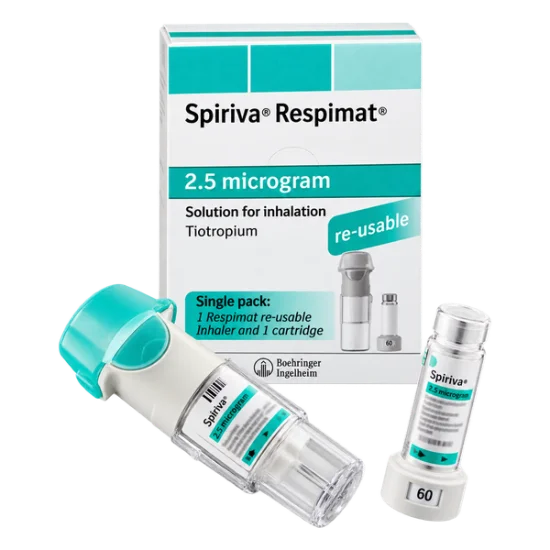
Spiriva Respimat contains tiotropium. Tiotropium belongs to the long-acting muscarinic antagonist class, also called an anticholinergic bronchodilator. The product uses a reusable Respimat inhaler with a cartridge containing inhalation solution.

The active strength marked for this presentation is 2.5 micrograms per actuation. The usual COPD regimen uses two inhalations once daily when prescribed in that way, giving a total daily dose of 5 micrograms.

The Respimat produces a slow-moving mist. Press the dose-release button while breathing in slowly, rather than taking a sharp breath as you would with some dry-powder inhalers.

COPD Indication and Position in Treatment Guidelines

Spiriva is prescribed for long-term symptom control in COPD. It can reduce airflow limitation, support exercise tolerance, and lower the likelihood of COPD flare-ups when used consistently. Tiotropium does not treat an acute asthma attack or sudden bronchospasm.

The Global Initiative for Chronic Obstructive Lung Disease, developed with involvement from the National Heart, Lung, and Blood Institute and the World Health Organization, includes long-acting bronchodilators within COPD treatment strategies. The GOLD 2025 report places treatment choice around symptom burden, exacerbation history, inhaler technique, and response.

In clinical practice, tiotropium is considered after COPD has been confirmed with spirometry, including a post-bronchodilator FEV1/FVC ratio below 0.70. The Food and Drug Administration approved tiotropium inhalation products for COPD maintenance treatment, while Health Canada regulates the Canadian product information.

Dosage and administration

Use the prescribed dose once daily through the Respimat device. The exact amount and frequency depend on the purpose of treatment and are agreed with a doctor or pharmacist.

Preparing and Loading the Respimat

  1. Keep the inhaler upright with the cap closed.
  2. Turn the clear base in the direction of the arrows until it clicks.
  3. Open the cap fully.
  4. Breathe out slowly, away from the mouthpiece.
  5. Seal your lips around the mouthpiece without covering the air vents.
  6. Start a slow, deep breath through your mouth and press the dose-release button.
  7. Continue breathing in slowly.
  8. Hold your breath for several seconds if comfortable.
  9. Repeat the process for the second inhalation when two inhalations are prescribed.
  10. Close the cap after use.

The cartridge remains inside the reusable inhaler. Spiriva Respimat is not a capsule that should be opened, swallowed, pierced, or transferred into another inhaler.

Inhaling the Dose Correctly

A slow inhalation allows the mist to travel into the lower airways. Breathing too quickly can leave medication in the mouth and throat instead of allowing deposition deeper in the lungs. Do not exhale into the mouthpiece because moisture can affect the spray mechanism.

The button should be pressed once during each inhalation. Pressing it repeatedly without inhaling can waste doses and make it harder to track remaining medication.

If the mist feels as though it hits the tongue or throat, slow the inhalation and keep the mouthpiece sealed between the lips. A mirror can help identify spray escaping from the sides of the mouth.

Cleaning, Storage, and Missed Doses

Wipe the mouthpiece and surrounding area with a damp cloth at least once each week. Do not rinse the entire inhaler under running water. Keep the cap closed when the device is not being used.

If a daily dose is missed, take the next scheduled dose at the usual time. Do not take extra inhalations to compensate. Spiriva provides maintenance bronchodilation; doubling the dose does not act as a rapid rescue treatment.

Formulation

Active Ingredient, Brand Name, and Drug Class

Spiriva Respimat contains tiotropium. Tiotropium belongs to the long-acting muscarinic antagonist class, also called an anticholinergic bronchodilator. The product uses a reusable Respimat inhaler with a cartridge containing inhalation solution.

The active strength marked for this presentation is 2.5 micrograms per actuation. The usual COPD regimen uses two inhalations once daily when prescribed in that way, giving a total daily dose of 5 micrograms.

The Respimat produces a slow-moving mist. Press the dose-release button while breathing in slowly, rather than taking a sharp breath as you would with some dry-powder inhalers.

How it affects the body

Muscarinic receptors respond to acetylcholine, a chemical messenger released by parasympathetic nerves. In the airways, M3 receptor activation contracts smooth muscle and increases mucus secretion. Tiotropium is an antagonist, meaning it occupies the receptor and prevents acetylcholine from producing that effect.

M1 and M3 Receptor Blockade in the Airway

Tiotropium blocks M1 and M3 muscarinic receptors in the respiratory tract. M1 receptors support parasympathetic signalling in airway nerve pathways. M3 receptors directly influence airway smooth-muscle contraction and glandular secretion.

A simple way to picture the action is a lock that remains occupied. Acetylcholine cannot easily activate the airway receptor while tiotropium is present. Tiotropium releases relatively quickly from M2 receptors and more slowly from M3 receptors, helping sustain airway relaxation while limiting some presynaptic and cardiac effects.

The FDA prescribing information describes tiotropium’s prolonged pulmonary action and renal elimination [1].

Therapeutic indications

Spiriva is prescribed for long-term symptom control in COPD. It can reduce airflow limitation, support exercise tolerance, and lower the likelihood of COPD flare-ups when used consistently. Tiotropium does not treat an acute asthma attack or sudden bronchospasm.

The Global Initiative for Chronic Obstructive Lung Disease, developed with involvement from the National Heart, Lung, and Blood Institute and the World Health Organization, includes long-acting bronchodilators within COPD treatment strategies. The GOLD 2025 report places treatment choice around symptom burden, exacerbation history, inhaler technique, and response.

In clinical practice, tiotropium is considered after COPD has been confirmed with spirometry, including a post-bronchodilator FEV1/FVC ratio below 0.70. The Food and Drug Administration approved tiotropium inhalation products for COPD maintenance treatment, while Health Canada regulates the Canadian product information.

Common mistakes

Pharmacists hear the same Respimat questions repeatedly. Most errors involve the device, the timing of benefit, or confusion between maintenance and rescue treatment.

Common mistake Better approach
Taking extra inhalations for sudden breathlessness Use the prescribed rescue plan and seek urgent help when symptoms are severe
Stopping Spiriva when breathing improves Continue the scheduled regimen unless the prescriber changes it
Pressing the button before starting a slow inhalation Begin breathing in, then press the button
Exhaling into the mouthpiece Breathe out away from the device
Assuming one missed dose requires two doses later Skip the missed dose and resume the next scheduled dose

Some patients stop treatment after several good days because COPD feels quieter. That removes the medicine that helped maintain airway openness. Others expect immediate relief and conclude that Spiriva has failed before the maintenance effect has been assessed.

A further mistake is using Spiriva during a severe attack while delaying urgent care. Sudden severe breathlessness, blue lips, confusion, chest pain, or inability to speak in full sentences requires emergency assessment.

Reasons not to use it

  • Previous allergy to tiotropium, atropine-like medicines, or any component of the inhalation solution
  • Narrow-angle glaucoma or a history of acute angle-closure glaucoma
  • Urinary retention, prostate enlargement, or bladder-outflow obstruction
  • Severe kidney impairment
  • A history of serious reaction to inhaled anticholinergic medicines
  • Pregnancy or breastfeeding, where treatment benefits and potential risks need individual assessment

When this is not for you

NOT for you if you have a serious allergy to tiotropium, narrow-angle glaucoma, urinary retention, or severe kidney impairment; seek medical advice before use.

Possible side effects

Dry mouth is the side effect most closely linked with tiotropium’s anticholinergic action. The same receptor blockade that relaxes airway muscle can reduce salivary secretions. Dry mouth may increase dental decay risk and can make swallowing less comfortable, especially in older adults.

Dry Mouth and Other Anticholinergic Effects

Possible effects include:

  • Dry mouth or throat
  • Constipation
  • Hoarse voice
  • Cough after inhalation
  • Headache
  • Dizziness
  • Blurred vision
  • Difficulty urinating
  • Fast or irregular heartbeat

Sugar-free gum, saliva substitutes, and regular water intake can ease mild dry mouth. Good dental care matters because persistent low saliva increases the risk of cavities.

Avoid mouthwashes containing alcohol when dry mouth is troublesome. They can make oral dryness feel worse and may irritate already sensitive mouth tissues.

Mild throat irritation often improves as inhaler technique becomes smoother. Persistent symptoms, new urinary difficulty, or troublesome palpitations require prompt clinical review.

Rare but Serious Adverse Effects

Seek urgent medical care for sudden worsening of breathing immediately after inhalation. This may indicate paradoxical bronchospasm, in which the airways tighten instead of opening.

Contact a clinician the same day for eye pain, halos around lights, marked blurred vision, or severe redness. Tiotropium can rarely trigger acute angle-closure glaucoma in susceptible people through anticholinergic effects on the iris and drainage angle.

Urgent assessment is also needed for inability to pass urine, severe lower abdominal pain, facial swelling, tongue swelling, or fainting. M3 receptor blockade can reduce bladder contraction, while allergic swelling can threaten the airway.

Comparison

Spiriva and Atrovent Compared

Spiriva and Atrovent belong to the anticholinergic bronchodilator family, but they serve different treatment roles. Spiriva contains tiotropium and is long acting. Atrovent contains ipratropium and is short acting.

Treatment Active ingredient and role Typical duration
Spiriva Respimat Tiotropium; once-daily COPD maintenance About 24 hours
Atrovent Ipratropium; short-acting bronchodilation Several hours

Tiotropium dissociates slowly from M3 receptors in airway smooth muscle. Ipratropium leaves these receptors more quickly, so it requires repeated daily dosing. Atrovent may be used several times daily when prescribed, while Spiriva is generally used once daily.

Duration of Action and Dosing Frequency

Tiotropium’s long receptor residence supports approximately 24-hour bronchodilation. Ipratropium commonly provides relief for around four to six hours, although the clinical response varies.

Once-daily treatment can simplify COPD routines, especially when a person already uses several medicines. Missing doses still matters because the benefit depends on regular maintenance use.

Choosing Between Tiotropium and Ipratropium

A clinician may select tiotropium for sustained COPD control and ipratropium for shorter-duration bronchodilation. Spiriva does not replace a prescribed rescue inhaler. Using two anticholinergic bronchodilators together is generally avoided unless a prescriber has a specific reason, because dry mouth, constipation, urinary retention, and blurred vision may become more likely.

Spiriva Compared with Albuterol and Salmeterol/Fluticasone Inhalers

Different inhalers target different parts of COPD care.

Treatment group Main action Main role
Tiotropium Muscarinic receptor blockade Long-term bronchodilation
Albuterol Beta-2 receptor stimulation Short-acting rescue bronchodilation
Salmeterol/fluticasone Long-acting beta-2 stimulation plus corticosteroid action Maintenance bronchodilation with inflammation control

Spiriva and Albuterol: Maintenance Versus Rescue

Albuterol acts quickly through beta-2 receptors and is commonly used for sudden breathlessness when prescribed as a rescue inhaler. Spiriva acts more slowly and is intended for scheduled maintenance. It should not be used as a substitute for albuterol during an acute episode.

Increasing albuterol use is a warning sign. It may indicate worsening COPD, an infection, or an exacerbation. The response is not to take extra Spiriva; the person needs an appropriate acute-care plan.

Spiriva with Salmeterol/Fluticasone

Salmeterol provides long-acting beta-2 bronchodilation. Fluticasone is an inhaled corticosteroid that reduces airway inflammation in selected patients. Tiotropium adds muscarinic blockade, so a regimen containing all three mechanisms may be called triple therapy when clinically indicated.

The three actions are distinct:

  • Beta-2 stimulation relaxes airway muscle.
  • Muscarinic blockade prevents acetylcholine-driven airway narrowing.
  • Corticosteroid treatment reduces airway inflammation.

Fluticasone can increase the risk of oral thrush and hoarseness. Rinsing the mouth and spitting out the water after the corticosteroid inhaler helps reduce this risk.

Keep the rescue inhaler available even when Spiriva has improved daily breathing. Maintenance control and emergency relief are separate jobs.

What doctors say

Respiratory clinicians generally judge Spiriva by practical outcomes: fewer symptoms, better activity tolerance, fewer exacerbations, and correct inhaler technique. Spirometry confirms airflow limitation, but day-to-day function and rescue-inhaler use also guide treatment decisions.

A physician may reassess the treatment when breathlessness continues despite regular use. The review can include inhaler technique, smoking exposure, infection, heart disease, pulmonary rehabilitation, oxygen levels, and whether another inhaler class is needed.

The main limitation is that tiotropium does not treat every cause of breathlessness. It also cannot reverse advanced structural lung damage. Dry mouth, urinary symptoms, glaucoma risk, and kidney function deserve extra attention in older adults.

Common questions

Can people under 18 use Spiriva?

Spiriva Respimat is generally used for adult COPD, and routine paediatric use is not established for this indication. A child or teenager should not start tiotropium based on an adult’s prescription. The 2024 FDA product information and Health Canada materials describe the approved population and dosing framework for the marketed inhalation product. Paediatric breathing symptoms require a separate diagnosis and treatment plan.

How does Spiriva differ from Atrovent?

Spiriva contains tiotropium, while Atrovent contains ipratropium. Both block muscarinic receptors, but tiotropium remains active in the airways for about a day and ipratropium acts for several hours. The GOLD 2025 strategy places long-acting bronchodilators within maintenance treatment, while short-acting agents may have a reliever role. Combining both anticholinergics can increase adverse effects.

Can Spiriva be split, crushed, or chewed?

Spiriva Respimat is a liquid inhalation product delivered through a reusable inhaler, so there is no tablet or capsule to split, crush, or chew. The cartridge must remain in the designated Respimat device. The 2024 EMA product information describes administration through the inhaler rather than oral use. Swallowing the cartridge contents would not provide the intended lung treatment.

How long does one Spiriva dose keep working?

One prescribed daily dose is designed to provide bronchodilation across approximately 24 hours. Tiotropium’s slow release from M3 receptors supports this prolonged action. The 2024 FDA prescribing information describes once-daily administration for COPD maintenance [2]. A longer-lasting effect does not make Spiriva suitable for repeated extra doses during sudden breathlessness.

How soon does the effect of Spiriva become noticeable?

Some people notice easier breathing after the first doses, while the full maintenance benefit may become clearer over days to weeks. The response depends on COPD severity, airway inflammation, activity level, and inhaler technique. The GOLD 2025 report supports reviewing symptoms and exacerbation risk rather than judging treatment from one inhalation. Persistent or worsening breathlessness needs clinical assessment.

What happens when Spiriva is stopped, and does it need tapering?

Spiriva does not usually require a taper because tiotropium is not a corticosteroid and does not create the same adrenal-withdrawal concern. Stopping can allow airway narrowing and COPD symptoms to return, especially when the medicine was controlling daily breathlessness. WHO COPD guidance from 2023 supports continued maintenance treatment according to the person’s clinical plan. A prescriber should direct any planned change, especially when other inhalers are also used.

Do you offer anonymous delivery?

Your order will be securely packed and shipped within 24 hours. This is exactly what your package will look like (images of an actual item sent). It has the size and look of a regular private letter (24x11x0.7 cm) and its contents cannot be seen.

Customer Feedback on Spiriva

4.1
Based on 4 reviews
Ellie, 42 Victoria Several months
Verified
Rating: 4.5 out of 5

I noticed stairs became easier after the first couple of weeks. The first few days gave me a dry mouth, so I kept sugar-free gum with me. The slow inhalation took practice.

Nov 15, 2026
Alison C., 69 Thunder Bay Several months
Verified
Rating: 3.5 out of 5

My morning cough was less disruptive after about a month. I still needed my rescue inhaler during a chest infection. I had to slow down the inhalation because I was pressing the button too early.

Oct 20, 2026
Deborah D., 64 Windsor Several months
Verified
Rating: 5 out of 5

The device was simpler than I expected, and I liked taking it once a day. I stopped for several days when I felt better and became more short of breath again. My clinician explained that it was maintenance treatment.

Oct 30, 2026
Jane, 61 Quebec City Several months
Verified
Rating: 3.5 out of 5

Breathing during walks improved, but dry mouth remained annoying. Rinsing after the other inhaler helped my throat, while water and gum helped the dryness. The treatment was useful, though it did not remove every symptom.

Nov 8, 2026

Sources

  1. U.S. Food and Drug Administration (2024). Spiriva Respimat (tiotropium bromide) Prescribing Information
  2. U.S. Food and Drug Administration (2023). Spiriva HandiHaler (tiotropium bromide) Prescribing Information
Get our free app Shop faster and track your orders 3.8 · 504 reviews Install