Skip to content
Atrovent
Active ingredient: Ipratropium bromide

Atrovent

Quality products
24/7 Support
Fast delivery
Delivery from 4 days
Select pack Package Per unit Price

Free delivery on orders from $ 312.00, free express delivery from $ 468.00

Secure Payments
Track your order
Best price guarantee

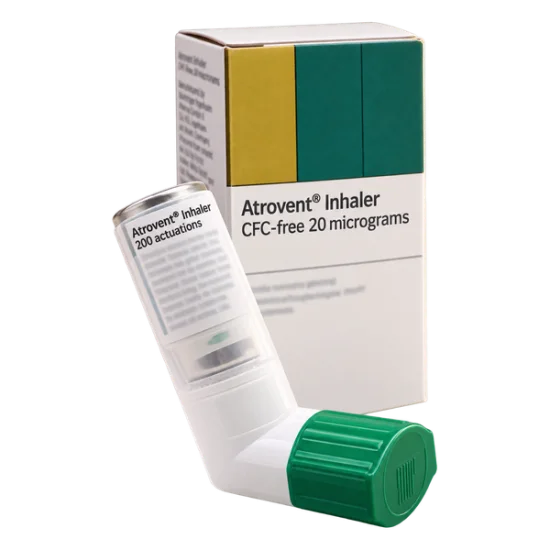
Atrovent Inhaler delivers ipratropium bromide, which relaxes airway muscle and reduces bronchial narrowing. It is used for airflow limitation in chronic obstructive pulmonary disease and, in selected situations, asthma. The pressurised inhalation aerosol provides local treatment through the lungs.

Overview

Atrovent Inhaler contains ipratropium bromide, an inhaled anticholinergic bronchodilator. Its clinical role is to reduce reversible bronchoconstriction and improve the movement of air through narrowed bronchi.

Active Ingredient and Pharmacological Class

Ipratropium bromide belongs to the short-acting muscarinic antagonist class, also called a short-acting anticholinergic bronchodilator. Its action is mainly local in the respiratory tract, so it produces less systemic anticholinergic exposure than an oral anticholinergic drug.

The medicine does not remove airway inflammation in the same way as an inhaled corticosteroid. It also does not replace an asthma preventer inhaler when regular anti-inflammatory treatment is required.

The Canadian product monograph and regulatory information describe ipratropium inhalation as a treatment for bronchospasm associated with chronic obstructive pulmonary disease, including chronic bronchitis and emphysema [1].

Dosage and administration

The dose of Atrovent is decided individually, taking age, other medicines, and health conditions into account. The prescribed dose determines how many inhalations are used and how often they are repeated.

  • Shake the inhaler as directed before administration.
  • Exhale gently before placing the mouthpiece between the teeth.
  • Start a slow, deep breath while pressing the canister once.
  • Continue inhaling steadily, then hold the breath briefly if able.
  • Replace the cap after use.
  • Follow the prescribed schedule rather than repeating doses simply because breathing feels uncomfortable.

A spacer may help people who struggle to coordinate pressing the canister with inhalation. It can also reduce medicine deposited in the mouth and throat.

If a dose is missed, use it when remembered unless the next scheduled dose is close. Do not double the next administration. Frequent need for extra doses suggests inadequate symptom control and requires clinical reassessment.

The most common technique problem is pressing too early or breathing in too quickly. Slow inhalation is more useful than forceful inhalation for a pressurised aerosol.

Formulation

Atrovent Inhaler contains ipratropium bromide, an inhaled anticholinergic bronchodilator. The product is supplied as a pressurised inhalation aerosol with 200 actuations.

How it affects the body

Ipratropium bromide blocks muscarinic acetylcholine receptors in airway smooth muscle. Acetylcholine normally promotes bronchial contraction and mucus secretion through parasympathetic nerve activity. By reducing this signal, ipratropium helps the bronchial muscles relax and may reduce excessive airway secretions. The effect is mainly local within the respiratory tract. Systemic anticholinergic effects can still occur. The clinical response depends on the underlying cause of airway narrowing.

Therapeutic indications

Atrovent Inhaler is mainly used to reduce airflow obstruction in chronic obstructive pulmonary disease. Patients with COPD may experience persistent bronchial narrowing, cough, wheeze, chest tightness, and shortness of breath. By reducing vagally mediated bronchoconstriction, ipratropium can improve airflow and ease some of these symptoms.

Asthma requires a more individualised treatment plan. Inhaled corticosteroids remain central to long-term asthma control when airway inflammation is present. Atrovent may be used as an additional bronchodilator in selected acute episodes, including severe exacerbations managed under medical supervision.

  • Maintenance treatment: regular therapy intended to reduce daily symptoms and improve lung function.
  • Relief treatment: medicine used when symptoms occur or worsen.
  • Asthma preventer inhalers: anti-inflammatory inhalers used to reduce future exacerbations.
  • Asthma relief inhalers: bronchodilators used for faster symptom relief.
  • Atrovent’s role: anticholinergic bronchodilation, with onset and clinical use differing from short-acting beta-2 agonists.

Clinical guidance from the Global Initiative for Chronic Obstructive Lung Disease recognises short-acting bronchodilators as options for symptom relief in COPD, while treatment selection depends on breathlessness, exacerbation history, lung function, and other medicines [2].

Atrovent may help airflow, yet it does not reverse every cause of breathlessness. A sudden increase in breathlessness, blue lips, confusion, severe chest pain, or inability to speak in full sentences requires urgent medical attention.

Common mistakes

Several practical errors can reduce the amount of medicine reaching the lungs:

  • Failing to shake the inhaler before use
  • Breathing in too quickly
  • Pressing the canister before beginning a slow inhalation
  • Stopping the inhalation immediately after pressing
  • Spraying several doses rapidly without a prescribed reason
  • Pointing the mouthpiece toward the eyes
  • Using a nebulizer solution in the pressurised inhaler
  • Treating sudden severe breathlessness at home without reassessment
  • Sharing an inhaler with another person
  • Ignoring persistent dry mouth, urinary difficulty, or eye pain

A spacer can improve delivery when hand-breath coordination is poor. It does not make an incorrect treatment plan appropriate.

If the mouthpiece feels blocked or the spray becomes irregular, do not attempt to repair the canister or transfer the contents. Device performance affects dose delivery and requires replacement or professional assessment.

Alcohol does not have a classic direct interaction with ipratropium, yet alcohol can worsen dizziness, dehydration, reflux, and the perception of breathlessness. People with COPD may also notice that alcohol worsens sleep quality or respiratory symptoms. The Canadian Lung Association advises attention to the wider respiratory treatment plan rather than relying on one inhaler alone.

Older adults can use inhaled ipratropium when it is prescribed appropriately. Age increases the likelihood of glaucoma, prostate enlargement, urinary retention, heart disease, and multiple medicines, so these factors influence treatment selection. The WHO’s 2023 technical information on COPD supports individualised assessment of symptoms, functional status, and comorbidities in older patients [4].

Reasons not to use it

This medication is not for you if you have had a serious allergic reaction to ipratropium, atropine-like medicines, or another ingredient in the inhaler. Extra caution is needed with narrow-angle glaucoma, enlarged prostate, bladder-outflow obstruction, or a history of urinary retention.

Other anticholinergic medicines may increase dry mouth, constipation, blurred vision, urinary retention, or heart-rate effects. Examples include some medicines used for overactive bladder, motion sickness, gastrointestinal spasm, and certain respiratory conditions.

Atrovent does not have the same interaction profile as beta-blockers or nitrates, but a full medicine review remains relevant when treatment is prescribed for COPD or asthma.

When this is not for you

Tell the prescriber about:

  • Glaucoma or recent eye surgery
  • Difficulty passing urine
  • Enlarged prostate
  • Cystic fibrosis
  • Pregnancy or breastfeeding
  • Severe or rapidly worsening breathlessness
  • Previous paradoxical bronchospasm after an inhaled medicine

The product should not be used as a reason to delay urgent care for severe respiratory symptoms.

Possible side effects

Common effects of inhaled ipratropium may include dry mouth, throat irritation, cough, headache, nausea, or an unpleasant taste. These effects are often related to local anticholinergic action.

Possible reactions include:

  • Dry mouth or throat
  • Hoarseness or throat discomfort
  • Cough after inhalation
  • Headache or dizziness
  • Constipation or difficulty passing urine
  • Blurred vision if the aerosol reaches the eyes
  • Palpitations or increased heart rate, less commonly

Serious reactions need prompt attention. These include worsening wheeze immediately after inhalation, facial or throat swelling, hives, severe eye pain with blurred vision, or inability to urinate.

Paradoxical bronchospasm means that breathing becomes worse immediately after inhalation instead of better. This is uncommon but clinically significant. The medicine should be stopped and urgent medical assessment obtained if severe breathing deterioration follows a dose.

One practical detail is easy to miss: dry mouth can increase discomfort from dentures and may aggravate dental problems over time. Regular oral care and adequate fluid intake can help, unless fluid restriction has been prescribed for another condition.

Comparison

Treatment approach Main pharmacological action Typical clinical role
Ipratropium bromide Blocks muscarinic receptors and reduces vagal bronchoconstriction COPD symptom relief; selected asthma adjunct
Short-acting beta-2 agonist Stimulates beta-2 receptors to relax airway smooth muscle Rapid bronchodilation for acute symptoms
Inhaled corticosteroid Suppresses airway inflammation Asthma prevention and selected COPD regimens

Ipratropium and a short-acting beta-2 agonist can sometimes be prescribed together because they open the airways through different mechanisms. The combination is selected according to the patient’s diagnosis and response.

A corticosteroid inhaler serves a different purpose. It reduces inflammation over time and does not act as a direct substitute for an anticholinergic bronchodilator during acute bronchospasm.

What doctors say

In clinical practice, physicians often focus first on the diagnosis behind breathlessness. COPD, asthma, heart failure, infection, pulmonary embolism, and deconditioning can produce overlapping symptoms, yet they require different treatment.

Doctors also assess inhaler technique before increasing the dose. A patient may report that Atrovent is ineffective when the real problem is poor coordination, incomplete inhalation, or failure to exhale before activating the device.

Health Canada and the European Medicines Agency describe inhaled ipratropium as a locally acting bronchodilator with anticholinergic properties. The benefit is usually measured through easier breathing, reduced wheeze, improved exercise tolerance, or less reliance on rescue treatment rather than through a single dramatic sensation [3].

A physician would also expect regular review when symptoms change. Increasing nighttime symptoms, declining walking distance, repeated chest infections, or more frequent rescue use may indicate that the broader respiratory plan needs adjustment.

Common questions

Can glaucoma rule out Atrovent?

Narrow-angle glaucoma can make inhaled ipratropium unsuitable or require specialist review because aerosol reaching the eyes may increase intraocular pressure. The FDA prescribing information for Atrovent HFA identifies glaucoma-related precautions and recommends avoiding eye exposure. This warning remains clinically relevant in 2023 and applies even when the medicine is inhaled rather than swallowed [5].

How soon can the effect become noticeable?

Ipratropium does not always produce an immediate sensation of relief. Bronchodilation may begin after inhalation, while the perceived benefit varies with the severity and cause of airway narrowing. Health Canada product information describes the expected respiratory response without treating the inhaler as a universal emergency medicine. Health Canada information from 2024 also supports reviewing the diagnosis when symptoms persist.

Can alcohol be used while taking Atrovent?

There is no standard direct alcohol interaction that automatically prohibits use of ipratropium. Alcohol can still worsen dizziness, dehydration, reflux, sleep-related breathing problems, or the perception of shortness of breath. Respiratory guidance from the WHO in 2023 supports considering comorbidities and lifestyle factors when managing COPD.

Can older adults use Atrovent?

Older adults may use Atrovent when the prescribed treatment fits their diagnosis and health profile. Clinicians pay closer attention to glaucoma, prostate symptoms, urinary retention, cognitive impairment, and multiple anticholinergic medicines in this age group. EMA product information from 2023 for ipratropium-based inhaled therapy supports assessing these risks before and during treatment.

How does Atrovent differ from a short-acting beta-2 agonist?

Atrovent uses ipratropium bromide to block muscarinic receptors, while a short-acting beta-2 agonist stimulates beta-2 receptors on airway muscle. Both can produce bronchodilation through different pathways. The choice, or use of both, depends on COPD or asthma severity, response, and the clinician’s treatment plan. The GOLD 2025 strategy describes bronchodilator selection according to symptoms and exacerbation risk. NICE guidance also supports tailoring inhaled treatment to the patient’s clinical assessment.

Do you offer anonymous delivery?

Your order will be securely packed and shipped within 24 hours. This is exactly what your package will look like (images of an actual item sent). It has the size and look of a regular private letter (24x11x0.7 cm) and its contents cannot be seen.

Atrovent Formulations and Routes of Administration

  • Atrovent Inhaler: pressurised aerosol inhaled through the mouth for bronchial narrowing and airflow limitation.
  • Atrovent nasal spray: intranasal ipratropium for watery nasal discharge, including rhinorrhea associated with perennial rhinitis.
  • Systemic exposure: both formulations act mainly at the application site, although some absorption can occur.
  • Interchangeability: the inhaler and nasal spray are not interchangeable because they use different devices, administration routes, and treatment targets.

Atrovent nasal spray does not treat bronchospasm in the lungs. Atrovent Inhaler does not provide the same targeted control of nasal gland secretion as an intranasal formulation.

Customer Feedback on Atrovent

3.8
Based on 3 reviews
Mark A., 57 Kamloops
Verified
Rating: 5 out of 5

I had been short of breath walking uphill. After learning to inhale more slowly, I noticed less chest tightness during ordinary errands. Dry mouth was annoying during the first week, so I kept water nearby.

Oct 6, 2026
Gary A., 63 Peterborough
Verified
Rating: 3.5 out of 5

The inhaler helped with wheezing, but it did not fix every bad breathing day. I initially pressed the canister before breathing in and probably wasted doses. A spacer made the technique easier.

Oct 18, 2026
Simon, 45 Kelowna
Verified
Rating: 3 out of 5

I felt some relief during a flare, but it was not immediate enough for me to rely on it alone. My doctor explained when to use it with the rest of my asthma treatment, which made the plan clearer.

Nov 3, 2026

Sources

  1. Health Canada (2024). Product Monograph — Atrovent HFA (ipratropium bromide).
  2. Global Initiative for Chronic Obstructive Lung Disease (2025). Global Strategy for the Prevention, Diagnosis and Management of Chronic Obstructive Pulmonary Disease.
  3. European Medicines Agency (2020). Summary of Product Characteristics (SmPC) — ipratropium bromide.
  4. World Health Organization (2023). Chronic obstructive pulmonary disease fact sheet.
  5. U.S. Food and Drug Administration (2023). Atrovent HFA prescribing information.
Get our free app Shop faster and track your orders Install