I took the 20 mg tablet after surgery and remained on it for several years. The hot flushes were strongest at night during the first months, but lighter bedding and a cooler room helped. My follow-up appointments made it easier to stay on schedule.
Patients with hormone receptor-positive breast cancer may be prescribed Nolvadex, which contains tamoxifen. It is an oral selective estrogen receptor modulator that blocks estrogen signalling in breast tissue and helps reduce hormone-driven tumour growth.
Overview
Nolvadex contains tamoxifen citrate, providing tamoxifen as the active anti-estrogenic agent. Tamoxifen belongs to the selective estrogen receptor modulator, or SERM, class.
Dosage and administration
Nolvadex tablets are taken by mouth. Dosing differs between strengths and between users, so there is no single amount that suits everyone. For many breast cancer treatment plans, clinicians prescribe a regimen selected for the individual, while some advanced disease regimens may use a different prescribed amount.
The prescribed schedule should be followed consistently:
- Take the tablet at the same time each day when possible.
- Swallow it with water.
- Take it with or without food, provided the routine remains consistent.
- Do not crush or chew the tablet unless a prescriber gives a specific instruction.
- Continue for the duration selected by the oncology team.
- If a dose is missed, take it when remembered unless the next dose is close; never take two doses together to compensate.
Treatment can extend for several years in early hormone receptor-positive breast cancer. The length depends on recurrence risk and treatment response. Stopping after symptoms improve can remove the protective benefit of continued endocrine therapy.
A practical point is easy to miss: keep a simple daily record if several medicines are taken. Tamoxifen treatment is often long-term, and missed doses can become difficult to identify when the routine changes during travel, hospital visits, or chemotherapy appointments.
Formulation
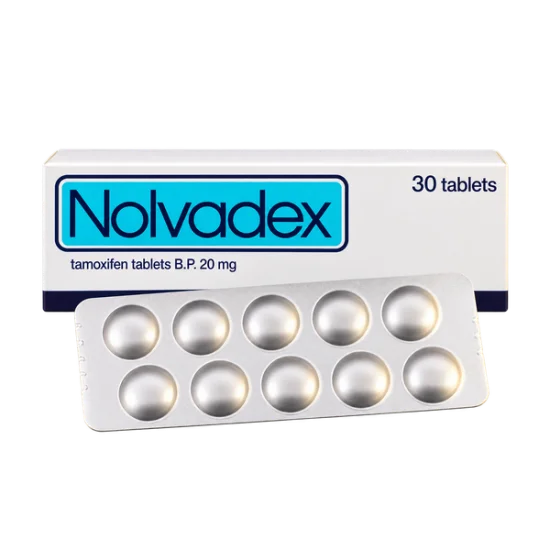
Nolvadex contains tamoxifen citrate, providing tamoxifen as the active anti-estrogenic agent. The product is supplied as oral tablets, with 30 tablets in the pack. Tamoxifen belongs to the selective estrogen receptor modulator, or SERM, class.
SERMs act differently in different tissues. In breast tissue, tamoxifen competes with estrogen at estrogen receptors and reduces estrogen-dependent signalling. In other tissues, it can show partial estrogen-like activity. This tissue-selective behaviour explains why tamoxifen can suppress breast cancer cell stimulation while producing separate effects on bone, the uterus, blood vessels, and lipid metabolism [1].
Active Ingredient Profile
Tamoxifen is used in endocrine therapy for hormone receptor-positive breast cancer. It may be prescribed after surgery, radiation, or chemotherapy to reduce the risk of recurrence, or as treatment for advanced disease. The treatment plan depends on menopausal status, tumour receptor findings, previous therapy, recurrence risk, and the oncology team’s assessment.
A SERM is neither a complete estrogen blocker in every organ nor a general estrogen replacement treatment. Its effects depend on the receptor environment and the tissue involved. That distinction matters when assessing benefits and adverse effects.
How it affects the body
Tamoxifen and its active metabolites bind to estrogen receptors inside cells. In breast tissue, the drug prevents estrogen from activating genes that can support the growth and division of hormone-sensitive cancer cells. The result is reduced estrogen-driven stimulation rather than an immediate destruction of tumour cells.
Tamoxifen undergoes hepatic metabolism, including conversion through CYP2D6 and CYP3A4 pathways. One active metabolite, endoxifen, contributes substantially to anti-estrogenic activity. Genetic variation in CYP2D6 can also influence endoxifen exposure. Clinicians interpret this pathway alongside the full medication list and treatment plan. Medicines that inhibit CYP2D6 can reduce endoxifen exposure and may weaken endocrine treatment; the FDA prescribing information lists this interaction as clinically relevant [1].
The tissue pattern is selective:
- Breast tissue: anti-estrogenic activity may reduce hormone receptor stimulation.
- Bone: partial estrogen-like activity may help preserve bone density in some patients.
- Liver: changes in lipid metabolism can occur.
- Uterine tissue: estrogen-like stimulation may increase the risk of endometrial abnormalities.
- Blood-clotting system: the risk of venous thromboembolism can rise.
Tamoxifen is therefore chosen for its therapeutic balance, not because it produces the same response in every organ.
Therapeutic indications
Tamoxifen is used in endocrine therapy for hormone receptor-positive breast cancer. It may be prescribed after surgery, radiation, or chemotherapy to reduce the risk of recurrence, or as treatment for advanced disease.
Common mistakes
Several practical errors can reduce treatment consistency or delay recognition of complications:
- Taking two tablets after forgetting one.
- Stopping treatment because hot flushes begin.
- Starting an antidepressant without checking CYP2D6 interaction potential.
- Ignoring vaginal bleeding after menopause.
- Treating new leg swelling as a minor muscle problem.
- Failing to mention tamoxifen before surgery or a long period of immobility.
- Assuming that herbal products cannot affect cancer treatment.
- Missing oncology appointments because the medicine itself feels routine.
- Continuing treatment without reporting new visual changes.
- Sharing tablets with another person who has a similar diagnosis.
A missed tablet is usually less dangerous than repeated double dosing. The larger concern is a pattern of missed doses over weeks or months. Linking the tablet to a stable daily event, such as breakfast or toothbrushing, can help establish a reliable routine.
Driving and machinery work require individual judgement. Tamoxifen does not impair every patient, yet dizziness, fatigue, blurred vision, poor sleep, or mood symptoms can reduce safe performance. Avoid driving or operating machinery when these effects are present.
Reasons not to use it
The following situations require avoidance or specialist review:
- Pregnancy, because tamoxifen may harm the developing fetus.
- Breastfeeding, because treatment can interfere with lactation and infant exposure must be avoided.
- Previous serious allergic reaction to tamoxifen or an ingredient in the tablets.
- A history of blood clots, stroke, or clotting disorders.
- Use of anticoagulants such as warfarin.
- Planned surgery or prolonged immobility.
- Significant liver disease.
- Unexplained vaginal bleeding.
- A history of eye disease or new visual symptoms.
- Treatment with medicines that strongly inhibit CYP2D6.
Health Canada and the FDA identify pregnancy-related harm, thromboembolic events, endometrial changes, and visual complications as important safety concerns associated with tamoxifen therapy [2].
When this is not for you
Nolvadex may not be for you if you are pregnant, breastfeeding, have unexplained vaginal bleeding, or have a serious clotting risk without specialist review.
Possible side effects
Hot flushes and night sweats are among the most familiar physical effects of tamoxifen. Estrogen receptor blockade can affect temperature regulation in the hypothalamus, producing sudden warmth, sweating, flushing, or chills. Symptoms may be more disruptive at night and can interfere with sleep.
Other possible effects include:
- Vaginal discharge or dryness.
- Irregular menstrual bleeding in premenopausal patients.
- Nausea or reduced appetite.
- Headache or dizziness.
- Tiredness.
- Muscle aches or joint discomfort.
- Fluid retention or ankle swelling.
- Skin rash or itching.
- Changes in vision, including blurred vision or cataracts.
Side effects can appear early or develop during prolonged treatment. Some settle as the body adapts, while others need a treatment review. Persistent vaginal bleeding after menopause requires assessment because tamoxifen can affect the endometrium.
Hot flushes often become easier to manage with breathable clothing, layered bedding, a cooler bedroom, and reduced exposure to individual triggers such as alcohol or spicy food. These measures do not remove the pharmacological cause, yet they can reduce the disruption to sleep and work.
One practical detail matters for people with a job requiring concentration: dizziness, fatigue, and sleep disturbance can affect performance even when the medicine itself does not sedate every patient.
Mood changes, low mood, anxiety, irritability, emotional fatigue, and sleep disturbance have been reported during tamoxifen therapy. Depression can also arise from cancer diagnosis, treatment stress, menopause, pain, loss of sleep, or other medicines.

Comparison
Nolvadex is not interchangeable with every endocrine therapy. Aromatase inhibitors reduce estrogen production, while tamoxifen mainly blocks estrogen receptors in breast tissue. Treatment selection depends on menopausal status, bone health, clotting history, tumour characteristics, and previous endocrine therapy.
What doctors say
In oncology practice, tamoxifen is often viewed as a long-term risk-reduction treatment rather than a short course aimed at immediate symptom relief. Patients may feel no dramatic change during the first weeks, even while the medicine is blocking estrogen receptor activity at the cellular level.
Doctors usually assess adherence, menstrual or menopausal status, treatment tolerance, bleeding symptoms, visual changes, mood, clotting symptoms, and interactions with new prescriptions. Follow-up may include breast cancer surveillance, gynaecological assessment when indicated, eye evaluation for visual symptoms, and liver-related testing when clinically appropriate.
One recurring clinical problem is premature discontinuation because hot flushes or fatigue become frustrating. A treatment review may identify manageable options, such as adjusting the timing of other medicines, treating sleep disruption, or selecting a compatible therapy for depression or vasomotor symptoms.
Tamoxifen does not replace surgery, radiation, chemotherapy, or other cancer treatment when those therapies are indicated. It forms one part of a broader plan for hormone-sensitive disease. The WHO describes endocrine therapy as an important component of breast cancer care where hormone receptors provide a treatment target [3].
Comparison
Common questions
Which symptoms mean I should stop Nolvadex and seek urgent medical help?
Chest pain, sudden breathlessness, coughing blood, one-sided leg swelling, sudden neurological symptoms, or major visual changes require urgent assessment. New postmenopausal bleeding also needs prompt medical review, though it does not automatically mean tamoxifen must be stopped permanently. The FDA's 2023 prescribing information identifies thromboembolism, stroke, ocular complications, and endometrial disease among serious risks requiring clinical attention [1]. Do not take extra tablets after stopping a dose while waiting for assessment.
Can Nolvadex affect driving, concentration, or work with machinery?
Tamoxifen can be associated with dizziness, tiredness, visual disturbance, sleep disruption, and mood changes, all of which can affect driving or machinery work. Health Canada's 2024 product monograph should be interpreted alongside the patient's symptoms, other medicines, and job demands. Do not drive or operate machinery when vision is blurred, concentration is poor, or dizziness is present. Patients who feel well and have no impairing effects may be able to continue normal activities, subject to local driving rules.
What is the best time of day to take Nolvadex?
The best time is a consistent time that fits the prescribed schedule and causes the fewest problems with nausea, hot flushes, or sleep. Taking it earlier in the day may suit patients who notice wakefulness or night sweats after evening dosing, while others prefer bedtime because of daytime fatigue. The FDA's 2023 prescribing information supports regular oral administration according to the prescribed regimen rather than a universal clock time. Do not change the daily schedule repeatedly, because irregular timing can make missed doses more likely.
Can Nolvadex be used during pregnancy or breastfeeding?
Tamoxifen should not be used during pregnancy because it may harm fetal development. Breastfeeding is also unsuitable during treatment because tamoxifen can interfere with lactation and infant exposure must be avoided. The FDA's 2023 prescribing information identifies pregnancy and breastfeeding as major restrictions for tamoxifen therapy. Discuss contraception, fertility preservation, and the timing of any future pregnancy with the oncology team before treatment begins or changes.
Do you offer anonymous delivery?
Your order will be securely packed and shipped within 24 hours. This is exactly what your package will look like (images of an actual item sent). It has the size and look of a regular private letter (24x11x0.7 cm) and its contents cannot be seen.
Customer Feedback on Nolvadex
After about six weeks, I noticed more tiredness and felt emotionally flat. My oncology team reviewed my other medicines and changed an antidepressant that could interfere with tamoxifen. My mood improved gradually, although the night sweats continued.
Tamoxifen was manageable during the day, but joint stiffness after sitting at work was annoying. Walking regularly helped more than I expected. I had one episode of unusual bleeding and arranged an assessment instead of waiting for it to disappear.
I had been taking treatment consistently for months when one calf became swollen and sore. I sought urgent care and was found to have a clot. The experience made me take warning symptoms seriously, and my cancer team adjusted the treatment plan.
The first weeks were difficult because of hot flushes and irregular periods. I also felt worried about fertility and future pregnancy. My oncology team explained the treatment timeline and helped me plan questions before each appointment.
Sources
- U.S. Food and Drug Administration (2023). Nolvadex (tamoxifen citrate) tablets — Prescribing Information.
- Health Canada (2024). Tamoxifen — Product Monograph.
- World Health Organization (2017). WHO guideline for the early detection, diagnosis and management of breast cancer.