My involuntary movements became less obvious when walking and eating. I also had a dry mouth at first, but it settled enough that I continued with the treatment plan.
Amantadine
Amantadine pills are taken by mouth for selected movement symptoms in Parkinson’s disease. They may reduce levodopa-associated dyskinesia and support motor control through effects on glutamate and dopamine signalling. The prescribed amount is individualized.
Overview
Amantadine is an active ingredient used in neurological care for Parkinson’s disease and medication-related dyskinesia. It belongs to a group of medicines that affect glutamate and dopamine signalling.
Dosage and administration
The prescribed amount per intake is set individually. A person with reduced kidney function may need a lower amount or a longer interval because amantadine leaves the body mainly through the kidneys.
Amantadine is absorbed after oral administration and distributes throughout the body, including the central nervous system.
The pharmacokinetic profile affects:
- The timing of doses.
- The interval needed between doses.
- The risk of accumulation in kidney impairment.
- The time required for adverse effects to settle after a dose change.
- The way clinicians plan discontinuation.
The FDA prescribing information describes renal dosing precautions and adverse neurological effects associated with excessive exposure [2].
Formulation
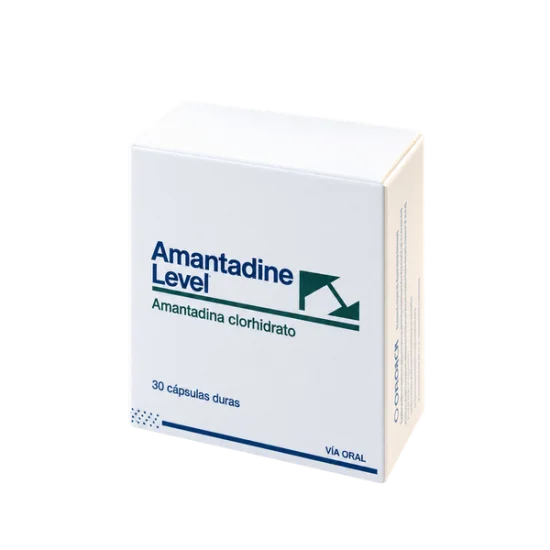
The active ingredient is amantadine hydrochloride. The product is supplied as oral pills; the exact amount per pill and any inactive ingredients are not specified here.
How it affects the body
Amantadine acts through more than one neurochemical pathway. Its anti-dyskinetic effect is linked mainly to modulation of glutamate signalling through N-methyl-D-aspartate, or NMDA, receptors. It also influences dopamine release and dopamine-related activity, which may contribute to its effect on movement.
In simple terms, levodopa increases dopamine availability in the brain, while long-term dopaminergic treatment can produce excessive, uneven movement in some patients. Amantadine may reduce part of that abnormal signalling by moderating NMDA-receptor activity. This explains why it can help dyskinesia without functioning as a direct substitute for levodopa.
The pharmacological actions include:
- NMDA-receptor antagonism, which reduces excessive excitatory glutamate signalling.
- Effects on dopamine release and reuptake in selected brain regions.
- Modulation of neural circuits involved in movement control.
- Potential improvement in levodopa-associated dyskinesia for selected patients.
Amantadine’s mechanism differs from levodopa. Levodopa is converted into dopamine and directly addresses dopamine deficiency. Amantadine changes receptor and neurotransmitter activity. This difference allows the two drugs to be used together in selected treatment plans.
Therapeutic indications
Amantadine hydrochloride is used in neurological care for Parkinson’s disease and medication-related dyskinesia. It may be added when involuntary movements become troublesome during levodopa treatment, or when a clinician is addressing a broader pattern of motor fluctuation. Health Canada and international prescribing information describe amantadine as a drug requiring attention to kidney function, age, adverse effects, and changes in motor symptoms [1].
Parkinson’s disease involves progressive disruption of dopamine pathways in the brain. This can cause tremor, slowness, stiffness, balance problems, and changes between periods of better and poorer movement. Amantadine does not replace levodopa when dopamine replacement is needed. Its role is more targeted.
Clinical use may involve:
- Reducing dyskinesia associated with levodopa therapy.
- Supporting control of selected Parkinsonian motor symptoms.
- Helping manage wearing-off patterns in some treatment plans.
- Complementing, rather than automatically replacing, other Parkinson’s medicines.
- Adjusting treatment around kidney function, age, sleep, mood, and fall risk.
Common mistakes
Several practical errors can make amantadine appear ineffective or poorly tolerated:
- Stopping suddenly after symptoms improve.
- Taking an extra pill after a missed dose.
- Moving doses later to compensate for a forgotten dose.
- Ignoring new hallucinations or vivid dreams.
- Assuming ankle swelling is unrelated.
- Failing to mention kidney disease or reduced urine output.
- Recording only the best period of the day rather than the full daily pattern.
- Combining it with sedating or anticholinergic products without review.
- Driving after new dizziness, blurred vision, or sleepiness appears.
- Judging the treatment only by tremor when the intended target is dyskinesia.
If a dose is missed, the next action depends on the timing and prescribed schedule. Taking two doses together can increase adverse effects, so a person should use the individualized missed-dose plan provided by the prescriber rather than improvising.
Reasons not to use it
Specific situations requiring avoidance, dose modification, or close clinical supervision include:
- Known allergy to amantadine hydrochloride or a formulation component.
- Significant kidney impairment without an appropriate renal dosing plan.
- Previous severe neuropsychiatric reaction linked to amantadine.
- Seizure history, when the prescriber considers the risk unacceptable.
- Untreated angle-closure glaucoma or significant visual symptoms requiring assessment.
- Severe heart failure or marked ankle swelling.
- Pregnancy or breastfeeding unless the prescriber has assessed the individual balance of benefit and risk.
- Concurrent medicines that increase confusion, dizziness, urinary retention, or cardiac rhythm risk.
Other medicines can intensify adverse effects. Anticholinergic drugs may increase dry mouth, constipation, blurred vision, urinary retention, confusion, and hallucinations. Diuretics and some other medicines may alter amantadine clearance or raise the risk of accumulation. A complete medication review should include prescription drugs, over-the-counter products, sleep aids, and herbal products.
Do not change levodopa, anticholinergic treatment, blood-pressure medicines, or sedatives without a specific plan. A change in one drug can alter walking, alertness, blood pressure, or involuntary movement within days.
When this is not for you
Amantadine is not suitable for every person with Parkinson’s disease. Its benefits must be balanced against confusion, hallucinations, ankle swelling, dry mouth, dizziness, and sleep disturbance, especially in older adults.
Possible side effects
Common adverse effects include nausea, dry mouth, constipation, dizziness, blurred vision, ankle swelling, insomnia, vivid dreams, and reduced concentration. Some people develop livedo reticularis, a mottled purplish skin pattern that often appears on the legs. This finding should be reported, especially when it occurs with swelling or pain.
Neurological and psychiatric reactions deserve close attention. Amantadine can contribute to confusion, hallucinations, agitation, anxiety, unusual behaviour, or excessive sleepiness. These effects occur more readily when concentrations rise because of impaired kidney function, advanced age, dehydration, or interacting medicines. Family members may notice changes before the patient does. Prompt reporting can allow the prescriber to review the dose and contributing factors.
Practical measures may help with mild effects:
- Rise slowly from a chair or bed if dizziness occurs.
- Maintain an appropriate fluid intake unless fluid restriction has been prescribed.
- Report ankle swelling rather than treating it as an ordinary part of ageing.
- Avoid driving if sleepiness, blurred vision, confusion, or sudden dizziness develops.
- Seek assessment for new hallucinations, severe agitation, or marked behavioural change.
One detail patients often miss is that amantadine-related insomnia may appear as repeated early waking rather than difficulty falling asleep. A written record of the timing can reveal a relationship with the later daily dose.
Rare but serious reactions can include seizures, severe allergic responses, fainting, serious heart rhythm problems, or severe muscle rigidity. Emergency care is appropriate for trouble breathing, facial swelling, chest pain, fainting, a seizure, or rapidly worsening confusion.

Comparison
Amantadine is an oral, single-active-ingredient treatment approach that affects glutamate and dopamine signalling. Its use differs from approaches that do not target these signalling pathways, while the prescribed amount is individualized.
What doctors say
Neurologists generally start by defining the treatment target: dyskinesia, tremor, stiffness, wearing off, or another movement problem. Amantadine is easier to assess when the patient and clinician agree on what improvement should look like. A reduction in involuntary movement accompanied by confusion or falls is not a successful trade-off.
Clinical practice also places strong emphasis on kidney function. The same prescribed schedule can be tolerated by one adult and accumulate in another, especially when filtration declines with age. A physician may review renal blood tests, mental status, sleep, falls, and swelling before increasing or continuing treatment.
The Movement Disorder Society describes amantadine as an option for levodopa-induced dyskinesia, while also recognizing the need to monitor adverse effects and individual response. The benefit may be modest, delayed, or limited by tolerability. Long-term continuation is reasonable only when the observed benefit remains greater than the burden of adverse effects.
A useful clinical question is: “What changed after starting or stopping it?” That timeline often reveals more than a general statement that Parkinson’s disease feels worse.
Comparison
Amantadine Current
Artane
Azilect
Common questions
Can Amantadine be used during pregnancy or breastfeeding?
Pregnancy and breastfeeding require an individualized risk assessment because human safety data are limited. Health Canada information and international product monographs address reproductive exposure cautiously, with the decision depending on disease severity, alternatives, and the need for maternal symptom control . In 2026, a person who is pregnant, planning pregnancy, or breastfeeding should report that status before the treatment plan is started or changed. Sudden self-discontinuation can also worsen Parkinsonian symptoms.
Is Amantadine appropriate for people under 18?
Use in people under 18 is not routine for Parkinson’s disease because the indication and clinical evidence mainly concern adults. The FDA prescribing information places emphasis on age, kidney function, and adverse neurological effects when determining suitability . In 2026, a child or adolescent should receive amantadine only when a specialist has selected it for a specific clinical reason. The prescribed amount must be calculated for the individual rather than copied from an adult schedule.
How soon can the effect of Amantadine become noticeable?
Some people notice changes in dyskinesia or mobility within days, while others require longer observation before the response is clear. The Cochrane review of amantadine for Parkinson’s disease dyskinesia found that response and tolerability vary between patients [3]. In 2026, clinicians commonly assess the treatment through a symptom diary rather than relying on one isolated day. New confusion, hallucinations, or severe dizziness should be reported promptly instead of waiting for a possible benefit.
Can alcohol be used while taking Amantadine?
Alcohol may add to dizziness, sleepiness, impaired coordination, and confusion caused by amantadine. This concern is greater for older adults, people with falls, and anyone taking sedatives or other medicines that affect the central nervous system. Health Canada safety information supports caution with activities requiring alertness when neurological adverse effects occur . In 2026, avoiding alcohol during dose changes is a practical way to distinguish medicine-related symptoms from alcohol-related impairment.
Do diet, exercise, or daily habits affect the result?
Regular physical activity adapted to balance and mobility can support Parkinson’s disease management, while irregular sleep and dehydration may worsen dizziness, constipation, or confusion. NICE guidance recommends a broader care plan that includes movement, falls assessment, and support for daily activities rather than relying on one medicine alone . In 2026, keeping medication times, meals, exercise, and sleep reasonably consistent can make symptom patterns easier to interpret. Excessive exertion, missed fluids, or sudden changes in routine may make a stable regimen feel less predictable.
How long can a course of Amantadine last, and is long-term use acceptable?
There is no single course length that applies to every person. Long-term use can be considered when the benefit for dyskinesia or another target symptom remains clear and adverse effects stay manageable. The Movement Disorder Society evidence review supports individualized continuation with periodic reassessment rather than automatic indefinite treatment . In 2026, a prescriber may review movement diaries, kidney function, cognition, falls, sleep, and swelling before deciding whether to continue, reduce, or stop therapy.
Do you offer anonymous delivery?
Your order will be securely packed and shipped within 24 hours. This is exactly what your package will look like (images of an actual item sent). It has the size and look of a regular private letter (24x11x0.7 cm) and its contents cannot be seen.
Customer Feedback on Amantadine
The first change I noticed was better control during the afternoon. Sleep was harder for about ten days, so the timing had to be reviewed rather than adding anything myself.
The movements improved, but I felt unsteady and unusually restless. My clinician reduced the schedule, and the balance problem became less troublesome.
My stiffness, pain, and walking worsened within a short period. A gradual change was arranged, and the recovery was steadier than the first attempt.
Sources
- Health Canada (2023). Product Monograph: Amantadine Hydrochloride.
- U.S. Food and Drug Administration (2023). Amantadine Hydrochloride Capsules, Prescribing Information.
- Cochrane (2010). Amantadine for dyskinesia in Parkinson’s disease.