Skip to content
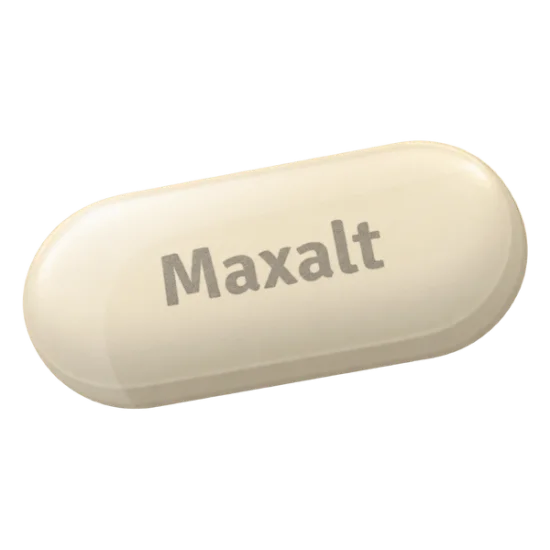
Maxalt
Active ingredient: Rizatriptan

Maxalt

Quality products
24/7 Support
Fast delivery
Delivery from 4 days
Select pack Package Per unit Price

Free delivery on orders from $ 312.00, free express delivery from $ 468.00

Secure Payments
Track your order
Best price guarantee

Maxalt acts on serotonin receptors involved in migraine pain, helping narrow affected cranial blood vessels and reduce pain signalling during an attack. It is intended for adults who need acute relief from migraine with or without aura, rather than prevention of future attacks.

Overview

Its active ingredient, rizatriptan, belongs to the triptan class.

Maxalt contains rizatriptan, supplied as rizatriptan benzoate. Rizatriptan is a selective serotonin 5-HT1B/1D receptor agonist.

Dosage and administration

The amount and frequency of Maxalt use depend on the purpose of treatment and are agreed with a doctor or pharmacist. The prescribed tablet should be taken at the start of migraine head pain with water, unless the specific oral formulation is intended to dissolve in the mouth.

Use the following practical rules:

  • Take Maxalt only for an acute migraine attack.
  • Use the prescribed single dose rather than taking extra tablets because pain feels severe.
  • Leave the interval specified by the prescriber before considering another dose.
  • Do not exceed the prescribed total amount during a 24-hour period.
  • Swallow a standard tablet whole with water.
  • Avoid crushing or chewing a tablet unless the product instructions specifically permit it.
  • If vomiting occurs soon after a dose, do not automatically repeat it; the correct response depends on the timing and formulation.
  • If a dose is missed, there is no need to take a catch-up dose after the migraine has resolved.

The appropriate strength is individualised. Certain medicines, including propranolol, can alter rizatriptan exposure and may require a different prescribed strength. The product-specific dose should therefore be settled before treatment begins.

Maximum Daily Limits and Frequency Rules

A second dose may be permitted for the same attack when the first dose has helped and the headache returns, provided the required interval and daily limit are followed. Repeating doses too closely can increase adverse effects without reliably improving pain control.

Keep a simple migraine record with the date, time of tablet use, symptom improvement, and any return of pain. This helps distinguish an ineffective dose from a late dose or a headache pattern driven by frequent acute treatment.

Frequent use of triptans can contribute to medication-overuse headache. A practical warning sign is needing acute migraine medicine on many days each month or finding that headaches are becoming more frequent despite treatment.

Maxalt can generally be taken with or without food, although a meal may slow absorption compared with taking it on an empty stomach. The migraine itself, nausea, and delayed stomach emptying can have a greater effect on timing than a small meal. Health Canada product information from 2023 supports oral administration for acute migraine treatment. If vomiting is likely, discuss whether a different formulation or treatment route is more suitable. The 2023 product monograph also advises following the prescribed dose.

Formulation

Maxalt contains rizatriptan, supplied as rizatriptan benzoate.

Active Ingredient and Formulations

The active ingredient is rizatriptan. Maxalt tablets are taken by mouth. The strength prescribed depends on factors such as response, tolerability, other medicines, and relevant medical conditions.

Some rizatriptan products are made as standard tablets, while others are oral-disintegrating tablets. A dissolving formulation can be useful when migraine-related nausea makes swallowing difficult, although it still delivers rizatriptan rather than acting as a separate type of migraine treatment.

How it affects the body

These receptors are found on cranial blood vessels and nerve endings involved in migraine.

During a migraine, trigeminal nerve activation can widen certain cranial vessels and release inflammatory neuropeptides. Rizatriptan reverses part of this process by constricting those vessels and reducing the release of substances that amplify pain. The result is a reduction in throbbing headache and related symptoms such as nausea, light sensitivity, and sound sensitivity.

Therapeutic indications

Maxalt is designed for the acute treatment of an established migraine attack. It does not prevent migraine from occurring and does not treat ordinary tension-type headache. Clinical information for rizatriptan describes its use in adults with migraine, with or without aura [1].

Common mistakes

Several practical errors can reduce benefit or increase risk:

  • waiting until the migraine is severe before taking the prescribed dose;
  • taking Maxalt for a non-migraine headache;
  • repeating a dose too soon;
  • combining it with another triptan or ergot medicine;
  • forgetting to mention propranolol, an MAO inhibitor, an SSRI, or an SNRI;
  • continuing to use acute treatment on many days each month;
  • driving before checking whether dizziness or sleepiness occurs;
  • dismissing severe chest pain as a routine triptan sensation;
  • assuming that a dissolving tablet is automatically stronger than a standard tablet.

One easily missed detail is vomiting. If the tablet is vomited shortly after administration, absorption may be incomplete, but taking another dose without timing information can create an excessive total dose.

Another is the aura phase. A visual aura can be a clear sign that migraine is developing, yet triptans are generally taken when the headache phase starts unless the prescriber has instructed otherwise.

Reasons not to use it

Do not use rizatriptan if you have:

  • ischaemic heart disease or angina;
  • a previous myocardial infarction;
  • coronary artery spasm;
  • peripheral vascular disease;
  • a previous stroke or transient ischaemic attack;
  • uncontrolled hypertension;
  • significant cardiovascular disease requiring exclusion by a clinician.

Severe liver disease can affect medicine handling and may alter whether rizatriptan is appropriate.

MAO inhibitors are a major interaction. Rizatriptan should not be used with an MAO-A inhibitor or within the specified period after stopping one, because drug levels may rise and serotonin-related toxicity becomes more concerning. The exact washout interval depends on the MAO medicine.

Other triptans and ergotamine-containing medicines should not be combined closely with rizatriptan. The FDA prescribing information describes these interaction precautions and the need to avoid overlapping vasoconstrictive treatment [3].

When this is not for you

Maxalt is NOT for you if you have ischaemic heart disease, a previous stroke, uncontrolled hypertension, or another listed cardiovascular contraindication. Its vasoconstrictive action means that cardiovascular screening is relevant before treatment.

Rizatriptan also requires caution in people with several cardiovascular risk factors, such as diabetes, smoking, obesity, strong family history of early heart disease, or post-menopausal status. Health Canada product information advises attention to cardiovascular risk before prescribing triptans [2].

People with kidney disease, pregnancy, breastfeeding, or a history of unusual neurological symptoms need an individual treatment decision.

Tell the prescriber whether the headache is accompanied by weakness, fainting, persistent visual loss, fever, neck stiffness, or a new neurological symptom. Those features need medical assessment rather than repeated self-treatment with a triptan.

Possible side effects

Rizatriptan is generally used for short episodes rather than continuous daily treatment. Clinical trials and regulatory information describe dizziness, sleepiness, fatigue, weakness, and sensations of pressure or heaviness as possible adverse effects.

Common or clinically recognised effects may include:

  • dizziness or light-headedness;
  • drowsiness;
  • fatigue or weakness;
  • nausea;
  • dry mouth;
  • tingling or altered sensation;
  • warmth or flushing;
  • pressure, tightness, or heaviness in the chest, throat, neck, or jaw.

These sensations may be brief, but chest symptoms deserve careful attention because migraine and cardiovascular disease can produce overlapping symptoms. Severe, persistent, or worsening chest pain requires urgent medical assessment, especially when accompanied by breathlessness, sweating, faintness, or pain spreading to the arm or jaw.

Seek urgent help for facial swelling, difficulty breathing, widespread hives, fainting, severe weakness on one side, confusion, or sudden speech or vision changes. These symptoms can indicate a serious allergic, neurological, or cardiovascular event.

Medication-Overuse Headache

Medication-overuse headache can develop when acute treatments are used repeatedly over time. Triptans are associated with this risk when taken frequently, especially across many days in the same month.

The pattern often looks deceptively logical: the person treats each headache, obtains short relief, and then notices headaches returning more often. A clinician may need to review the diagnosis, triggers, preventive options, sleep pattern, caffeine intake, and total use of acute medicines.

SSRIs and SNRIs include medicines used for depression, anxiety, and some pain conditions. Serotonin syndrome is uncommon but can involve agitation, confusion, sweating, fever, tremor, muscle rigidity, diarrhoea, or rapid changes in heart rate. Urgent assessment is needed if several of these symptoms appear together.

Comparison

Rizatriptan and sumatriptan, the active ingredient in Imitrex, belong to the same triptan class. Both are intended for acute migraine relief and both act through serotonin 5-HT1B/1D receptors. Their differences involve absorption, response, available formulations, interactions, and individual tolerability.

Treatment approach Main feature Clinical distinction
Rizatriptan in Maxalt Rapid oral triptan action Useful when an oral tablet is suitable and a quick response is needed
Sumatriptan in Imitrex Triptan available in several administration forms Non-oral options may help when vomiting or severe nausea prevents swallowing
Preventive therapy such as topiramate Taken regularly to reduce attack frequency Not a substitute for Maxalt during an acute attack

Rizatriptan is often selected when a patient has responded well to it in the past or wants an oral triptan with relatively rapid absorption. Sumatriptan may be preferred when a non-oral route is needed, although the appropriate choice depends on medical history and the pattern of each attack.

Topamax contains topiramate and belongs to a different treatment category. It is used for prevention in selected patients, not for immediate interruption of one migraine attack. Preventive treatment becomes more relevant when attacks are frequent, disabling, prolonged, or poorly controlled with acute medicines.

No triptan works for every patient. One person may obtain reliable relief from rizatriptan but experience pressure or drowsiness; another may prefer a different triptan because the pain returns less often. A 2015 Cochrane review found meaningful differences between triptans in response and tolerability, while confirming that individual treatment response remains important [4].

What doctors say

In clinical practice, doctors usually judge a triptan by three outcomes: whether it reduces pain, whether it restores function, and whether the headache returns later. A medicine that reduces pain but causes disabling drowsiness may need reconsideration even if it works on paper.

A doctor would also ask how quickly Maxalt was taken after head pain began, whether vomiting prevented absorption, and how often it has been used. These details can explain an apparent treatment failure without simply increasing the dose.

Patients sometimes expect a triptan to remove every symptom immediately. Rizatriptan targets migraine biology, but improvement can be gradual, and light sensitivity or fatigue may persist after the pain eases.

The clinical plan may change when attacks become frequent. Repeated acute treatment can point to the need for preventive management rather than stronger rescue dosing.

Common questions

Can Maxalt be taken with food or on an empty stomach?

Maxalt can generally be taken with or without food, although a meal may slow absorption compared with taking it on an empty stomach. The migraine itself, nausea, and delayed stomach emptying can have a greater effect on timing than a small meal. Health Canada product information from 2023 supports oral administration for acute migraine treatment. If vomiting is likely, discuss whether a different formulation or treatment route is more suitable. The 2023 product monograph also advises following the prescribed dose.

What happens when Maxalt is stopped, and does it need to be tapered?

Rizatriptan is used for individual migraine attacks rather than as a continuous daily treatment, so tapering is not normally required when occasional use stops. Stopping it does not usually cause a withdrawal syndrome. Headaches may return because the underlying migraine tendency remains, not because the body needs a reducing schedule. The American Headache Society continues to distinguish acute treatment from preventive therapy in migraine care, with guidance reviewed in 2021.

Can Maxalt be used during pregnancy or breastfeeding?

Pregnancy and breastfeeding require an individual risk-benefit decision before rizatriptan is used. The amount of clinical pregnancy data is more limited than for some older treatments, and the cause of the migraine also matters. The EMA reviews triptan exposure and reproductive safety within its medicine information framework in 2024, with patient-specific decisions guided by the treating clinician. Breastfeeding advice may depend on the dose, timing, frequency of use, and alternative treatments.

What should be checked with a doctor before starting Maxalt?

The prescriber should review any history of heart attack, angina, stroke, transient ischaemic attack, peripheral vascular disease, uncontrolled hypertension, or significant liver disease. Provide a full list of medicines, including propranolol, MAO inhibitors, SSRIs, SNRIs, other triptans, and ergotamine products. Health Canada safety information from 2023 also supports cardiovascular risk assessment before triptan treatment, especially when several risk factors are present. New neurological symptoms or an unusual headache pattern need assessment before relying on acute migraine treatment.

How does Maxalt differ from sumatriptan?

Maxalt contains rizatriptan, while Imitrex contains sumatriptan. Both are triptans that activate 5-HT1B/1D receptors, but they differ in absorption, available formulations, interaction profiles, and how long relief lasts for a particular person. The EMA recognises these medicines as separate active substances within the triptan group in 2024, rather than interchangeable products. A clinician may favour sumatriptan when a non-oral route is needed, while rizatriptan may suit someone who responds well to an oral tablet.

Do you offer anonymous delivery?

Your order will be securely packed and shipped within 24 hours. This is exactly what your package will look like (images of an actual item sent). It has the size and look of a regular private letter (24x11x0.7 cm) and its contents cannot be seen.

Special Clinical Considerations and Lifestyle Factors

Maxalt is intended for migraine attacks. It is not a general painkiller, a treatment for tension headache, or a medicine for routine athletic performance.

Physical activity can worsen an active migraine because exertion may increase throbbing and nausea. Once symptoms improve, a gradual return to normal activity is reasonable if the person feels alert and does not have concerning symptoms. Rizatriptan has no performance-enhancing purpose and should not be taken before sport when migraine is absent.

Migraine management also involves regular sleep, hydration, meals, and recognition of personal triggers. These measures do not replace Maxalt during a severe attack, but they may reduce avoidable fluctuations that make attacks harder to manage.

Customer Feedback on Maxalt

3.5
Based on 5 reviews
Gareth, 61 Moncton Several months
Verified
Rating: 3.5 out of 5

The first dose reduced the throbbing within a couple of hours, and I was able to return to work later that day. I felt heavy and sleepy afterward, so I stopped driving until I knew how I reacted.

Oct 10, 2026
Jane, 32 Barrie Several attacks
Verified
Rating: 3.5 out of 5

It helped most when I took it early. One attack was already severe before I used it, and the improvement was slower. I also noticed mild warmth in my neck, which passed without treatment.

Oct 17, 2026
Steven G., 33 Saint John Several months
Verified
Rating: 3.5 out of 5

The pain relief was useful, but the headache came back during one weekend. I had been treating too many attacks that month, so my doctor reviewed the frequency instead of simply adding more tablets.

Oct 23, 2026
Hannah, 30 Abbotsford Several attacks
Verified
Rating: 5 out of 5

It worked well for the pain and light sensitivity. Nausea remained for a while, and I found that taking the tablet early was easier than waiting until I was already vomiting.

Oct 30, 2026
Christopher, 34 Sherbrooke Several months
Verified
Rating: 2 out of 5

The first few uses caused a tight feeling across my chest that worried me. It settled quickly, but I stopped repeating doses until the symptom had been reviewed and a safer plan was agreed.

Nov 8, 2026

Sources

  1. Health Canada (2023). Product Monograph: Maxalt (rizatriptan benzoate)
  2. Health Canada (2023). Guidance Document: Cardiovascular Risk Assessment for Triptan Use
  3. U.S. Food and Drug Administration (2019). MAXALT prescribing information
  4. Cochrane (2015). Triptans for acute migraine attacks in adults
Get our free app Shop faster and track your orders 3.8 · 304 reviews Install