I fell asleep faster during a stressful week. The dry mouth was manageable, but I felt unsteady when I got up early, so I stopped using it before my morning appointments.
Doxylamine
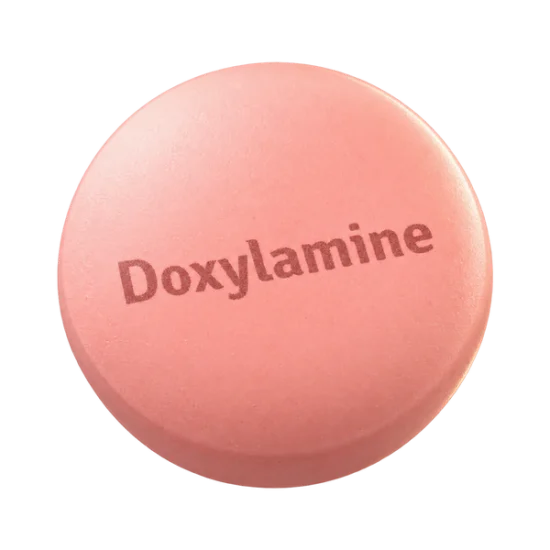
Doxylamine, the active ingredient in Doxylamine, is a first-generation ethanolamine antihistamine used as a short-term aid for occasional insomnia. It blocks central histamine H1 receptors, producing drowsiness that can help reduce the time needed to fall asleep. The tablets are intended for adults who need temporary support with sleep onset.
Overview
Doxylamine is the active ingredient in Doxylamine, a first-generation ethanolamine antihistamine used as a short-term aid for occasional insomnia. It blocks central histamine H1 receptors, producing drowsiness that can help reduce the time needed to fall asleep. The tablets are intended for adults who need temporary support with sleep onset. It does not treat the cause of persistent insomnia. Its sedating effect can also continue into the following morning.
Dosage and administration
Doxylamine tablets are taken by mouth. The correct amount varies between strengths and between users, so there is no single amount that suits everyone.
Common administration points include:
- Take it only when a full night of sleep is available.
- Use the prescribed or product-directed amount rather than taking extra tablets after waking during the night.
- Do not combine it with alcohol.
- Do not drive, cycle in traffic, or operate machinery after taking it.
- Avoid using it repeatedly for ongoing insomnia without clinical review.
- If a dose is missed, do not double the next dose.
One practical issue is timing. Taking a sedating antihistamine too late at night can leave a person awake but slowed the next morning, especially when work or driving begins early.
The tablet form is intended for oral administration. It should be swallowed as directed rather than altered unless a prescriber or product-specific instruction permits that change. Crushing or splitting a tablet can be unsuitable when the formulation uses a release-control design.
Formulation
Doxylamine is available in tablet formulations, with the active substance sometimes presented as doxylamine succinate. Salt forms help create a stable pharmaceutical ingredient, while the pharmacological activity comes from doxylamine.
The product identity is Doxylamine, and the active substance is used for its sedating antihistamine action. Manufacturer information, tablet strength, and formulation details can differ between products, so dosing must follow the specific regimen supplied for the product and the individual user.
How it affects the body
Doxylamine belongs to the ethanolamine class of first-generation antihistamines. Its main pharmacological action is blockade of histamine H1 receptors in the central nervous system. Histamine helps maintain wakefulness, so reducing its activity can produce sedation and sleepiness.
Ethanolamine antihistamines differ from newer, less-sedating antihistamines because they enter the brain more readily. This central nervous system activity explains why doxylamine can cause sleepiness, slower reaction time, impaired coordination, and next-day drowsiness.
The sedative effect does not depend on treating the underlying cause of chronic insomnia. It temporarily lowers alertness and may make sleep onset easier when sleeplessness is occasional.
H1 receptor blockers prevent histamine from stimulating receptors involved in wakefulness. Doxylamine also has anticholinergic activity, which contributes to dry mouth, constipation, blurred vision, and difficulty urinating.
The FDA describes doxylamine succinate as a sedating antihistamine used in nighttime sleep-aid products [1]. The same central action that promotes sleep can impair driving and other activities requiring rapid responses.
Therapeutic indications
Doxylamine is used for the short-term management of occasional or transient insomnia. Its practical role is to reduce sleep latency, meaning the time between going to bed and falling asleep.
It is not intended to correct chronic insomnia caused by untreated sleep apnoea, persistent anxiety, depression, shift work, pain, restless legs syndrome, or another medical condition. Repeated nightly use can also make it harder to judge whether the original sleep problem is improving.
Clinical practice treats sedating antihistamines as temporary options rather than long-term sleep therapy. Behavioural treatment, regular sleep timing, and assessment of underlying causes remain more suitable for persistent insomnia. Health Canada’s non-prescription drug information for doxylamine products supports short-duration use and attention to sedative warnings [2].
Common mistakes
Several practical errors reduce benefit or increase harm:
- Taking a second tablet during the same night because sleep has not started.
- Mixing doxylamine with alcohol or a sedative medicine.
- Taking it before a short sleep period.
- Driving the next morning while still drowsy or dizzy.
- Using it nightly for persistent insomnia without reviewing the cause.
- Ignoring new urinary difficulty or worsening constipation.
- Assuming an antihistamine is harmless because it is sold without a prescription.
- Combining it with another nighttime cold or allergy product that also causes sedation.
One frequently missed detail is duplicate exposure. A person may take a sleep aid and then use a nighttime cough, cold, or allergy product containing another sedating antihistamine. The combined effect can be much stronger than expected.
Another mistake is judging the dose only by the first night. Older adults and people with slower drug clearance may develop more pronounced impairment after repeated use.
Reasons not to use it
Doxylamine should be avoided or medically reviewed before use in people with:
- Angle-closure glaucoma or a history of raised pressure inside the eye.
- Difficulty urinating, urinary retention, or significant prostate enlargement.
- Severe breathing problems or untreated sleep apnoea.
- Previous serious reactions to doxylamine or other antihistamines.
- Confusion, falls, or pronounced sensitivity to sedating medicines.
- A need to remain fully alert overnight or early the next morning.
Pregnancy and breastfeeding require a product-specific assessment. Doxylamine is used in some pregnancy-related nausea formulations in combination with pyridoxine, but that does not automatically establish that every doxylamine sleep product is suitable during pregnancy. Breastfeeding also needs individual assessment because sedating antihistamines may affect the nursing infant or milk production.
When this is not for you
Doxylamine is not suitable for everyone. Its anticholinergic and sedating actions can worsen several conditions and can interact with medicines that depress the brain or impair bladder emptying.
Older adults require extra caution because sedation, blurred vision, dizziness, and impaired balance can increase fall risk. A person with benign prostatic enlargement may develop acute urinary retention after an anticholinergic medicine, even if urination was previously manageable.
Possible side effects
The most expected adverse effect is drowsiness. Doxylamine can also cause dry mouth, dizziness, blurred vision, constipation, urinary retention, and reduced alertness. These effects reflect both central sedation and anticholinergic activity.
The FDA product information lists next-day impairment and anticholinergic reactions among the clinically relevant risks of doxylamine-containing sleep aids [3]. The intensity varies with age, sensitivity, kidney or liver function, concurrent medicines, and the amount taken.
| Symptom | Why it occurs | Practical response |
|---|---|---|
| Drowsiness or impaired coordination | Central H1 blockade | Avoid driving and allow a full night for sleep |
| Dry mouth, constipation, blurred vision | Anticholinergic activity | Maintain appropriate fluid intake and monitor worsening symptoms |
| Dizziness or urinary difficulty | Sedation, reduced blood pressure response, or anticholinergic effects | Stop activity requiring balance and seek medical advice if severe |
A person may feel sleepy but still have fragmented sleep. Sedation is not identical to restorative sleep, and morning alertness may be lower even when the night seemed adequate.
Common tolerability problems include:
- Morning heaviness or slowed thinking.
- Dry mouth that persists after waking.
- Constipation, especially in people already using medicines with anticholinergic effects.
- Dizziness when standing.
- Difficulty starting urination.
- Blurred vision or increased sensitivity to bright light.
Urgent assessment is needed for severe confusion, fainting, severe breathing difficulty, inability to urinate, marked palpitations, or extreme drowsiness that is difficult to reverse.

Comparison
Doxylamine and diphenhydramine are first-generation antihistamines with central H1-blocking activity. Both can cause drowsiness, dry mouth, constipation, blurred vision, dizziness, and next-day impairment.
| Feature | Doxylamine | Diphenhydramine |
|---|---|---|
| Pharmacological class | First-generation ethanolamine antihistamine | First-generation antihistamine |
| Main sleep-related effect | Sedation and reduced sleep latency | Sedation and reduced sleep latency |
| Main limitation | Longer-lasting morning drowsiness may occur | Sedation, anticholinergic effects, and tolerance may occur |
Doxylamine is often regarded as a longer-acting sedating antihistamine, while diphenhydramine may wear off sooner for some people. Individual response varies, and a shorter apparent duration does not remove the risks of impaired alertness or anticholinergic effects.
Neither option addresses the behavioural and medical causes of chronic insomnia. A clinician may prefer a non-drug sleep programme, an assessment for sleep apnoea, or treatment of pain, mood symptoms, or medication-related insomnia instead of repeated antihistamine use. A review of sedating antihistamines in clinical pharmacology literature describes limited value for prolonged insomnia treatment and meaningful next-day impairment risks [4].
What doctors say
In clinical practice, doctors usually frame doxylamine as a short-term sleep aid rather than a treatment for chronic insomnia. The useful question is whether the person has occasional difficulty falling asleep or an ongoing sleep disorder requiring assessment.
A physician will also consider age, falls, glaucoma, prostate symptoms, breathing disorders, alcohol use, and other sedating medicines. A person who snores loudly, stops breathing during sleep, wakes choking, or remains exhausted despite sufficient time in bed may need assessment for sleep apnoea rather than repeated sedation.
The main benefit is straightforward: doxylamine can make sleep onset easier through central H1 blockade. The trade-off is morning impairment, anticholinergic symptoms, and limited usefulness when insomnia continues for weeks.
Common questions
What should be discussed with a doctor before starting Doxylamine?
A discussion should cover glaucoma, urinary difficulty, prostate enlargement, breathing problems, pregnancy, breastfeeding, falls, and all medicines that cause drowsiness. Health Canada safety information reviewed in 2025 highlights the relevance of anticholinergic effects and central sedation. Alcohol use and nighttime products should also be mentioned because they can increase impairment.
How soon does the effect of Doxylamine become noticeable?
Doxylamine generally produces drowsiness during the evening after an oral dose, with individual timing affected by food, metabolism, age, and other medicines. The FDA sleep-aid label reviewed in 2025 advises taking doxylamine only when enough time remains for a full night of sleep. Lack of immediate sleep does not justify taking an extra tablet.
What happens after stopping Doxylamine, and is tapering needed?
Short-term use of doxylamine is generally stopped without a gradual dose reduction, though sleep difficulty may return if the original cause remains. NICE guidance on insomnia, updated in 2023, places emphasis on identifying persistent causes and using behavioural sleep strategies. Rebound sleeplessness can feel like the original problem returning rather than a need for escalating antihistamine use.
What should be done if the expected sleep benefit does not occur?
Do not increase the amount or combine doxylamine with alcohol, benzodiazepines, tranquilizers, or another sleep aid. The American Academy of Sleep Medicine guideline published in 2017 supports evaluation of ongoing insomnia rather than relying on sedating antihistamines as a long-term strategy. Persistent symptoms, loud snoring, breathing pauses, pain, mood changes, or restless legs warrant clinical assessment.
How does Doxylamine differ from diphenhydramine?
Both are first-generation H1 antihistamines, but their duration and individual sedative effects can differ. A 2022 review indexed in PubMed describes both medicines as capable of causing anticholinergic effects and next-day impairment. Doxylamine may produce longer-lasting sedation for some users, while diphenhydramine can also cause substantial drowsiness and is not a risk-free substitute.
Do you offer anonymous delivery?
Your order will be securely packed and shipped within 24 hours. This is exactly what your package will look like (images of an actual item sent). It has the size and look of a regular private letter (24x11x0.7 cm) and its contents cannot be seen.
Customer Feedback on Doxylamine
The first night was helpful and I slept through until morning. I felt heavy-headed the next day when I took it too late, so earlier timing made a noticeable difference.
It helped me get to sleep, but the benefit was less impressive after repeated use. I also noticed constipation, which I had not expected from a sleep tablet.
Sleep came more easily, and I did not have dizziness. My mouth was very dry overnight, so I kept water nearby and avoided taking it when I needed to wake early.
The first dose made me sleepy within the evening, but I still felt slowed down the following morning. It was useful once in a while, not something I wanted to take every night.
Sources
- U.S. Food and Drug Administration (2024). Drug label — doxylamine succinate.
- Health Canada (2024). Product Monograph — doxylamine succinate.
- U.S. Food and Drug Administration (2024). Doxylamine succinate — warnings and adverse reactions in the FDA label.
- American Academy of Sleep Medicine (2017). Clinical Practice Guideline for the Pharmacologic Treatment of Chronic Insomnia in Adults.