Kitchener, used the tablets during a two-day episode of loose stools after a meal out. He reported less urgency by the next day, although he also increased his fluid intake and ate smaller meals, so he could not separate the effects of each measure.
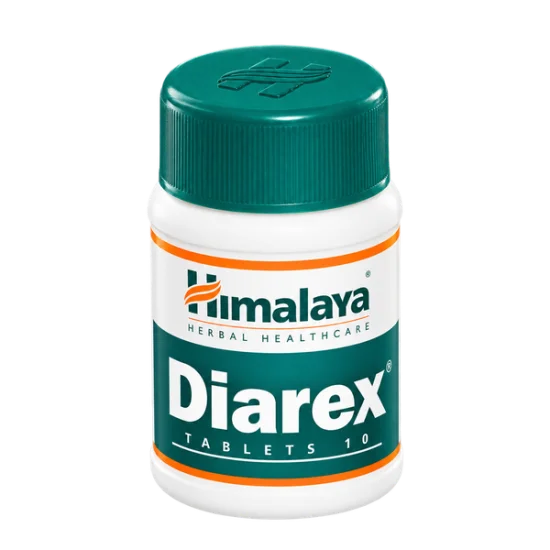
Diarex tablets are taken by mouth as an herbal antidiarrhoeal product for short-term digestive upset involving loose or frequent stools. The formulation is intended to support gastrointestinal comfort while the underlying cause of diarrhoea is addressed with fluids, suitable food, and medical assessment when symptoms are severe.
Overview
The formulation is intended to support gastrointestinal comfort while the underlying cause of diarrhoea is addressed with fluids, suitable food, and medical assessment when symptoms are severe. Diarex belongs to the herbal gastrointestinal-support category.
Dosage and administration
The dose is decided individually, taking age, other medicines, and health conditions into account.
- Take Diarex tablets by mouth.
- Use the dose selected for the individual patient.
- Swallow the tablet with sufficient fluid unless a clinician has provided different instructions.
- Do not increase the dose because symptoms have not improved quickly.
- Do not continue self-treatment through persistent or worsening diarrhoea.
- Keep oral rehydration fluids separate from the tablet schedule when needed; both address different aspects of diarrhoeal illness.
- If a dose is missed, take the next planned dose rather than doubling the amount.
The 30-tablet bottle is a pack format, not a recommended course length. Duration depends on the cause of diarrhoea, symptom severity, age, hydration status, and concurrent treatment.
A common mistake is to stop drinking because each sip seems to trigger another bowel movement. Fluid replacement remains necessary. Another is to take several products with overlapping antidiarrhoeal actions, which can increase constipation, abdominal distension, or difficulty monitoring the illness.
Formulation
Diarex belongs to the herbal gastrointestinal-support category. The product is supplied as tablets rather than a liquid, powder, or topical preparation.
Botanical actions associated with antidiarrhoeal formulations
Herbal preparations used for diarrhoea may be designed around several traditional pharmacological aims:
- Reducing excessive intestinal secretion.
- Supporting firmer stool consistency.
- Calming intestinal spasms.
- Protecting irritated mucosal surfaces.
- Supporting recovery from uncomplicated digestive upset.
Astringent action refers to the ability of certain plant compounds to cause local tissue proteins to contract, which may reduce surface secretions. Demulcent action refers to a soothing effect on irritated mucosal tissue. These terms describe pharmacological concepts, not a guarantee that every person will respond in the same way.
Health Canada classifies natural health products according to their ingredients, claims, dosage form, and evidence requirements. The finished product should therefore be assessed as a complete formulation rather than by assuming that one traditional herb explains every effect. [1]
How it affects the body
Diarex is used as a gastrointestinal-support product during diarrhoeal episodes. Its intended action can be described in practical terms: it may help reduce digestive discomfort and support more controlled bowel function while the body recovers.
The mechanism of an herbal combination may involve several modest actions rather than one single receptor target. Traditional antidiarrhoeal formulations can include compounds with astringent, antispasmodic, soothing, or antimicrobial activity in laboratory settings. Laboratory antimicrobial activity does not prove that a product eliminates the cause of infectious diarrhoea in a person.
That distinction matters. Acute diarrhoea may be caused by viruses, bacteria, parasites, toxins, antibiotics, or dietary triggers. An antidiarrhoeal product cannot be assumed to treat amoebiasis or another infection unless a clinician has established that diagnosis and selected appropriate therapy.
The European Medicines Agency evaluates herbal substances through quality, safety, and traditional-use frameworks. Traditional use can support a recognised therapeutic role, while it does not automatically provide the same evidence as a modern clinical trial for every indication. The U.S. Food and Drug Administration also provides a botanical-drug framework that distinguishes traditional-use evidence from controlled clinical-trial evidence. [2]
Effects on the digestive tract
Potential symptom-focused effects include:
- Less urgency caused by rapid intestinal movement.
- Reduced cramping associated with bowel spasms.
- Improved comfort while stool frequency settles.
- Support for recovery after uncomplicated digestive upset.
Therapeutic indications
Diarex is intended for diarrhoeal symptoms and related gastrointestinal discomfort. The product may be considered for an uncomplicated episode in an adult when there is no sign of severe infection, major dehydration, or another condition requiring urgent treatment.
Acute diarrhoea usually develops over a short period. Common causes include viral gastroenteritis, foodborne illness, sudden dietary change, and medication-related irritation. Chronic diarrhoea continues or recurs over a prolonged period and may reflect inflammatory bowel disease, malabsorption, thyroid disease, infection, or a functional bowel disorder.
These situations should not be treated as interchangeable.
Medical assessment is needed when diarrhoea involves:
- Blood, black stool, or visible mucus.
- A high temperature or marked weakness.
- Severe or localised abdominal pain.
- Repeated vomiting or inability to retain fluids.
- Very little urine, faintness, confusion, or pronounced thirst.
- Symptoms after recent hospitalisation or antibiotic treatment.
- Unexplained weight loss or repeated nocturnal diarrhoea.
- Symptoms in an infant, frail older adult, or immunocompromised person.
Diarex should not be presented as a treatment that eradicates amoebiasis. Suspected amoebic infection requires diagnostic testing and targeted antimicrobial treatment. The same applies to persistent dysentery, which can signal invasive infection or inflammatory disease.
Common mistakes
Several habits can lead to poor results or delayed treatment:
- Treating every episode as ordinary food-related diarrhoea.
- Taking tablets while drinking too little fluid.
- Doubling a dose after one additional loose stool.
- Continuing the product after bowel movements have normalised.
- Using it when blood, fever, or severe pain is present.
- Giving an adult product to a child without age-specific direction.
- Combining multiple products with similar antidiarrhoeal effects.
- Ignoring diarrhoea that returns repeatedly over several weeks.
- Forgetting to mention herbal products when a clinician reviews current medicines.
- Assuming “natural” means allergy-free or suitable during pregnancy.
Food choices can also affect symptoms. Alcohol, very fatty meals, and large amounts of caffeine may worsen fluid loss or intestinal urgency during an acute episode. Plain foods in small portions are often easier to tolerate until appetite returns.
Reasons not to use it
- There is blood or black stool.
- A high fever accompanies diarrhoea.
- Severe or worsening abdominal pain is present.
- The abdomen is swollen and bowel movements have stopped.
- The person cannot keep fluids down.
- There are signs of significant dehydration.
- The illness follows recent antibiotic treatment and is severe or persistent.
- A known allergy exists to any ingredient in the formulation.
- The product is being considered for a child under 18 without age-specific medical direction.
- Pregnancy or breastfeeding requires an individual risk assessment.
- Kidney, liver, inflammatory bowel, or immune-system disease complicates the episode.
When this is not for you
NOT for you if blood, fever, severe pain, dehydration, or persistent symptoms are present; seek medical assessment instead.
Older adults can deteriorate from fluid loss more quickly because thirst may be reduced and kidney reserve may be lower. People taking diuretics, laxatives, blood-pressure medicines, lithium, or medicines affected by dehydration require additional care during significant diarrhoea.
Do not combine several antidiarrhoeal or herbal gastrointestinal products without checking for overlapping ingredients and effects. A combination can make it harder to identify an allergy or determine which product caused constipation.
Possible side effects
Herbal products can cause adverse effects even when they are traditionally used. Possible problems include nausea, abdominal discomfort, constipation, headache, or an allergic reaction to a botanical component.
Stop using the product and seek prompt medical care for facial swelling, breathing difficulty, widespread hives, severe abdominal pain, fainting, or rapidly worsening weakness. These symptoms require assessment rather than another dose.
Tolerability can also be affected by the illness itself. Bloating, cramps, nausea, and fatigue may come from gastroenteritis or dehydration rather than from Diarex. A symptom diary can help separate a new reaction from the original illness.
People with diabetes should monitor fluid intake and glucose more closely during significant diarrhoea. Dehydration can alter glucose control, and reduced food intake may change the effect of diabetes medicines.
One detail patients often overlook is constipation after the diarrhoeal episode has ended. Continuing an antidiarrhoeal product after bowel function has normalised can make bloating and sluggish bowel movements more likely.
Comparison
Diarex is an oral herbal gastrointestinal-support product for short-term diarrhoeal symptoms. Unlike prescription treatment, it is intended to support digestive comfort while fluids, suitable food, and assessment address the underlying cause.
What doctors say
In clinical practice, the first question is usually not “How can stool frequency be stopped?” It is “Why is the person losing fluid, and are there warning signs?” Symptom relief is useful only when it does not delay assessment of an infection, inflammatory condition, obstruction, or severe dehydration.
A physician would normally consider the patient’s age, duration of symptoms, travel or food exposure, recent antibiotics, fever, blood in stool, vomiting, chronic disease, and current medicines. The same herbal tablet may be reasonable for one adult with mild diarrhoea and unsuitable for another with renal impairment or dysentery.
Consistency also means using one clear plan. Taking Diarex, a separate antidiarrhoeal, several supplements, and an antibiotic without a defined reason can obscure the clinical picture.
For older patients, clinicians pay attention to orthostatic dizziness, reduced urine, confusion, and falls. These signs may appear before a patient describes severe thirst.

Common questions
Can Diarex be combined with other medicines or supplements?
Health Canada’s 2022 guidance advises reviewing natural health products alongside prescription medicines, over-the-counter products, and supplements because interactions can depend on ingredients and patient factors. During diarrhoea, dehydration can also change how medicines such as diuretics, lithium, and blood-pressure treatments affect the body. Avoid combining Diarex with another antidiarrhoeal or herbal digestive product unless the treatment plan specifically allows it. A pharmacist or prescriber can assess the complete medicine list using the product’s formulation and the patient’s medical history. Keep the medicine list available during that review.
How should Diarex be stored at home and while travelling?
WHO’s 2005 manual supports keeping oral tablets in a dry place away from excessive heat, moisture, and direct sunlight. Store the bottle securely so children cannot access it, and avoid leaving it in a hot vehicle or humid bathroom. During travel, keep it in its closed container and protect it from prolonged temperature extremes. Do not transfer tablets into an unmarked container because identification and dose selection become more difficult.
Is Diarex suitable for people under 18?
The WHO’s 2013 Pocket Book approach to childhood diarrhoea places emphasis on oral rehydration, age-appropriate zinc where indicated, feeding, and assessment of danger signs. Children can become dehydrated quickly, so Diarex should not be given to anyone under 18 without age-specific direction from a qualified healthcare professional. Infants and young children require prompt evaluation for reduced urination, lethargy, repeated vomiting, blood in stool, or inability to drink. Adult dosing should never be adapted for a child by simply reducing the number of tablets.
How does Diarex differ from a conventional antidiarrhoeal by active substance or mechanism?
Diarex is an herbal tablet formulation, while conventional antidiarrhoeal medicines may contain a single defined synthetic active substance with a known molecular target. The pharmacological profile of a single active substance can be easier to quantify, while a botanical combination may contain several compounds with different actions and variable clinical evidence. The EMA’s 2017 herbal-medicine assessments distinguish traditional-use evidence from evidence generated in controlled clinical trials. The choice depends on the cause of diarrhoea, symptom severity, contraindications, and the patient’s other medicines.
Is Diarex appropriate for older adults?
Health Canada’s 2022 guidance and WHO’s 2013 clinical principles place special emphasis on hydration and medicine review in older adults because fluid loss can lead to dizziness, kidney stress, confusion, and falls. Age alone does not determine suitability, but kidney function, liver function, swallowing ability, concurrent medicines, and the severity of diarrhoea do matter. Older adults should not rely on symptom relief if urine output falls or weakness increases. Persistent diarrhoea, fever, blood in stool, or confusion requires medical assessment rather than prolonged self-treatment.
Do you offer anonymous delivery?
Your order will be securely packed and shipped within 24 hours. This is exactly what your package will look like (images of an actual item sent). It has the size and look of a regular private letter (24x11x0.7 cm) and its contents cannot be seen.
Customer Feedback on Diarex
Lethbridge, took Diarex for several days during recurring digestive upset. He felt the cramping settled, but the diarrhoea returned after stopping, which led him to arrange medical assessment rather than continue self-treatment.
Oshawa, found the tablets easy to swallow and noticed fewer bathroom trips during the first day. He also experienced mild constipation afterward and decided that continuing the product once stools were formed was unnecessary.
Saskatoon, used Diarex during a short stomach illness but had persistent weakness and poor appetite. The product did not address those symptoms, and he required assessment focused on hydration and the cause of the illness.
Sources
- Health Canada (2022). Natural Health Products.
- European Medicines Agency (2017). Guideline on Quality of Herbal Medicinal Products/Traditional Herbal Medicinal Products.