Skip to content
Cystone
Active ingredient: Cystone

Cystone

Quality products
24/7 Support
Fast delivery
Delivery from 4 days
Select pack Package Per unit Price

Free delivery on orders from $ 312.00, free express delivery from $ 468.00

Secure Payments
Track your order
Best price guarantee

Cystone is intended for adults seeking nutritional support for kidney-stone prevention, mild urinary discomfort, and routine renal wellness. Its botanical formulation supports urinary health and normal urine flow as part of a broader wellness routine.

Overview

Cystone tablets are taken orally as a botanical supplement intended to support urinary tract health and normal urine flow.

Dosage and administration

The amount of Cystone taken at each intake is set individually rather than being one fixed number for every person. Use the dose selected for your circumstances and take the tablets by mouth with water. The intended course depends on the reason for use, symptom history, kidney-stone risk, and clinical advice.

Practical administration points include:

  • Take the tablets consistently at the same time each day when possible.
  • Swallow them with sufficient water.
  • Taking them with food may be more comfortable for people who develop stomach sensitivity from herbal products.
  • Do not increase the amount because urinary symptoms have not improved quickly.
  • If a dose is missed, take the next planned dose rather than doubling the amount.
  • Maintain regular fluid intake unless a clinician has prescribed fluid restriction for heart or kidney disease.
  • Stop self-management and seek urgent assessment if severe pain, fever, repeated vomiting, or urinary retention develops.

Fluid intake should be individualized. A person with heart failure, advanced kidney disease, or a prescribed fluid limit should not force large volumes of water. Excessive water intake can also be unsafe in certain medical situations.

Do not use thirst alone as the measure of hydration during hot weather or physical work. Pale-yellow urine is a practical guide for many adults, but fluid targets must be adjusted when heart or kidney disease is present.

Formulation

A multi-ingredient herbal formula may have a different tolerability profile from a single-ingredient product. Digestive sensitivity, allergy, interactions, and individual kidney function still matter. People with recurrent stones need evaluation of stone composition when possible because calcium oxalate, uric acid, struvite, and cystine stones have different prevention strategies.

Health Canada evaluates natural health products within its regulatory framework, but regulatory status does not mean that every botanical claim applies equally to every person. The World Health Organization also emphasizes quality, safety, and appropriate use when medicinal plants are used in healthcare [2].

How it affects the body

Cystone is a multi-ingredient botanical formulation intended to support urinary tract health and normal urine flow. Its supportive action is based on the combined effects of its botanical constituents rather than on a single identified pharmacological target.

Therapeutic indications

Cystone may be considered for supportive use when urinary health is the goal. It should not be relied on to manage severe flank pain, visible blood in the urine, fever, vomiting, or an inability to pass urine. Those symptoms can indicate obstruction or infection and require prompt medical assessment.

The product’s intended role is supportive rather than diagnostic. It does not replace imaging, urine testing, blood tests, or treatment for a confirmed obstructing stone. Stone size and location determine whether observation, medication, a procedure, or urgent care is appropriate.

Cystone is not a treatment for every urinary symptom. Burning urination can result from infection, while pelvic discomfort, blood in the urine, or recurrent urgency may have other causes. A urine test is more useful than increasing a supplement when infection is possible.

The National Institute of Diabetes and Digestive and Kidney Diseases describes hydration as a central measure for reducing recurrent stone risk [1].

Common mistakes

Several practical mistakes can reduce the value of a urinary-support routine:

  • Increasing the tablet amount when symptoms do not change quickly.
  • Drinking excessive water despite heart failure, kidney disease, or a fluid restriction.
  • Assuming that every episode of burning urination is a kidney stone.
  • Delaying care when fever, vomiting, severe pain, or urinary retention appears.
  • Taking herbal tablets without reviewing anticoagulants, diuretics, or diabetes medicines.
  • Stopping prescribed treatment because a botanical product feels more natural.
  • Ignoring dietary sodium and relying on a supplement alone for recurrent calcium stones.
  • Failing to record the timing and pattern of pain.
  • Continuing self-treatment after repeated blood in the urine.
  • Giving the tablets to a child without age-specific medical direction.

One easily missed detail is fluid restriction. Advice to drink more water is not suitable for every patient. A person with advanced kidney or heart disease may need an individualized target rather than a general hydration recommendation.

Another common error is confusing temporary symptom relief with stone clearance. Follow-up testing may be necessary when a stone has been diagnosed, especially if pain or urinary changes continue.

Reasons not to use it

  • Severe renal obstruction.
  • Urinary retention.
  • Suspected kidney infection.
  • Rapidly worsening flank pain.
  • Known allergy to any botanical constituent.
  • Advanced kidney disease or a prescribed fluid restriction.
  • Pregnancy or breastfeeding.
  • A history of recurrent or complicated urinary infections.
  • A single functioning kidney.
  • Previous procedures for kidney stones.
  • Current use of medicines affecting blood clotting, blood pressure, glucose, or kidney function.
  • Planned surgery or a procedure involving anaesthesia.

When this is not for you

Cystone is not for you if you need urgent assessment for obstruction, infection, severe symptoms, pregnancy-related urinary pain, or a fluid restriction. Children should not be given an adult herbal urinary product unless a qualified clinician has selected it for their age and circumstances. Older adults may also need a medication review because reduced kidney function and polypharmacy can alter the risk of adverse effects.

Pregnancy-related urinary pain, fever, blood in the urine, or reduced urine output needs prompt assessment. Delaying care can expose both the pregnant patient and fetus to avoidable complications.

Possible side effects

Cystone is a botanical tablet intended for urinary support. Possible unwanted effects include stomach discomfort, nausea, loose stools, constipation, headache, or an allergic reaction to one of the botanical constituents. The risk may be higher in people with known plant allergies or sensitivity to herbal products.

Possible allergy symptoms include itching, hives, facial swelling, wheezing, or difficulty breathing. Stop using the product and obtain urgent help for breathing difficulty, throat swelling, faintness, or rapidly spreading hives.

A mild stomach reaction may improve when the tablet is taken with food. Persistent vomiting, severe abdominal pain, or worsening urinary symptoms needs medical assessment rather than dose escalation.

The safety profile also depends on the user’s medical conditions and medicines. People taking diuretics, medicines affecting kidney function, anticoagulants, diabetes treatments, or blood-pressure medicines should have the full botanical composition reviewed before regular use. This is a specific interaction concern because multi-ingredient herbal products can affect fluid balance, blood glucose, blood pressure, or drug metabolism.

Record every herbal product, vitamin, and prescription medicine used during a urinary evaluation. A complete list is more useful than mentioning only the products taken on the day of an appointment.

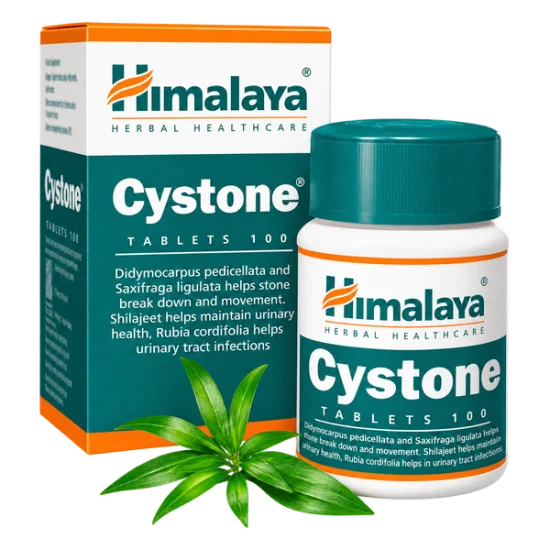
Comparison

Cystone occupies the supportive botanical category. Other approaches use hydration, dietary changes, prescription medicines, or procedures selected according to the stone type and clinical findings.

Approach Main role Key limitation
Cystone botanical tablets Supportive urinary and renal wellness Cannot assess obstruction or replace stone analysis
Hydration and dietary prevention Reduces urine concentration and addresses selected dietary risks Must be adapted to stone type and medical conditions
Clinician-directed stone treatment Manages obstruction, infection, pain, or a confirmed stone Requires diagnosis and individualized treatment

For recurrent calcium oxalate stones, prevention may involve sodium reduction, appropriate dietary calcium, moderation of high-oxalate foods, and treatment of specific metabolic abnormalities. Uric acid stones may require a different dietary and urinary-pH strategy. These distinctions are why a herbal supplement should not be presented as a universal stone-dissolving treatment.

Procedures become relevant when a stone causes persistent obstruction, infection, kidney impairment, uncontrolled pain, or failure to pass naturally. Cystone may fit a wellness routine for some adults, but its role is narrower than that of diagnostic or procedural care.

What doctors say

In clinical practice, physicians usually separate symptom relief from treatment of the underlying cause. A person with mild, nonspecific urinary discomfort may need hydration advice and testing, while a person with severe colic may need imaging and pain management. The same symptom can arise from a stone, infection, bladder irritation, or another urinary disorder. Clinical assessment helps identify which cause is most likely. Testing can guide treatment when symptoms persist or become more severe.

A doctor reviewing Cystone would usually ask about previous stones, urine infections, fluid intake, diet, kidney function, current medicines, pregnancy status, and the duration of symptoms. Stone prevention is more successful when the stone type and metabolic risk are known.

The European Medicines Agency provides plant-based medicinal product guidance that supports careful attention to evidence, quality, dosing, and safety rather than assuming that every botanical product has the same clinical effect [3]. This is relevant to Cystone because its formulation is multi-ingredient and its use should remain within supportive urinary care.

Common questions

How should Cystone be stored at home and while travelling?

Keep Cystone in a dry place at ordinary room temperature and protect the tablets from excess heat and moisture. A bathroom with frequent steam is a poor storage location because humidity can affect solid oral products. During travel, keep the bottle closed and away from direct sunlight, heaters, and a hot vehicle. Health Canada’s natural health product framework supports following product-specific storage directions and avoiding conditions that could compromise quality, as reflected in its guidance available in 2023.

Can Cystone be used during pregnancy or breastfeeding?

Pregnancy and breastfeeding require individual assessment before using a multi-ingredient botanical product. The safety of a combination of plant constituents cannot be assumed from the fact that each ingredient is naturally derived. The World Health Organization’s maternal-care principles support prompt evaluation of urinary pain, fever, blood in the urine, or reduced urine output during pregnancy. Those symptoms need medical assessment rather than self-treatment; this remains relevant to care in 2026.

Can Cystone affect driving, concentration, or work with machinery?

Cystone is intended as an oral botanical tablet, but individual reactions can vary. Dizziness, nausea, headache, or an allergic reaction could make driving or machinery work unsafe, even if these effects are not expected for every user. The European Medicines Agency evaluates medicinal-product effects on activities requiring alertness through product-specific evidence, and that principle applies when assessing any new treatment in 2024 guidance. Avoid hazardous work if symptoms affect balance, alertness, or vision.

How soon might the effect become noticeable?

The timing depends on the reason for use, symptom cause, fluid intake, stone characteristics, and individual response. A lack of rapid improvement does not prove that a stone has passed, while worsening pain may indicate obstruction or infection. The National Institute of Diabetes and Digestive and Kidney Diseases explained in 2023 that stone symptoms and passage depend on factors such as size and location, rather than on a fixed supplement timeline. Persistent or severe symptoms need assessment rather than repeated dosing.

What should be done if the expected result does not occur?

Do not increase the amount independently when the expected urinary benefit does not occur. Persistent discomfort, recurrent blood in the urine, fever, vomiting, or reduced urine output requires medical assessment and may call for urine testing or imaging. The American Urological Association’s 2019 medical guidance on kidney stones supports evaluation based on symptoms, stone history, and risk factors rather than relying on symptom changes alone [4]. Bring a list of medicines and supplements to the appointment, including Cystone.

Do you offer anonymous delivery?

Your order will be securely packed and shipped within 24 hours. This is exactly what your package will look like (images of an actual item sent). It has the size and look of a regular private letter (24x11x0.7 cm) and its contents cannot be seen.

Storage and travel

Keep Cystone in a dry place at ordinary room temperature and protect the tablets from excess heat and moisture. A bathroom with frequent steam is a poor storage location because humidity can affect solid oral products. During travel, keep the bottle closed and away from direct sunlight, heaters, and a hot vehicle.

Customer Feedback on Cystone

3.2
Based on 3 reviews
Susan, 37 Abbotsford Several weeks
Verified
Rating: 3.5 out of 5

I found them easy to take with breakfast and had no stomach problems. I still needed to increase my water intake, and the product did not give me an immediate change.

Oct 6, 2026
Victoria, 57 Kelowna About two weeks
Verified
Rating: 4 out of 5

After about two weeks, the discomfort seemed less noticeable. I was also taking other medicines, so I arranged a medication review before continuing. That step was useful because I had not considered possible interactions.

Oct 23, 2026
Lucy, 40 Charlottetown Several days
Verified
Rating: 2 out of 5

I stopped after several days because the symptoms returned and I felt nauseated. Testing showed that I needed proper assessment rather than relying on a supplement, so I would not use it as the only response to strong pain.

Nov 4, 2026

Sources

  1. National Institute of Diabetes and Digestive and Kidney Diseases (2023). Kidney Stones: Treatment and Prevention
  2. World Health Organization (2019). WHO Global Report on Traditional and Complementary Medicine 2019
  3. European Medicines Agency (2014). Guideline on the assessment of herbal medicinal products
  4. American Urological Association (2019). Medical Management of Kidney Stones: AUA Guideline
Get our free app Shop faster and track your orders Install