Skip to content
CellCept
Active ingredient: Mycophenolate mofetil

CellCept

Quality products
24/7 Support
Fast delivery
Delivery from 4 days
Select pack Package Per unit Price

Free delivery on orders from $ 312.00, free express delivery from $ 468.00

Secure Payments
Track your order
Best price guarantee

By reducing the activity of immune cells that can attack a transplanted organ, CellCept helps protect kidney, heart, and liver transplants from rejection. It is an immunosuppressant for transplant recipients, used as part of a planned anti-rejection regimen that may include other medicines.

Overview

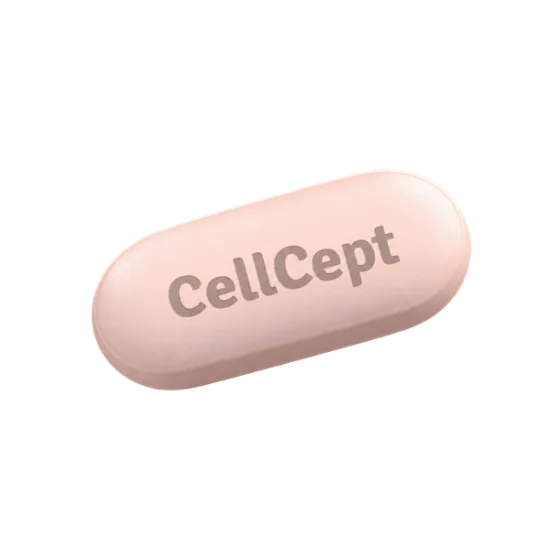
CellCept tablets contain mycophenolate mofetil, an immunosuppressive agent used to prevent organ rejection after transplantation. In the body, mycophenolate mofetil is converted to mycophenolic acid, the substance responsible for reducing the multiplication of selected immune cells.

Dosage and administration

CellCept tablets are taken by mouth on a regular schedule established by the transplant team. Dosing differs between transplant types, time since surgery, kidney and liver function, blood-test results, and the medicines used alongside it. Each patient needs an individual schedule.

  • Take the prescribed dose at the same times each day.
  • Swallow tablets whole with water.
  • Keep the schedule consistent with regard to meals unless the transplant team has advised a change.
  • If a dose is missed, contact the transplant clinic for instructions when the next dose is approaching; do not take two doses together.
  • Do not change, pause, or stop CellCept after vomiting, diarrhoea, fever, or an infection without transplant-team advice.
A dose taken late is different from a dose doubled. Doubling can raise adverse-effect risk without restoring the steady immunosuppressive exposure intended by the regimen.

Tablets should not be crushed, chewed, or split unless a transplant specialist has specifically directed an alternative approach. Powder from damaged tablets can irritate skin and mucous membranes, and exposure requires extra care for anyone who is pregnant or may become pregnant.

Formulation

CellCept tablets contain mycophenolate mofetil, an immunosuppressive agent used to prevent organ rejection after transplantation. In the body, mycophenolate mofetil is converted to mycophenolic acid, the substance responsible for reducing the multiplication of selected immune cells.

The treatment goal is specific: lower the immune response enough to protect the transplanted organ while maintaining close surveillance for infection, low blood-cell counts, and other complications. CellCept is commonly used alongside medicines such as corticosteroids and calcineurin inhibitors within a transplant specialist’s regimen. Health Canada’s product monograph describes mycophenolate mofetil as part of combination immunosuppression for adult transplant recipients. [1]

Keep CellCept in the same daily routine. Linking doses to regular morning and evening habits can reduce missed doses during the demanding first months after transplantation.

How it affects the body

Mycophenolic acid blocks inosine monophosphate dehydrogenase, often shortened to IMPDH. This enzyme is needed to make guanosine nucleotides, molecular building blocks used by cells when they divide.

T and B lymphocytes rely heavily on this pathway when they multiply after recognising a transplanted organ. CellCept slows their proliferation, reducing the immune attack that can damage the graft. It does not remove the immune system completely. It changes one key pathway in a wider immunosuppressive plan.

Mycophenolate sodium also delivers mycophenolic acid, though it is formulated differently. Transplant teams may consider formulation, gastrointestinal tolerance, and the rest of the immunosuppressive regimen when selecting therapy. The European Medicines Agency describes mycophenolate mofetil as a selective inhibitor of lymphocyte proliferation, and the U.S. Food and Drug Administration describes the same mechanism in its prescribing information. [2]

A benefit is targeted suppression of lymphocyte activity. The limitation is that infection surveillance remains necessary because immune defences are intentionally reduced.

Therapeutic indications

By reducing the activity of immune cells that can attack a transplanted organ, CellCept helps protect kidney, heart, and liver transplants from rejection. It is an immunosuppressant for transplant recipients, used as part of a planned anti-rejection regimen that may include other medicines.

Common mistakes

  • Stopping tablets during diarrhoea without contacting the transplant team.
  • Taking a missed dose together with the next scheduled dose.
  • Starting an antacid, antibiotic, or supplement without reporting it.
  • Assuming no fever means no infection is present.
  • Skipping CBC appointments because the person feels well.
  • Crushing a tablet to make swallowing easier.
  • Delaying contact about mouth sores, bruising, persistent cough, or urinary symptoms.
  • Underestimating pregnancy risk during treatment.

One detail patients often miss is that diarrhoea may be caused by infection, CellCept, another medicine, or several factors at once. The right response is assessment, hydration advice, and medication review rather than guessing the cause.

Reasons not to use it

CellCept is not for you if you have a known serious hypersensitivity to mycophenolate mofetil, mycophenolic acid, or a tablet ingredient.

Important risk factors require transplant-specialist management rather than self-adjustment:

  • pregnancy or plans for pregnancy;
  • breastfeeding;
  • a current severe infection;
  • very low white blood-cell counts or significant bone-marrow suppression;
  • a history of serious gastrointestinal ulceration or bleeding;
  • inherited disorders affecting purine metabolism, such as Lesch–Nyhan or Kelley–Seegmiller syndrome;
  • major kidney or liver impairment requiring closer monitoring;
  • a history of skin cancer, lymphoma, or other malignancy.

When this is not for you

Sun protection matters during long-term immunosuppression. Wear protective clothing and use broad-spectrum sunscreen when outdoors, since reduced immune surveillance contributes to a higher skin-cancer risk.

Possible side effects

Digestive symptoms are among the effects patients report most often. Diarrhoea, nausea, vomiting, abdominal discomfort, indigestion, headache, tremor, insomnia, and fatigue can occur. Some symptoms settle as the post-transplant regimen stabilises, while persistent diarrhoea needs medical review because it can cause dehydration and may alter exposure to other transplant medicines. Persistent symptoms deserve review. Hydration can become difficult.

CellCept can also lower white blood cells, red blood cells, or platelets. A low white-cell count may make infections harder to fight. Anaemia can cause reduced exercise tolerance, breathlessness, or unusual tiredness. Low platelets may lead to easy bruising, small red-purple spots, or prolonged bleeding.

Seek urgent medical assessment for:

  • fever, chills, sore throat, new cough, or shortness of breath;
  • painful urination, persistent diarrhoea, or vomiting;
  • mouth ulcers that are severe or do not heal;
  • unexpected bruising, bleeding, black stools, or marked weakness;
  • severe abdominal pain;
  • a new lump, changing skin lesion, or persistent unexplained night sweats.

Serious infections, including opportunistic infections, and certain malignancies are recognised risks of long-term immunosuppression. The risk reflects the combined effect of the full anti-rejection regimen, not CellCept alone. The EMA product information also warns of serious infections, blood disorders, and increased malignancy risk in immunosuppressed patients. [3]

Do not dismiss a temperature rise as a routine cold after transplantation. Fever can be less dramatic during immunosuppression, yet still signal an infection that needs prompt assessment.

Comparison

CellCept is one component of combination therapy. It is not intended to replace the rest of a transplant regimen on its own.

Approach Main role Key limitation
Mycophenolate mofetil Limits T- and B-lymphocyte proliferation Can cause diarrhoea and low blood-cell counts
Calcineurin inhibitor therapy Reduces T-cell activation through a different pathway May affect kidney function, blood pressure, or neurological symptoms
Corticosteroid therapy Broadly suppresses inflammation and immune activity Long-term use can affect bone, glucose, mood, and infection risk

In clinical practice, CellCept is valued because its mechanism complements calcineurin inhibitors rather than duplicating them. The trade-off is that combined immunosuppression raises the need for infection prevention, cancer screening, and laboratory monitoring. A Cochrane review found mycophenolate-based regimens can reduce acute rejection compared with azathioprine-based approaches, while adverse effects remain an important part of treatment selection. [4]

What doctors say

Transplant clinicians usually focus first on consistency. Rejection prevention depends on maintaining adequate immunosuppression every day, not only when the patient feels well. Missed doses, sudden self-directed dose reductions, and unreported vomiting or diarrhoea can destabilise a regimen.

Doctors also look beyond one isolated laboratory value. A mildly reduced white-cell count may be interpreted differently in someone using antiviral prophylaxis, a calcineurin inhibitor, and CellCept than in someone taking CellCept alone. That is why transplant clinic follow-up is tailored to the individual rather than copied from a generic schedule.

CellCept can be highly useful for graft protection, yet it requires active participation in blood testing, infection awareness, reproductive planning, and medication reconciliation.

Common questions

Can CellCept be used in people under 18?

CellCept may be used in paediatric transplant care when a transplant specialist determines that it is appropriate. Children need age- and body-size-specific prescribing, plus close monitoring of blood counts, growth, infections, and gastrointestinal tolerance. Health Canada’s 2022 CellCept monograph includes paediatric information for selected transplant settings, while the exact regimen remains specialist-directed. Do not apply an adult schedule to a child.

Can CellCept affect driving, concentration, or machinery use?

CellCept itself is not usually associated with a predictable sedative effect, though headache, dizziness, fatigue, tremor, and illness-related weakness can affect concentration. Avoid driving or operating machinery if you feel dizzy, unusually tired, unwell, or mentally slowed. The EMA’s 2024 product information advises patients to consider their individual response to treatment. Transplant recovery and companion medicines may affect alertness as much as CellCept.

Can CellCept be taken with food or on an empty stomach?

CellCept can be taken with food or on an empty stomach, depending on the schedule set by the transplant team. Food may reduce peak concentration without changing the total exposure in a clinically meaningful way for many patients, yet consistency is more useful than alternating between fasting and heavy meals. The EMA product information from 2024 supports oral administration with a stable routine. If nausea develops, the transplant team can assess whether meal timing is relevant.

Can older adults use CellCept?

Older adults can receive CellCept after transplantation, though they may be more vulnerable to infection, gastrointestinal effects, reduced kidney function, and low blood-cell counts. Age alone does not decide suitability; the transplant regimen, coexisting conditions, and laboratory trends guide prescribing. WHO transplant guidance published in 2023 supports individual risk assessment for immunosuppressive treatment. New confusion, weakness, fever, or reduced fluid intake deserves prompt clinical attention in older adults.

Can CellCept tablets be split, crushed, or chewed?

CellCept tablets should be swallowed whole. Crushing, chewing, or splitting can increase contact with the tablet contents and may change how tolerable the dose feels in the mouth or stomach. The EMA’s 2024 CellCept product information advises avoiding inhalation or direct contact with powder from damaged tablets. Swallowing difficulty should be discussed with the transplant team so that a suitable clinical solution can be arranged.

Do you offer anonymous delivery?

Your order will be securely packed and shipped within 24 hours. This is exactly what your package will look like (images of an actual item sent). It has the size and look of a regular private letter (24x11x0.7 cm) and its contents cannot be seen.

Customer Feedback on CellCept

3.4
Based on 5 reviews
Tom, 30 Halifax
Verified
Rating: 3 out of 5

I took CellCept as part of my daily anti-rejection routine. The first month included loose stools, which settled after the clinic reviewed the rest of my medicines. Using phone reminders helped because missing an evening dose made me anxious.

Oct 26, 2026
Lee D., 61 Calgary
Verified
Rating: 3 out of 5

I had regular bloodwork and felt reassured seeing the results discussed at each appointment. I noticed fatigue in the early recovery period, though it was hard to separate the medicine from surgery recovery and the other treatments.

Nov 1, 2026
John V., 58 Toronto Several months
Verified
Rating: 3 out of 5

I used CellCept for several months after transplant. I had nausea on some mornings and found that keeping my routine steady made the day easier. My transplant nurse took every stomach issue seriously, which was helpful.

Oct 6, 2026
Ben, 46 Red Deer
Verified
Rating: 3 out of 5

The treatment schedule was manageable, but diarrhoea became persistent after an antibiotic course. I contacted the clinic rather than stopping anything myself, and they arranged bloodwork and reviewed the combination.

Oct 19, 2026
Adam, 41 Thunder Bay
Verified
Rating: 5 out of 5

I had no major stomach problems, but I became more careful about crowded indoor spaces during cold season. The regular CBC appointments were inconvenient at times, yet they gave me confidence that changes would be caught early.

Oct 10, 2026

Sources

  1. Health Canada (2022). Product Monograph: CellCept (mycophenolate mofetil).
  2. European Medicines Agency (2024). CellCept: EPAR – Product information.
  3. European Medicines Agency (2024). CellCept: Summary of Product Characteristics.
  4. Cochrane (2009). Mycophenolic acid versus azathioprine for primary immunosuppression in kidney transplant recipients.
Get our free app Shop faster and track your orders Install